More than 11,000 Farmers in Galway are this week receiving €20 million in payments under the Areas of Natural Constraint scheme.
Minister for Agriculture Charlie McConalogue announced this week that €185 million in payments have been issued to 85,000 farmers.
“The importance of the timely delivery of payments under the ANC scheme is vital for the survival of the farm families,” said Galway TD Seán Canney, welcoming the announcement.
In total 11,825 farmers in Galway are receiving €20.6 million in the first tranche payments from the scheme, which will arrive bank accounts in the coming days.
Minister McConalogue emphasised that the ANC scheme is crucial for farm families, and that he was keen to issue payments as early as possible.
“These payments represent a timely and significant financial boost for farmers and for the wider rural economy. The issuing of these payments in mid-September ensures payments to farmers at the earliest possible time.”
The Minister also confirmed that work is underway to ensure that 70% of the Basic Payment Scheme is delivered by October 18.
Connacht’s fixture against Cardiff will kick off the new United Rugby Championship next week, with over 150 hours of live action promised for TV.
RTÉ and TG4 have joined forces to ensure that games involving all four Irish provinces will air for free to Irish audiences.
RTÉ and TG4’s live, free-to-air coverage of the new URC begins with Connacht live on TG4 on Friday, September 24, followed by an action-packed rugby Saturday as Leinster are live on TG4, and Munster live on RTÉ.
Martin Anayi, CEO of the United Rugby Championship said “The widespread return of URC and the provinces to Free-to-Air television in Ireland is a real cause for excitement and we can’t wait for that energy to be unleashed on the opening weekend.”
In total, RTÉ will deliver live television, radio, and online coverage of 26 games featuring the Irish provinces in the league, plus additional knockout matches, along with extensive post match analysis on Against the Head.
TG4’s Rugbaí Beo will continue to be the station’s flagship rugby programme and will broadcast 26 games involving Irish provincial clubs and an additional 16 games featuring international club sides.
Spórt TG4 will also have exclusive behind the scenes action from the competition across its social media channels.
For the final of the championship, the two channels have agreed to amicably split the coverage, with each broadcasting it on alternate years.
Rónán Ó Coisdealbha, TG4 Head of Sport said: “TG4 has been bringing interprovincial rugby to Irish Audiences since the first days of the Celtic League in 2001, and we are looking forward to taking this next step with the URC and to see the South Africa ‘Super’ teams become part of our Rugbaí Beo line-up.”
“This partnership with RTÉ galvanises TG4’s commitment to provide the best of sporting action to our audiences, and to making that coverage free-to-air and accessible to all fans.”
Declan McBennett, Group Head of Sport, RTÉ said: “Throughout the year RTÉ Sport has seen the very best of Irish athletes compete domestically and internationally against first class opposition at an elite level.”
“Being in a position to provide free-to-air coverage of the provinces to our audience in the newly reconstituted URC adds a further dimension to that and allows us to ensure our best rugby players are seen and seen to inspire future generations who want to one day wear their provincial and national jersey.”
A further 1,456 confirmed cases of COVID-19 have been reported in the state by health officials today.
As of this morning there are 261 people in Ireland who have been admitted to hospital for COVID.
Of these patients, 66 are in serious condition and being treated in intensive care units.
Chief Medical Officer Dr Tony Holohan has said that since April, four out of five people admitted to the ICU, and roughly three quarters of deaths, have been among the unvaccinated.
“It remains vital that those who have not yet received a COVID-19 vaccine do so at the earliest opportunity.”
“If you are fully protected through vaccination, then you can have confidence that your vaccination, and your continued adherence to the public health advice appropriate to each environment, is the best way you can protect yourself”.
Repairs have been completed today on a major burst watermain that was affecting the supply to the west side of Galway City and its suburbs.
Repairs took place through the night to repair a burst mains on the NUIG campus, which supplies the Clifton Hill and Tonabrucky reservoirs.
The repairs were very complex due to the location of the burst on the NUIG Campus and the presence of many services over the watermain which had to be carefully excavated.
The crews completed their works around 6:30am this morning, but parts of the city and surrounding villages may experience lingering issues throughout the day.
Customers in the west of the city including Knocknacarra, Barna, Moycullen and surrounding areas supplied from Tonabruckey Reservoir may experience low pressure during the day and into the evening as reservoir levels recover.
Speaking about this Tim O’Connor, Irish Water, said: “The repairs were complex due to the location of the burst and the presence of other services.”
“Dedicated crews, did excellent work, working through the night carried out the repair as quickly and efficiently as possible to minimise disruption to the area and restore water for all customers.”
“We understand the inconvenience unplanned outages can have on customers and we appreciate your patience as we worked to return the water supply to homes and businesses as quickly and as safely as possible.”
Briain is left shaken by a chat with the Gardaí after Berni comes forward, Fiach turns the tables on Michelle about being honest, and Colm is feeling the strain of Mo’s absence in Ros na Rún.
Berni bravely gives her statement to O’Shea in the hope that Briain will be punished for what he did to her, but O’Shea puts a twist on things with some questions of her own for Berni.
Briain is feeling confident that Berni’s case against him will be dropped, until a visit to the Garda station leaves him shaken to the core.
Fiach learns a no-so-little secret about Michelle when arguing with Greg. After she dumped him for lying to her, he confronts her about her secret millionaire status.
Colm is feeling Mo’s absence terribly while also struggling to care for Charlie and the baby. He panics when Charlie thinks it best she leave but Colm insists she live with him until Mo returns.
Rory wants out of his relationship with Emma, but its not as easy as just walking away. Will Emma ruin him financially or has Rory put a plan in place to ensure this won’t happen
Catch up on all of this and more in a double feature omnibus of Ros na Rún this Sunday on TG4.
Want to get out of the house and enjoy some tunes this weekend? Well you’re in luck as more free live music events are taking place in Gort and Portumna.
Thus Saturday and Sunday, the Ceol an tSamhraidh series enters its third week with more free live music events for people to enjoy.
On Saturday at 8pm, Songs & Stories Show with Mike Hanrahan, Eleanor Shanley & Rachel Grace takes to the stage in Portumna to present an evening of songs and stories in a relaxed setting.
Expect an evening of classic hits, with songs from Stockton’s Wing, De Dannan and memories of times spent with Ronnie Drew featuring in this collaborative set, along with new music from the trio.
This Sunday, September 19, they will be followed by Seba Safe, one of the most interesting new talents to emerge in 2020, who has just released his debut EP the ‘Map Runner’.
This free show will take place outside the Irish Workhouse Courtyard in Portumna. It will be fully seated, under a waterproof durable cover with open sides and patrons are advised to wear suitable clothing.
Also on Sunday there will be an evening of song and performance from 5pm at the walled garden of the Gallery Café in Gort.
Attendees will get to enjoy contemporary and traditional Galway-based artists including Eugene Lambe, Ultan Conlon, Maija Sofia, and Lowli.
“We are delighted to bring music, art and performance to the culturally rich region of Galway spanning the Wild Atlantic Way and Ireland’s Hidden Heartlands,” said Ruth Mulhern, Tourism Officer.
“These well-visited areas have a strong local identity and interest on the arts; with Shorelines Festival in Portumna and a great pop up venue in the Gallery Café, Gort.”
Advance booking for all of these music events is required via the Ceol an tSamhraidh Eventbrite page.
Ceol an tSamhraidh is part of the Local Live Performance Programming Scheme, funded by the government and organised by the Council Arts and Tourism Offices.
It aims to provide support for people in the live performance industry and facilitate programming of outdoor concerts in Galway through summer 2021, animating town centres for local communities.
County Arts Officer Sharon O’Grady said “Ceol an tSamhraidh is continually delivering on high-quality performances in partnership with all aspects of the arts.”
“The programme is ably supported by local festivals as well as providing a space for talented performing artists and crew, while creating unique events around the County.”
GMIT will see primary school children go head to head in a battle of robotics next year. Well, not actual robot wars, but competing in creating one of their own.
The west of Ireland regional heats in the centrepiece competition of the VEX Robotics Programme will take place at GMIT in the next academic year.
VEX Robotics is an exciting programme where school children and teenagers, aged 8 to 18 years, learn about Science, Technology, Engineering and Maths (STEM) while having fun.
Each year there is a new challenge where students must work as a team to design, build, programme and drive a robot.
The regional competition will take place in GMIT in January and promises to be a lot of fun. Winners of the heat will go on to represent the West of Ireland in the national competition in Cork.
Dr Carine Gachon, project coordinator at GMIT, said that they were “overwhelmed” by the amount of primary schools that sought to take part.
“Unfortunately, we could only accommodate 16, but in the future we hope to expand the competition to more primary schools and also include secondary schools.”
This week, primary school teachers were invited to the campus to get a sneak peak at the VEX Robotics kit they will receive in the next few weeks, and learn more about this year challenge.
Science Foundation Ireland has provided funding for the regional heat to GMIT and Munster Technological University, which has been running the competition for 12 years now.
Since the creation of the competition, it has grown to encompass over 70 schools taking part each year.
Professor Graham Heaslip, Head of the GMIT School of Engineering, said “The VEX Robotics Competition challenges students to use a number of soft and hard STEM skills.”
“The competition will enable students to comprehend how important it is to come up with several solutions when solving a problem, enhancing their creativity and problem-solving skills.”
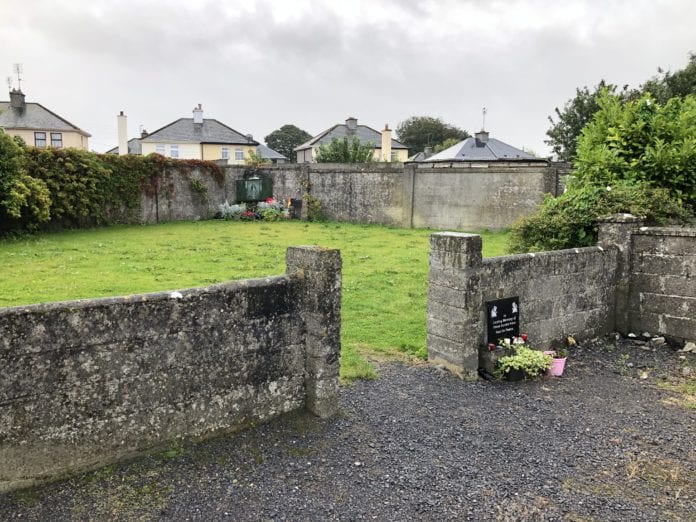
A new grant scheme for events commemorating the experiences of people who were in the Mother and Baby Homes has been established.
The scheme allows survivor groups to get funding for commemoration events for a specific mother and baby home.
The goal of the scheme is to “support survivor centred advocacy organisations” who are dealing with the past in their own way.
This can include “both virtual and in person events, when public health guidelines allow, that responds to the specific needs of their communities.”
There has been €50,000 allocated for this scheme in 2021, with organisations able to apply for up to €2,500 for each event.
An information pack for the scheme notes that while applications will be accepted year round, the scheme is “cash limited” and they will be processed on a first come, first serve basis.
The Commission of Investigation into the Mother and Baby Homes’ final report was released in January, six years after it was established.
Taoiseach Micheál Martin also stated in the Dáil this week that a redress scheme for survivors of the homes will open early next year.
More information about the commemoration scheme, and how to apply for a grant, can be found here.
Pamela Ube was in direct provision from seven years old until the year she started GMIT. Photo: Miss World
The number of children living long-term in the direct provision system has gone up by 50% in the past year.
Figures provided to Galway TD Denis Naughten by the Department of Children show that the number of children in direct provision for 5 years or longer has gone up from 110 in October of last year, to 165 this month.
Deputy Naughten criticised the length of time that people, especially children, are spending in the system, saying that anyone who has seen the facilities in person is aware of the “mental health, psychological and emotional issues” faced by people stuck in it.
“The Direct Provision system was never supposed to provide long term accommodation and it is never acceptable that people should spend years in that system,” Denis Naughten said.
“As I have said in the past in Dáil Éireann on numerous occasions, having nothing to do and all day to do it, in the Direct Provision system, is not good for any individual or their mental health.”
He compared it with the experience of living in lockdown that Irish people have coped with at numerous times in the past 18 months, adding that it is comparatively worse to endure such restrictions for up to seven years.
“Children have been born and, in some instances, have gone through their primary education living in these direct provision facilities.”
The recently crowned Miss Ireland, Galway girl Pamela Ube was one of those children. She came to Ireland with her parents and younger siblings at the age of seven, and her family spent the better part of a decade in Direct Provision, until the year she started college.
In total there are 725 people in Ireland, adults and children, who have been in the direct provision system for at least five years.
Under direct provision, adults receive a small weekly stipend, but are not allowed to work until at least six months has passed, at which time a special application must be made for permission to seek employment.
The reply from the department said that these figures only represent people who have had an uninterrupted stay in a centre, and does not include those who may have left and had to return for whatever reason.
They also only related to people who have registered with the International Protection Office (IPO) and “do not reflect children resident in the centres who may not have been registered by their parents.”
The department also said that between January and September of this year, 900 people have been moved out of direct provision centres to live in the community.
The government published plans back in February to end the direct provision system by 2024, but Sinéad Gibney, chief of the Irish Human Rights and Equality Commission, told the Dáíl Committee on public petitions this week that some commitments are already slipping.
Opulent casinos are known for offering unique and prestigious entertainment. Their interior design, their service, and pretty much everything about the place were created to provide visitors with a good time. This is extremely difficult, after all, casinos profits come from those customers that lose money. Meaning the great majority of visitors is on the losing side and you can imagine just how tricky it is to keep everyone in a good mood.
This is why working as a live dealer can be demanding. You need to be charismatic, witty, and so many other things. But it is also a job that has its perks, and a lot of people who work as a dealer love it. Unless of course, a pandemic strikes and your job is in jeopardy because the institution is losing revenue. Those events aside, let’s see what are some pros and cons of working as a croupier.
Lots of Responsibilities
This is neither good nor bad, it’s really one of those things that are demanding but at the same time builds a character. Croupier needs to know the rules to all of the games, he needs to be social and charming, and also look out for anyone who might be cheating. Basically, a good atmosphere at the table is your responsibility, and if you are not careful, or if you make mistakes it could harm the game.
Of course, you cannot manage everything, and casinos are somewhat known for shady dealings. Just recently a casino in Sydney was a part of a money-laundering scandal, which is why they plan to ban cash payments in a casino. This is something that criminals often do, use supposed casino winnings to justify their earnings, and chances are you will have to deal with them from time to time.
Problematic Clients
When we say troublesome guests we don’t only refer to criminals that were mentioned previously. The truth is you can do your best to be professional but if someone is drinking and losing then that person will likely be tense and irascible. It’s not so uncommon that they take out their frustrations on the dealer or that they antagonize the worker because it feels like they are playing against him or her.
If these things bother you but you still wish to do this job, you can always try your chance at a slightly different but similar workplace. Nowadays there are lots of online casino platforms in Ireland and all over the world that boast a great number of casino games, and they also have lots of users. They typically offer hundreds of slot games, but they also have so-called live games. These experiences require a live dealer who is sitting in front of the camera. This can be a far less stressful environment.
Lucky Guests Tend to Be Generous
There are definitely going to be moments when you are truly glad you picked this profession. Every now and then guests catch a lucky streak, and it’s pretty much a custom for them to tip the dealer. It’s also a part of gambling psychology, they might perceive you as a lucky charm and they want to show karma how they are not selfish, whatever the case these are some of the best moments throughout the dealer’s career.
Working Night Shifts
Casinos tend to work 24/7 so you will definitely see a fair share of night shifts while working as a dealer. The same goes if you are working as a live dealer on any instant withdrawal casino site, as they are always available, and allow users to withdraw their winnings at any time. This is why it can be exhausting at times and you might get a desire to switch professions later in life. Of course, if you are a night owl then chances are you won’t mind too much and you will thrive at this workplace.
It’s a Unique Career Path with Opportunities for Progression
It’s true that the skills you are honing here aren’t entirely applicable to other jobs. Although, you do get to work on your social skills and learn to be witty, which can definitely come in handy. However, it’s obvious that when the pandemic started and casinos began to lose revenue lots of dealers were concerned about where they will work next. Still, this was an exceptional situation, and many other professions were affected. Furthermore, there is a hierarchy or ladder that you can climb once you start as a croupier.
For example, if you show ambition and interest to advance, you can be promoted to pit manager. After that, you can aim for the position of floor manager or even as a shift manager. Each of these entails more responsibility, but if you excel you can end up managing the entire casino.
Conclusion
To sum up, this is a dynamic and very interesting job. At the same time, it is demanding and sometimes outright exhausting. You might have days where you get lots of tips, but the overall salary for this position isn’t that high so it soon starts to feel like you are dependent on those tips.
Luckily, there is room for you to advance in ranks and that can be a serious motivating factor. Moreover, online casinos with live games are now everywhere, so it’s a lot easier to get a new gig with this skill set. So, all things considered, it is a pretty balanced opportunity, and if you enjoy this type of work you should go for it.
Either a happy ending with honourable thieves, or slickly carried out ransom. However you view it, a city centre restaurant is just happy to have their signs back.
Bangin Noodles on Augustine Street in Galway City shared a plea on Monday for the return of their ‘Sendnoodz’ sign out front, which had been stolen by a bunch of lads the night before.
High level and objectively hilarious negotiations got underway quickly, with the restaurant offering a €100 voucher for the return of their sign, and offering a elaborate system for the exchange to take place, as soon as proof was provided of the safety of their beloved sign.
The plea quickly went viral, to great success, and the very next day the sign was returned with an apologetic note.
In a cunning attempt at misdirection, the thieves signed their return note as Pat McDonagh, though an in-depth investigation found that this probably wasn’t a slip up by the Supermacs godfather.
Roping the clown himself Ronald McDonald into the plot was likely also an effort to muddy the waters by these world class operators. A hollywood adaptation is surely already in the works.
“To all the Baiis at Bangin Noodles,” the note began, setting the tone early with a friendly approach.
“I’m very sorry for taking your sign. Myself and Ronald McDonald got a notion the other night while on a three day session.”
“Ronald told me that if I stole the sign he would let me open up Supermacs ‘Shateside’.” High stakes indeed if it could solve the legal bitterness between the two fast food chains.
“They are also the best craic ever! We are now best friends with the robbers,” the restaurant said in a later Facebook update, celebrating the return of their sign.
“Also 100 euro voucher for Bangin Noodles is given to the bandits and we will also be giving one of you free cocktails later in the week for helping and all the sharing to get our banner returned!”
Those who think all of this has sounded a bit familiar may cast their memory back to the great Carbon caper of 2013, where two thieves managed to slip out of the nightclub with a floor mat.
After they were publicly challenged by the now closed nightclub, the two daring lads managed to sneak it back in without getting caught, earning themselves a €100 bar tab in the bargain.
Clearly Galway is home to a generation of master criminals that will soon storm the world.
An Bord Pleanála has given the go ahead for a planning application to be made for a new back-up power station between Loughrea and Portumna.
The Bord ruled that a new open cycle gas turbine plant at the Tynagh Power Station complex would not constitute a Strategic Infrastructure Development.
This means that a planning application for the power plant can be made in the first instance to Galway County Council.
Forestdream and EP Energy Developments intend to build a natural gas fueled turbine plant, which would operate as a “peaking plant” to back up the national grid.
It would be designed to run for short periods of time when not enough electricity is being generated by renewable sources, in order to give a boost to the existing network.
The new gas turbine plant will have a maximum output of just under 300MW, bringing it below the threshold that would automatically make it a Strategic Infrastructure Development.
Though it is being built at the same location as the existing Tynagh Power Station, during the pre-application consultation, it was argued that the output two should not be considered cumulatively, as the new plant will be entirely independent.
The applicants stated in their meeting with An Bord Pleanála that they intend to submit a planning application to the county council in October 2021.
Well-known Galway broadcaster, musician and songwriter Seán Ó hÉanaigh has retired from his work with RTÉ Raidió na Gaeltachta this week, as he celebrates his 65th birthday.
Seán Ó hÉanaigh worked at RnaG for 28 years and is particularly associated with music at the national Gaeltacht station.
Born in Boston in the United States, Seán and his family returned to Ireland to live in Roisín na Mainiach in Carna, Connemara when he was ten years old.
Seán says that he vividly remembers from a young age listening to the pirate radio station Saor Raidió Chonamara, which preceded RnaG, and he has been completely taken with radio since then.
“Since I was in national school, when I first heard Saor Raidió Chonamara, I thought that the best job a person could have would be working in Raidió na Gaeltachta – broadcasting to a community in their own language,” he said on Iris Aniar on RTÉ Raidió na Gaeltachta today.
He spent years in the Armed Forces before working in PR for Bord na Gaeilge, and in 1993, Joe Brennan, Head of Programmes at RnaG at the time, gave him an offer her couldn’t refuse – to put together a summer music series.
Seán took three months’ leave from his job with Bord na Gaeilge and he has been with RnaG ever since.
He has worked on many series over the years, but is most associated with music programmes and music content at the station.
A musician and songwriter himself, Seán comes from a musical family which included his uncle, legendary sean-nós singer Joe Heaney.
But he didn’t go down the traditional route, and had hits with popular songs such as Conamara, which many young people now learn on their summer courses in Irish college, and Ag Éisteacht leis an Raidió, Páidín, agus Na Laetha a bhí.
Seán says that the Réalta songwriting competition, which ran from 1995 until 2000, was one of the highlights of his career with RTÉ RnaG.
It was intended to bolster the Irish-language songwriting industry, and that it did, producing such great hits as An Dreoilín and An Ronnach by Seán Monaghan, Na Laethanta a Bhí by Feargal Ó Béarra and Ag an gCóisir by John Spillane and Louis de Paor.
Seán spent 27 years presenting the Scottish-Irish programme Sruth na Maoile with his co-presenter Mairi Anna Nic Ualraig. The programme was a co-production with BBC Radio nan Gàideal in Scotland, and gave trad and folk artists working in both countries a platform on the national airwaves.
The series ended this year after a record-breaking run, making it the longest running Celtic co-production in the world.
The programme won the award for Best Music Radio Programme at the Celtic Media Festival for their gala concert to celebrate 25 years on air, broadcast live from Glór in Ennis in October 2019.
Broadcaster Seán Ó hEanaigh in 1997
Seán was appointed head of programmes in 2000 and he was central to the night-time music service Anocht fm which came on air in 2005 when RTÉ Raidió na Gaeltachta first allowed English-language lyrics on the station after 9pm, and he also managed many of the big annual music broadcasts of the station such as the Willie Clancy Summer School and Fleadh Cheoil na hÉireann.
“Raidió na Gaeltachta offered me many, many opportunities over the last 28 years. I worked with some great people all across the service and learned a lot from them and I’m very grateful for that.”
“The years have flown by, and I have greatly enjoyed my time working for this fantastic radio service.”
Head of Service, Ceannaire Gearóid Mac Donncha, said that Seán had been a fantastic ambassador for RTÉ Raidió na Gaeltachta over the years, with a wonderful way with people, and was a warm and understanding colleague who had given great service.
He said that although Seán didn’t seek praise, he had earned it, and wished him well in the next chapter of his life.
Galway TD Mairead Farrell has said that the Freedom of Information system in Ireland is seriously lacking and abused by the deletion of records.
The Sinn Féin was speaking in the Daíl this week in light of the ongoing political scandal surrounding Katherine Zappone’s aborted appointment as a UN special envoy.
Deputy Farrell introduced a motion in Daíl on Thursday calling for all government departments to ensure that Ministers do not destroy records that should be preserved, and educate the Ministers themselves about what needs to be retained.
It also calls for all public bodies not currently under the remit of the Freedom of Information legislation to be brought into the fold, and for a strengthening of the Information Commissioner’s Office powers to investigate complaints.
This comes after the government has been consumed in recent days with the process behind the Zappone’s planned appointment to the UN envoy role.
Minister for Foreign Affairs Simon Coveney has been accused of cronyism for the entire affair, with people saying that the job was cooked up for a party colleague.
But much of the disaster has surrounded public explanations of the scandal, with Coveney telling the Dáil Committee that he deleted texts between himself and Katherine Zappone surrounding the position.
Tánaiste Leo Varadkar would later release texts which also seemed to contradict Minster Coveney’s claim that she did not lobby for the position.
Speaking in the Dáil, Máiread Farrell said “The reality is that in this State for most of its history there have been very significant concerns as to transparency and access to records and data.”
“Freedom of information has been essential for journalists, political researchers, concerned citizens, NGOs, historians and victims of State abuse.”
“It has been a means to get access to information on politicians’ expenses and to gain access to reports on scandals in our nursing homes, hospitals and industrial schools. It has played very significant roles in sagas that have been detrimental to this State.”
“Many transparency campaigners and journalists have been saying for a very long time that they have very significant concerns as to the ability of the FOI Act at this time.”
“John Devitt from Transparency Ireland said it played an essential role in underpinning our faith in public affairs but that it has been deliberately diluted in recent years. That is its importance here in that it has an essential role in underpinning our faith in public affairs.”
According to the Farrell, a survey she conducted last year found that 80% of people in Ireland felt that the FOI system performs poorly, and a whopping 86% felt that it had declined in quality in recent years.
She went on to say that was informed in June that the system is “robust and functioning well”, but called those “famous last words” in light of what has been seen in recent days.
“Those events really show the attitude towards the FOI regime and the fact that it needs to be strengthened. We know that deleting official correspondence is a clear offence under the Act, but this seems to be disregarded again.”
“Public bodies were claiming that correspondence did not exist only to show later that it did. This is nothing new, however. Anyone who has been using FOI can tell you that this happens regularly.”
Minister for Public Expenditure and Reform Michael McGrath moved to amend the motion to be remove all of the points initially put forth, and replace it with language broadly complimentary of the current operation of the FOI regime, and referring to a planned review of the Freedom of Information Act 2014 announced this year.
This motion and proposed amendment is due to be taken up by the Dáil again today.
Deputy Farrell and Deputy Sorcha Clarke are also planning to bring forward an FOI (amendment) bill to address the issues they have with the current system.