NUI Galway has signed an agreement with Nanjing University in China to establish an institute of Chinese and Regenerative Medicine.
The new Confucius Institute will integrate eastern and western practices, including Chinese and regenerative medicine, into medical research.
The agreement was inked at a signing ceremony at NUI Galway with the Chinese Vice-Minister for Education, the Ambassador of China in Ireland and Mayor of Galway Niall McNelis.
This Confucius Institute marks the formalising of collaborative ties with Nanjing University of Chinese Medicine.
Research done there will aim to identify regenerative properties of Chinese medicines including the effects on stem cell biology to help find new treatments for conditions of unmet clinical need such as diabetes mellitus and neurodegenerative diseases.
Professor Tim O’Brien, Dean of Medicine at NUI Galway said “Global education, scientific research and clinical trials of Chinese Medicine are all needed to enable a worldwide translation of Chinese Medical products.”
“Chinese Medicine has therapeutic effects for many conditions with unmet medical needs,” he added.
This centre at NUI Galway will teach Chinese Medicine, but at the same time a deep research programme will also seek to identify the active products in those medicines.
This new agreement follows on from already established cooperation between NUI Galway’s regenerative medicine institute, REMEDI and the Nanjing University (NJUCM).
President of NUI Galway Prof Ciarán Ó hÓgartaigh said that NUI Galway has had a strong academic relationship with China since Ireland began diplomatic ties 40 years ago.
“Today we work with Chinese partners across a range of areas and we host 165 Chinese students on campus,” he said.
He went on to say that traditional medicines are a treasure of Chinese culture and this institute will use that knowledge as it “uniquely combines the medical and scientific traditions of East and West.”
He hoped that scientists from NUI Galway and China working together will “develop innovative treatments to improve healthcare for humankind”.
Extinction Rebellion Galway have organised their second big gathering to highlight the catastrophic effects of climate change.
The Climate Emergency Protest march will take place in Salthill on Sunday afternoon in protest against policies that are failing to address ecological devastation affecting out planet.
The protest will take the form of a mock funeral procession to commemorate the death of the world as we know it.
The march is taking place this Sunday, starting at Salthill carpark from 2pm and making its way towards Eyre Square.
Anyone who’d like to join the march is asked to wear black to join in with the solemn theme.
This is the second major event help by Extinction Rebellion Galway to protest the dangers of our climate crisis.
Last November hundreds of people came out to a protest in Salthill where they acted out a mass die-off.
In less than half a century of industrialisation, humanity has wiped out nearly 60 percent of the animal life on this planet.
The devastation we have wrought is so profound that science has even classified it as an extinction event, the Holocene Extinction.
Every report made highlight the same message, that there is only a few years left to turn back the damage before we are confronted with an irreversible ecological catastrophe.
This protest and other extinction rebellion events like it are geared towards pushing national governments to adopt more ambitious climate and conservation strategies.
An Bord Pleanála has confirmed compulsory purchase orders issued to progress the Mountbellew Sewerage Scheme.
The CPOs pertain to a new wastewater treatment plant being built north of Mountbellew as part of the sewerage Scheme.
Mountbellew is identified as priority area for improvements to the sewerage system, with discharge into the Castlegar river consistently receiving a “Poor” rating.
The existing wastewater treatment plant on the Castlegar river was upgraded in 2007.
However the plant has been inundated by the river on multiple occasions most significantly in 2015, and is in need of replacement according to Irish Water.
The new treatment plant to correct those is planned for a site adjacent to Mountbellew Co-op Livestock Mart.
Irish Water issued a Compulsory Purchase Order last year for the greenfield site in order to progress the scheme.
That CPO was the subject of an objection by the Livestock Mart on the grounds that the treatment plant would affect local business, impact on right of way, and cause noise pollution.
It was also claimed that insufficient information had been prepared about any potential environmental impact the treatment plant could have on livestock in the area.
The Co-op is also a partial owner of the land being subjected to a CPO for the sewerage scheme.
An oral hearing was held by An Bord Pleanála in October of last year at the Shearwater Hotel in Ballinasloe.
Recently, An Bord Pleanála confirmed the CPOs originally issued by Irish Water without any modification.
In making its decision the planning authority said that it was satisfied with the necessity of the project and the details laid out by Irish Water.
The Pulitzer Prize winning stage drama Wit is coming to Galway next week, and part of the proceeds will go towards Galway Hospice.
The most renowned play of American playwright Margaret Edson, Wot tells the tale Vivian Bearing as she deals with terminal ovarian cancer.
An professor of metaphysical poetry, Wit follows Dr Bearing as she reflects on her life through the English language, particularly the exacting wit of poet John Dunne.
As she submits to experimental treatment an approaches the end of her life, Vivian faces her life with uncompromising rigour, and a wry humour.
A reflection on the frailty of existence and the complexity of love, Wit was awarded a Pulitzer prize in 1999.
Galway Youth Theatre and Galway Arts Centre are bringing it to the Town Hall Theatre next week, directed by Andrew Flynn.
The play is showing at 8pm on Friday and Saturday, March 8-9.
Tickets cost €20 with a portion of the proceeds from each going to support Galway Hospice.
Tickets can be booked online here, or by calling the Town Hall Theatre at 091 569 777.
Galway West TD Hildegarde Naughton has said that a multi million extension to Galway port would be a “once in a lifetime opportunity” to reshape the city.
Planning approval for the extension to Galway Port would free up 30 acres of inner harbour area for development that could benefit many areas.
The project would provide “huge potential for cultural and tourism initiatives,” Deputy Naughton said, as well as address a lack of “office space, hotel accommodation, and residential properties” in the city.
Plans for the extension are currently sitting with An Bord Pleanála, and a decision is due on the application by Galway Harbour Company in the coming months.
A positive decision from An Bord Pleanála would provide us with a once-in-a-lifetime opportunity to reshape the city and address many of its current difficulties by creating a 30-acre blank canvas for planning in the heart of the town,” Hildegarde Naughton said.
The main objective of the expansion to Galway Port is to allow access to more and larger ships that are currently blocked by the shallow depth and other constraints.
It’s expected that this would bring in a significant tourism boost by opening Galway city to more cruise liners for stopovers.
Galway has been allowed to sprawl out into suburbs while the inner city lacked space Deputy Naughton said.
But the inner harbour projects represents “an opportunity to rectify historical deficits in planning” according to the Fine Gael TD.
The harbour redevelopment would link up with masterplans being drawn up for Sandy Road/Liosban and Nun’s Island.
Bringing more families into the city centre by providing more homes would also help to support schools and businesses in the inner city Deputy Naughton added.
Without this upgrade, she cautioned, Galway Port might fade into irrelevancy among Ireland’s harbours.
“Galway as a port has a history stretching back 1,000 years. Unless it’s allowed to grow and compete with other commercial harbours, it’s likely to close.”
“We can’t allow that to happen if we, as a nation, are serious about regional development,” warned Deputy Naughton.
Galway History Festival is taking place next week to put the past in the spotlight and encourage people to take an interest in the stories behind our county.
The History Festival will kick off at the Aula Maxima at NUI Galway on Thursday, March 7 at 5:30pm when Professor Enrico Del Lago will introduce Mayor of Galway Niall McNelis and Deputy Mayor Donal Lyons.
That won’t be the extent of the evening as Dr John Cunningham and singer-songwriter Andy Irvine will take people on a journey through the life of soldier and labour activist Tome Glynn (1881-1934).
Dr Cunningham will discuss how a man from Gurteen ended up as a teenage soldier in the Boer War, a labour activist everywhere from Johannesburg, to Vancouver and Syndey, before being imprisoned as one of the ‘Syndey Twelve’ for their opposition to WWI consription.
Mr Irvine will perform some of the classic songs of the Industrial Workers of the World, or ‘Wobbly’ movement, including his own composition ‘Gladiators’ which was inspired by the travails of Tom Glynn and his friend Tom Barker.
There will be plenty of other events taking place in spots around Galway during the week looking at the history or Revolution and Activism in the west, looking at our traumatising institutional past, and the problem of St. Patrick.
Galway History Festival 2019 is being organised by Dr Sarah-Anne Buckley and Dr Kevin Higgins of NUI Galway in association with Galway city council and Creative Ireland.
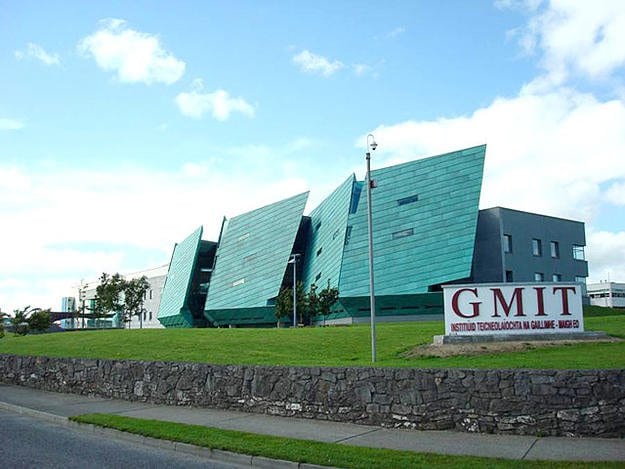
GMIT Science lecturer Dr Cormac Quigley was one of the big prize winners at the 2019 Education Awards.
Dr Quigley, who lectures in Chemistry & Forensic Science, was awarded ‘Best Use of Technology’ at the recent Education Awards in Dublin.
The Education Awards were established in 2019 to promote innovation and excellence in teaching at third level education.
Dr Quigley, who was also a recipient of the 2017 GMIT President’s Award for Teaching Excellence, led a project entitled ‘Blending Chemistry’.
Her project was about finding innovative ways to improve on the tried and true method of lecturing by using technology to promote student teacher interaction to teach practical skills.
A key part of this project was the Lightboard studio, the first of its kind in the country, which creates a personalised online workspace that keeps the interactive feel of a traditional classroom.
It enables lecturers to create and distribute online content in real time in a user friendly environment.
Dr Quigley said that innovations in online engagement techniques mean that “student interaction can happen well beyond the boundaries of the traditional classroom and are allowing lecturers to bridge the gap between traditional classrooms and online teaching.”
As students using the lightboard studio complement their traditional classroom time with online activities, it creates analytics that provide feedback on student improvements.
This makes it possible for teachers to implement evidence based strategies to improve the programme experience for everyone.
Dr Lisa Ryan, Head of the Department of Natural Sciences, said, “We are delighted with the many innovations in teaching that our staff at GMIT have been involved in.”
“Dr Cormac Quigley has been instrumental in driving innovation forward in the School and the Institute.”
To be clear, we are not opposed to regulating the buskers in some way.
But we believe these bylaws as drafted will do more harm than good.
In our opinion, they would either be unenforceable, or they would make Shop Street into a cultural desert, eliminating the reason the Latin Quarter is loved by tourists and Galwegians alike.
First, let’s take a serious look at why these laws came about.
What surprised us most was the length of the list and the fact that many of the businesses on it are much-loved and well-respected establishments.
Clearly busking is more of a problem than we thought.
Why the bylaws have support
How many of us love and support Galway buskers?
Public submissions on last year’s draft laws show that the vast majority of Galwegians don’t want to see busking gone from Shop Street.
Yet how many of us – as pedestrians – avoid Shop Street like the plague in the summer months?
If you are trying to get somewhere on time, get something done, or even just enjoy a stroll, it’s impassable.
Shop Street is crammed with more and more tourists every year, and if they’re moving at all they tend to exclaim over every cobblestone (bless them).
Now imagine if you weren’t a pedestrian but a brick-and-mortar establishment. You can’t avoid Shop Street if you’re there 24/7.
And it’s not just the crowds, which only become a problem if the performer is good.
Once you hear one tuneless amateur rendition of Raglan Road, it would be torture to hear it again, and again, and again – especially if the performer only knows two other songs.
Pedestrians can simply move on, but that is not an option for the businesses and their employees.
Imagine constantly trying to keep your doorway clear or trying to shout to a customer above someone moaning about letting their grief be a falling leaf for the twelfth time that hour.
Suddenly the support for the bylaws among Shop Street and other city centre businesses becomes far more understandable.
Why the bylaws aren’t a good idea
While we understand the desire to make Shop Street more livable for the businesses (and people!) that actually live there, these bylaws are not the right way to do that.
For one thing, they would severely limit most buskers on Shop Street.
There would be a blanket ban on drum kits, which would outlaw hugely popular groups like Galway Street Club and Keywest, who made their names on our streets.
And any amplification or backing tracks would be forbidden on Shop Street until 6pm.
This means that – since buskers are only allowed until 10 or 11pm – there would be only four or five hours for most of Galway’s buskers to play, and competition for the handful of spots along Shop Street would be fierce.
The bylaws also forbid any action, speech or song that might offend any member of the public.
While this law would likely be used sparingly, it smacks of unconstitutional police-state censorship – and who gets to decide what’s offensive?
If Galway City were serious about enforcing these laws, then almost any song, poem, or monologue could be taboo.
The new regulations also demand that buskers immediately stop a performance once a crowd has gathered.
But again, how could this possibly be enforced?
Buskers would have to stop playing just when the going gets good, or risk paying a hefty fine.
So either they ruin the atmosphere or they (potentially) lose all their earnings. It’s a no-win scenario for them.
In practice, then, these bylaws would be either not enforced (and therefore pointless), enforced only sometimes or only for some people (i.e. unfairly), or enforced all the time – which would cause buskers to leave Galway in droves.
Let’s not even mention the potential drain on resources for the gardaí and the already-backlogged courts that serious enforcement could entail.
Convergence
Are there any other solutions?
Well, yes. The GCBA and the city council could sit down with the buskers to hammer out better regulations.
The buskers already have a Code of Conduct that helps them self-regulate – but if this isn’t working, it would be good for city centre businesses to have some legal recourse.
And most buskers recognise this.
They’re very willing to discuss how best to regulate busking – especially if the only other option would drive them out of the city.
“We want to be a part of the process this time,” she said.
Businesses draw shoppers into town, and unlike buskers they have to pay rent, utilities, and tax – so it’s no wonder they might begrudge the performers their place.
But Galway’s buskers are a massive draw.
In fact, the phrase mentioned most often on Tripadvisor reviews of city centre attractions is “street performers”.
They not only add to the vibrant atmosphere of the Latin Quarter, they pretty much make it.
And they also contribute economically by bringing in foot traffic and expanding Galway’s reputation as a cultural hub.
So while businesses attract shoppers who become audiences for street performers, the performers likewise draw in tourists and other happy wanderers who become customers in the shops.
Both the shops and the buskers are necessary to keep the city we love as prosperous and pleasant as possible.
All stakeholders – including the buskers themselves – should therefore have a say in the bylaws that would regulate them, to make sure they work for everyone.
Two of the world’s leading cardiac experts in have joined a heart health initiative led by Croí Galway.
Professors David Wood and Bill McEvoy have both joined the National Institute for Prevention and Cardiovascular Health established by Croí Heart and Stroke charity to promote research and preventative care for heart disease.
The Institute was first set up in 2014 as an affiliate of NUI Galway, where both men have also taken positions.
Professor David Wood is coming to Galway fresh off a stint as President of the World Heart Federation.
He will be working as an Adjunct Professor of Preventive Cardiology at NUIG after moving from the Imperial College London.
Prof Wood said that he looked forward to collaborating with Professor McEvoy on promoting innovative science and research, and improving teaching programmes for students studying cardiovascular care.
“Preventive healthcare must become both a national and global priority,” Prof. Wood said.
“Prevention through promoting healthier lifestyles, and treating the major risk factors like blood pressure, lipids and diabetes, is the only realistic way to reduce the burden of heart disease and stroke.”
He will be working alongside Prof. Bill McEvoy who is returning to Ireland from John Hopkins University to take up the post of Professor of Preventative Cardiology at NUIG.
He will also be working as a Consultant Cardiologist for Galway University Hospitals and Research & Medical Director at the NIPC.
Prof McEvoy said that Ireland has a proud history of innovation and leadership in the field of heart health.
However he warned that, “like much of the developed world, we now face major challenges in curbing the negative health impacts of obesity, diabetes and an increasingly sedentary western lifestyle.”
Despite advances in care, cardiovascular disease remains the number cause of death in Ireland, he added.
To drive that down the NIPC aims to develop a national and international centre of research and education in preventing cardiovascular disease and promoting heart health.
Key to that work will be promoting collaboration in the fields of cardiac research and education with experts at NUIG and Galway’s hospitals.
Ingersoll Rand industrial manufacturing company has submitted plans for a new research and development building in Galway city.
A planning application has been submitted to the city council for the construction of a new 1,117sq metre facility next to the company’s Thermo King manufacturing plant on the Monivea road.
The project would consists of a new two-storey office building with research laboratories.
Other work involved in the develop includes a test yard to the rear, car parking, and associated works.
In the application Simon J Kelly Architects say that the new office and laboratory facilities are needed to accommodate the growing research group in Galway.
This development is anticipated as being closely linked with the nearby manufacturing facility.
“The primary goal being to expand engineering capabilities to improve product development in terms of quality, delivery, and cost,” the design statement states.
The Thermo King plant in Galway manufactures builds refrigerated trucks and trailers for a wide range of industries.
Over 500 people are employed by Thermo King operations here in Galway.
This new research and development building is on land zoned for Enterprise, Industrial, and Related uses in Mervue Industrial Estate.
It will include office space for 60-72 employees with two laboratories that open directly out onto the test yard.
Submissions can be made to the city council by the public until March 20, and a final decision is due on this application for planning permission by April 10.
Tech giants Hewlett Packard Enterprise (HPE), DXC & Micro Focus, along with facilities partner ISS, have come together to support those facing homelessness in the local community.
Galway Simon Community has been chosen as the businesses’ charity partner of the year.
One of the key goals of the partnership is to raise €60,000 to help homeless people in Galway.
Among other projects, they will support Galway Simon’s ‘Journey Home Fund’, which aims to fit out 12 houses and apartments in 2020.
This will create new homes for approximately 30 individuals and children in Galway who would otherwise be facing homelessness.
The tech giants have also launched a programme of volunteering with Galway Simon that leverages their technical expertise through skills-share projects, which will see over 60 employees involved.
Louise Gallagher of HPE, Chairperson of the Charity Partnership Committee describeed the desire for the onsite companies to make an impact locally.
“Homelessness is such a huge issue nationwide and people who never thought they could be affected are being faced with either the possibility or reality of homelessness.
“For this reason we have partnered with Galway Simon Community whose key focus area is prevention,” Louise explained.
Karen Golden, CEO of Galway Simon Community said urgent action is needed to ensure people have places to call home
Speaking about the partnership, Karen Golden, CEO of Galway Simon Community said urgent action is needed to ensure people have places to call home and that the partnership will help the charity to do this.
“We are delighted to partner with HPE, DXC, Micro Focus and ISS who will be supporting us to make a big impact in the local community by helping us to ensure that people can find their journey to a new home,” she said.
It’s not like you’re stuck for choice but how do you know if you’ve made the right one?
A quick Google search and you can find thousands of different workout styles and plans, some vague, some in depth.
I’m sure that those plans worked for the person writing them and if you were able to maintain what they have laid out, I’m sure they would work for you too.
But what if they’re using some equipment you don’t have access to, what if you find the treadmill boring or find it really hard to motivate yourself to plan out your reps and sets for any resistance training.
If you follow my Instagram you’ll have seen some videos of the training I do to prepare for Tough Mudder but this does not mean that you need to follow along exactly with the same frequency or intensity to be Tough Mudder ready, it’s just the style that works for me.
Exercise plans that can be found online are designed with no one person in mind, they’re not meant to fit your personal parameters or limitations so committing to them can sometimes be an uphill battle.
I’ve been training for years and have fallen in and out of love with tons of different routines and styles.
It’s only recently that I’ve latched onto the calisthenics focused workouts and even then I keep a CrossFit spin involved and that’s the trick – Don’t feel like you’re stuck to any one type of training.
Take the best parts of each discipline and figure out your own by using the FITT principle.
FIIT stands for Frequency, Intensity, Type and Time. I can only use
myself as an example here so let’s look at how I plan.
Frequency –
I train every day, sometimes 2/3 times per day (Working as a personal trainer, I teach a lot of fitness classes).
There are weeks where I train less when things come up or get in the way, that’s going to happen regardless of how often you plan on training.
When you’re trying to figure this out, take a look at how often you’re happy to train.
Exercise should work around your life, not the other way around. Maybe you enjoy a certain type of group class and it’s on twice a week. That’s a hell of a good place to start.
Intensity –
I love the feeling of leaving the gym, knowing I have nothing left in the tank. Lungs burning and hands shaking. For me, that’s the intensity I aim for.
Plan how intense your workout will be based on where you are in your fitness journey. Anywhere from a 10 minute, gentle walk to 30 minutes of incline suicide sprints.
If you’re attending a group class, all of this is planned out for you and if you’re a member of a gym, talk to your instructor and get a plan written up.
Type –
Repping out hundreds of abdominal crunches is all well and good for building endurance in your abs but on its own it’s not going to go too far towards preparing me for a Tough Mudder.
For me it’s the functional style of calisthenics with the fast paced, high intensity of CrossFit mixed in that keeps me in the mindset of “I enjoy this” when planning a workout.
Feeling how comfortable my body is in the more complex movements and obstacles from the calisthenics and the aerobic capacity being able to carry me through from the CrossFit is what determines my “Type” of training.
Time –
How long you’re working out for per session. This can vary greatly depending on the intensity and type that we’ve already figured out.
If I’m training a strict calisthenics routine my workouts can last about 60 – 90 minutes but if I’m going all in on CrossFit for the day my workouts could be 10 minutes.
I make sure to change this regularly for two reasons. !. It keeps my body guessing so I can’t fall into a routine and coast along and 2. It keeps it exciting and challenging.
So if you’re planning out the next stage of your training, all you have to do is fill in each section of the FITT principle with what suits you.
As often as you can manage, as hard as you’re comfortable to go for as long as you’re happy to do it in whatever style suits you best. And there you have it, you are your own personal trainer.
Time to get to work.
For Gym membership information please contact Active 24 Fitness and Leisure @ 09131250 or e-mail us at acaulfield@activefitness.ie to start your fitness Journey today!
The parents of two young girls who were sexually exploited by pedophile in Loughrea have said they are disappointed by the leniency of his sentence.
Adrian Finnerty, of the Athenry Road Loughrea pleaded guilty at Galway Circuit Court to sexually exploiting two schoolgirls in November 2016.
RTÉ reports that the 54 year old used the photo of an 18 year old boy in a suit as his profile pic to entice teenage girls to talk to him.
He would engage in sexually explicit conversations with young girls while maintaining that he was an 18 year old himself.
Detective Garda Ronan Leonard told the court that Finnety sent messages to one 15 year old girl on Facebook he was grooming, asking her for pictures of herself in her underwear.
Detective Leonard said that it was clear from analysing the messages that the girl did not fully understand what he was asking her to do.
A friend of this girl told her teacher, who in turn got in touch with the girl’s mother to express her fears.
Adrian Finnerty also pleaded guilty to sexual exploitation of a 13 year old girl he messaged.
Garda Leonard said the conversation escalated very quickly from making contact to becoming sexually explicit.
A friend of this girl also told her teacher after she said she was going to meet her boyfriend.
The court heard that the girl ended contact with Finnerty when she called his house and it was clear she was speaking to a man.
Evidence gather from his phone showed that Finnerty had been speaking with over 170 girls around the world.
In handing down his sentence Judge Rory McCabe said it was clear Finnerty was grooming the girls, but there was no evidence he ever met them.
He imposed two concurrent sentences of three years for the first offence and two and a half years for the second.
The final 18 months of both sentences were suspended.
After sentencing the parents of both girls said that the sentence for the pedophile was disappointingly lenient.
The local community in Kinvara and across South Galway has been praised for supporting the family of Stephen Ward, who was missing in Malaysia for over a month.
Minister Ciaran Cannon said he was delighted to have received a call early yesterday morning from Ireland’s Ambassador Eamon Hickey in Kuala Lumpur confirming that Stephen had been found safe.
The Galway East TD paid tribute to Stephen’s family, who, ‘despite enduring several weeks of worry and uncertainty, have never given up hope of finding Stephen and bringing him safely home’.
“I also wish to pay tribute to the support of the local community in Kinvara, the untiring efforts of my colleague Councillor Joe Byrne, and the people from across South Galway and Ireland who have offered Stephen’s family active support, prayers and good wishes.
“The most important thing now is that Stephen has been found safe and well and can be reunited with his loved ones,” he said.
The increasing number of jobs in South Galway’s hospitality sector has been welcomed by Galway East TD Ciaran Cannon.
This comes as two of the region’s foremost hotels put up advertisements for a number of jobs.
The Merriman in Kinvara and the Lady Gregory in Gort are advertising for jobs which range from catering positions to lifeguards and porters.
Minister Ciaran Cannon said that the future is bright for the hospitality and tourism sector in the region, especially in light of the growing Government investment in core assets such as Coole Park.
He said that this not only indicates an increase in business but also a good confidence in prospects for the 2019 visitor season.
Minister Cannon commented: “This confidence has a solid foundation, particularly when one takes into account the constant traffic through Kinvara to the Burren and Kinvara`s natural draw for visitors through its scenic coastline and the attraction of Dun Guaire Castle.
“The Kinvara Boardwalk, when completed, will create an entirely new layer of possibility for the local tourism sector and the investment of €125,000 in seed funding for the project, under the Rural Regeneration and Development Fund (RRDF), will get this work off to a flying start.
Minister Cannon added: “I am also confident that the investment of €250,000 in a core regional asset such as Coole Park, also under the RRDF, will ensure another boost to visitor numbers in South Galway and by extension, a boost to related jobs.”
The College of Arts, Social Sciences and Celtic Studies and the J.E Cairnes School of Business and Economics were both declared the best of their kind in Ireland at the 2019 Education Awards.
The Eduation Awards were established in 2017 to recognise and encourage extraordinary achievements in third level education.
NUI Galway was nominated in two categories, Best College of Business and Best College of Arts and Social Science, taking home both awards.
They were chosen by an independent panel of judges who praised them, not just on the quality of what happens in the classroom, but for their impact in the community with industry partnerships, collaborations and research.
Professor Cathal O’Donoghue, Dean of the College of Arts, Social Sciences and Celtic Studies said that in the past 18 months the college has worked hard to ensure its appeal, launching multiple successful new programmes and producing incredible research for the benefit of society.
“It is wonderful for the efforts of all colleagues in making this happen to be recognised at the 2019 Education Awards,” Professor O’Donoghue said.
Professor John McHale, Dean of the College of Business, Public Policy, and Law at NUI Galway also said he was delighted with the win for the J.E Cairnes School.
“This incredible achievement is truly representative of the efforts of all colleagues and reaffirms our commitment within the University to creating transformational opportunities for our students.”
J.E Cairnes School of Business and Economics
The top prize of Overall Excellence in Education was awarded to the National College of Ireland.
NUI Galway was also shortlisted in multiple other categories including Best Education Outreach Award’ for NUI Galway Youth Academy, ‘Best Online Learning Experience’ for the Centre for Adult Learning and Professional Development, ‘Career Impact Strategy Award’ for the Career Development Centre, ‘Best Marketing/Communications Team’ for the J.E. Cairnes School of Business and Economics, and ‘Best Business and Third Level Institution Collaboration’ for Deloitte and NUI Galway.
The Local Enterprise Office here in Galway is looking to the future with an event for local businesses on ‘Exploring New Markets’.
Next week is Local Enterprise Week, and with so much uncertainty on the horizon, its important that businesses in Galway have every possible option at their disposal.
That’s why the Galway LEO has invited speakers for a ‘Exploring New Markets’ event to provide businesses with the information they need to expand and find new customers overseas.
Professor Alan Ahearne, Director of the Whitaker Institute at NUI Galway, will be discussing Brexit, putting it in its economic context and laying out potential impacts and options.
Simon McKeever, CEO of The Irish Exporters Association, will discuss the export market and what supports are available for businesses looking to find overseas customers.
OnePageCRM founder and CEO Mic Fitzgerald will talk customer support and representatives from the patent office will be on hand with advice about protecting your business at home and abroad.
This free enterprise support workshop will take place on March 6 at the Connacht Hotel from 9am – 12:30pm.
Plans for a 20Mw solar farm and battery storage facility near Athenry have been refused by An Bord Pleanála.
Galway county council had previously rejected the solar farm in the area of Toberoe, Caraunduff, Caherbriskaun and Rathmorrissy townlands near Athenry last June.
That decision was appealed to the higher planning authority by Soleirtricity Ltd of Fitzwilliam Place, Dublin.
An Bord Pleanála decided to uphold the county council’s original decision to refuse permission.
The development would have consisted of a farm of photovaltic panels with four transformer substations and, and forty 1Mw battery storage containers.
In deciding to refuse permission An Bord Pleanála took into consideration the proximity of the solar farm to the M6 and M17/18 motorways which it was felt would pose a danger to drivers.
The authority felt that glint and glare from the panels may “impair driver’s vision and cause distraction and have adverse effects on road safety.
It was also said that the project wpuld interfere with residential and visual amenities of this rural area, and have a negative impact on the visual landscape.