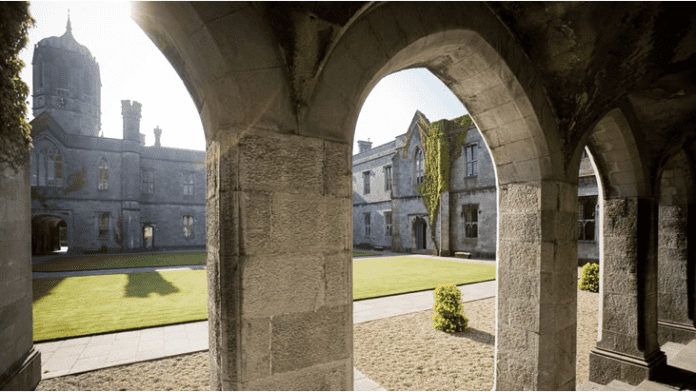
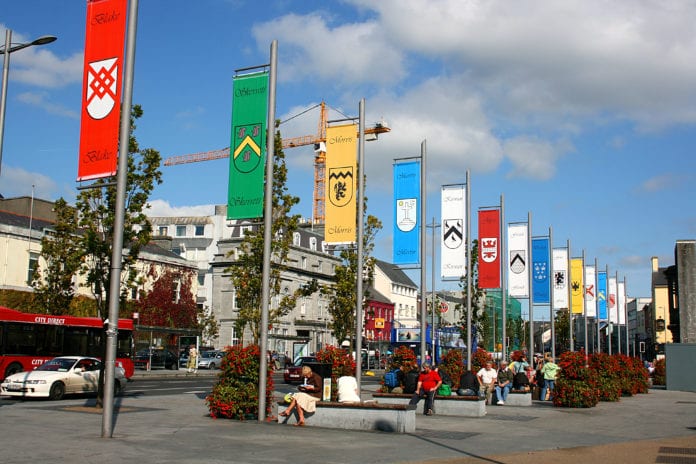
Funding has been granted for essential repair and conservation works to six historic buildings in Galway City and County.
The councils have been allocated €168,000 for six projects under the Historic Structures Fund this year.
Minister of State for Heritage Malcolm Noonan last week announced €4 million in funding for 78 heritage projects around the country under the HSF.
Minister Noonan said “These awards celebrate the richness and diversity of our built heritage and help to preserve our connections to past generations”.
In Galway City, funding has been awarded for two projects at the Poor Clares Convent on Nun’s Island, and Francis Cottage at Coolough Menlo.
The convent requires repairs to the roof of the east wing, the eastern half of the southern slope, and to the central pediment of the three-storey building.
The city council has been awarded €41,723 to carry out these repair works.
At Coolough Cottage, €14,140 will go towards sistering of the existing joists, and repairing defects discovered during thatching work last year.
Three projects by Galway County Council at Kilcornan House in Clarinbridge, the Neo-Gothic church at Kylemore Abbey, and St Peter & Paul’s Church in Ballinasloe have been allocated €35,000 each.
At the Farmyard Coach House of Kilcornan House, essential repairs will be carried out on the roof, and other refurbishment and conservation works meant to keep it in use.
Works on the Neo-Gothic church at Kylemore Abbey will involve repairing cast iron gutters, and removing gargoyles to address leakages in the roof, before reinstating them.
St Peter & Paul’s Church requires repairs and restoration works on five stained glass panels in the tracery altar window.
The county council has also been awarded €7,695 for repairs to Keane’s Thatch, An
Trian Lár, Maree, Oranmore under the Vernacular Structures stream of the fund.
The Historic Structures Fund supports owners and custodians of historic and protected structures to safeguard and maintain their properties.
Minister for Housing Darragh O’Brien said that these projects “help to safeguard our rich built heritage, keeping many buildings in use and helping to bring many others back into use.”
He added that there is a knock-on effect of generating employment among “skilled crafts and tradespeople” around the country.
One of the providers of Gaeltacht summer courses in Connemara has announced that they have had to cancel for the third year running.
Coláiste na bhFiann has said that all of their residential summer courses in Galway, Meath, and Donegal have been cancelled this year.
In a letter to parents, Coláiste na bhFiann Chief Executive Caitríona Ní Cheallaigh said that they have cancelled this summer’s courses due to the “extreme rise” in COVID cases recently.
“We did not envisage that we would find ourselves in this situation again after the last two summers without our courses, but again it is with great sadness and disappointment that we must inform you that all Coláiste na bhFiann residential courses will be cancelled again for Summer 2022.”
“We have carried out a risk assessment in the hopes of making sure that our courses could go ahead this summer and with sufficient staff to ensure firstly, the safety and care of your children, and also to ensure a high standard in all aspects of the course.”
As part of the assessment they visited host families in Rosmuc, and other gaeltacht locations, to cover the safety of students, she added.
“After much discussion all week, it became very clear that there are far too many variables out of our control, which we feel would make it impossible to run courses successfully this summer.”
“We are very disappointed to have to make this decision again, but the health and safety of our students and staff and the standard of our courses, must be our primary considerations in any decision we make.”
She said that full refunds will be issued to people who have booked, and further updates will be coming about Coláiste na bhFiann and Cumann na bhFiann events for 2022/2023.
Last year, the government created a €2.2 million fund to support Gaeltacht families that would normally provide accommodation for summer school students.
In 2021, as with the previous year, summer courses were universally cancelled due to concerns among families about the spread of COVID at the time.
Your success as a trader depends on many factors, and the currency pair you trade is one of them.
All pairs are not equal – their characteristics depend on the nature of the currencies of which they’re comprised.
Currency pairs that contain currencies from emerging economies tend to be more volatile and less liquid due to the lesser number of market participants. This makes them more volatile and prone to random price fluctuations.
To maximize the potential of your trading strategy, you need to choose trade pairs that have the level of volatility and liquidity that you require.
Most Profitable Currency Pair in Forex
There isn’t a single currency pair that can be chosen as the most profitable. This is because traders have unique needs and may make profits consistently while trading different pairs on brokers like Oanda.
Some traders enjoy the highly volatile trading environment provided by exotic pairs, while others prefer to trade in the highly liquid market conditions provided by major contenders.
https://unsplash.com/photos/UqILKDhWiFw
However, certain of these possess characteristics that are favorable for most traders. These are usually majors such as EUR/USD and GBP/USD, which are sufficiently liquid and volatile for forex traders of different trading styles to trade. Since these are widely traded by new and experienced traders, they’re often regarded as the most profitable in forex.
EUR/USD
The Euro/US dollar pair is regarded as the most profitable currency pair in forex for the following reasons;
High Liquidity: The European economy is the second-largest globally, while the US is the largest. Therefore, both currencies are the most traded due to the large volume of banks and financial institutions present in the US and European countries.
This high trading volume leads to high liquidity because it makes it easy for the Euro and dollar to be traded. The EUR/USD pair is relatively easy to trade because it is less prone to irregular price fluctuations.
Low liquidity also causes price gaps which make a currency pair difficult to trade.
https://unsplash.com/photos/ZzOa5G8hSPI
Low Spreads and Commissions: The spread is the difference between the bid and ask price. The liquidity of EUR/USD leads to lower spreads and commissions due to the negligible difference between the bid and ask prices.
The low spread is beneficial because it ensures that trade execution and management remain effective. Higher spreads are associated with slippages which can have adverse effects on your trading results.
Sufficient Volatility: All traders require a level of volatility to make profits. Extremely high volatility can lead to unpredictable price movements and provide the opportunity to make a lot of profits in little time.
Low volatility creates a lethargic market environment which can be easier to predict. The EUR/USD pair is widely traded because the volatility is sufficient for traders to profit from, without the random price fluctuations associated with other pairs like exotics.
However, EUR/USD can exhibit random price movements when high-impact news and fundamental data are released.
Sufficient Fundamental Data: There is sufficient and easily accessible fundamental and economic data relating to the US and European economies. This is because the sizes and influences of both economies attract a lot of research from news media and information sources.
Most of these are freely available online and help traders predict price movement. In contrast, finding economic reports and fundamental data on less developed states can be difficult – leading to less informed trading decisions.
Other major currency pairs are also known as the most profitable pairs because they possess these favorable characteristics. These include;
GBP/USD
The British Pound/US dollar is strongly correlated with the EUR/USD. It is also highly liquid and sufficiently volatile.
It is highly impacted by news and fundamental data affecting the economy of the United Kingdom.
AUD/USD
This is also known as the Aussie. The Australian dollar is a commodity currency, and its value is strongly tied to the value of its major exports like oil, agricultural products, and precious metals.
USD/JPY
The Japanese yen is the most traded Asian currency. The economy of Japan is a free market economy that is largely dependent on exports.
The yen is sometimes known as a safe haven currency because investors invest in it as a way of offsetting risk in times of uncertainty and economic instability.
This pair is highly influenced by the exchange rate policies and statements by the Bank of Japan.
NZD/USD
The New Zealand dollar is strongly correlated with the Australian dollar. Thus, NZD/USD major pair is widely traded because the presence of the US dollar in the team makes it liquid enough to be easily dealt with.
While other NZD crosses may move erratically, the NZD/USD is widely sold by new and experienced traders.
USD/CAD
The Canadian dollar is a commodity currency, and its value is strongly tied to the performance of major Canadian exports on a global scale.
While trading this pair, ensure you monitor the prices of oil, natural gas, and other petroleum products. You’ll also need to analyze the exchange rate and economic data of both currencies.
Major forex pairs like EUR/USD provide excellent trading opportunities with favorable conditions like low spreads and commissions. But, to make the best of these pairs, you need to devote time and effort to learning and mastering your trading style and strategy.
Gardaí are appealing for the public’s help in locating a missing man in his 40s who may be in the Galway area.
Miguel Cordosa (41) has been missing from his home in Ashbourne, Co. Meath since last Friday, April 1.
It is believed that Miguel may be in the areas of Limerick or Galway.
Miguel is described as being 5’ 10” in height, shaven and has short brown hair.
When last seen Miguel was wearing a light coloured baseball cap, dark coloured jacket, dark coloured pants and a light coloured t-shirt.
Gardaí and Miguel’s family are concerned for his welfare.
Anyone with information on Miguel’s whereabouts is asked to contact Ashbourne Garda Station on 01 8010600, the Garda Confidential Line on 1800 666 111, or any Garda Station.
Grants for adapting the housing of older people and those with a disability need to be reviewed due to rising construction costs.
Galway TD Denis Naughten said that failing to increase the grant limits will lead to many people being excluded from the schemes, as they cannot meet the shortfall themselves.
The government announced earlier this week that Galway would receive almost €4.5 million to adapt the housing of older people and those with disabilities.
The scheme was allocated a total of €81.25 million in 2022, which was an 8.3% increase in funding on the previous year.
Deputy Naughten said that the increased funding for the scheme is welcome, but took aim at the maximum grant limits.
These are currently set at at €30,000 for those with a disability t carry out adaptation works, and €8,000 for older people.
“Many people will be excluded from the schemes as they will not be able to meet the funding shortfall which will occur due to rising construction costs,” stated Denis Naughten.
“These schemes are incredibly important as they help both older people and those with a disability to continue to live in their own homes and they also help to relieve pressure on our hospital and nursing home systems.”
“That is why the maximum grant rates available must be reviewed and I will be raising this issue with the Minister for Housing in the Dáil next week.”
Carrying water containers filled from the River Cong, 60 students began one of the most educational walks of their lives last week.
Walk for Water, an annual event celebrating the value of fresh water in our lives, proved to be an eye opener for students at Presentation Colleges in Headford and Tuam, and Gort Community School.
Irish Water and Green-Schools teamed up to raise awareness of the 2.2 billion people around the world living without access to safe drinking water.
Part of this was achieved by hosting walks mimicking the conditions many have to endure daily, including one in Cong Woods on the Galway/Mayo border.
With a heavy bag on her back and flanked by students carrying water in recycled milk cartons Colette Flanagan, a Geography teacher at Presentation College Headford was one of those who completed the trek through Cong Woods.
“It was such an educational event. On the bus home the students said they found the walk tiring,” Colette said.
“I just reminded them that in some countries people have to walk much longer, maybe twice a day in scorching heat for water. We had a leisurely walk with a stop to enjoy treats.”
“The walk reminded us all of the importance of access to clean water and how we should be working together to protect and conserve such a precious resource in this country.”
Green-Schools Officer Robert Nelson said that the experience always has a visible effect on students who take part.
“they go home with a greater awareness of what water scarcity is, how important conservation and sustainable development has become,” he said.
“And, of course, with a greater appreciation for the beautiful surrounds of places like Cong Woods.”
Gardaí will be holding a public meeting on crime prevention advice for the public in Claregalway next week.
The public meeting will take place at the Claregalway Hotel on Monday, April 4 from 8pm.
A Garda Crime Prevention Officer will discuss home security, fraud, and cybercrime threats facing the public.
Afterwards, there will be a Q&A session for members of the public to raise any other matters of concern.
The local representative for Muintir Na Tire will also be in attendance and will present on community alert and other topics of community care and safety.
The meeting is free to attend and open to all members of the public.
People attending hospital, or visiting patients, should not have to pay for parking People Before Profit have said.
PBP called for the abolition of these hospital charges after it was reported that the HSE took in millions in parking fees last year, with Galway being the second highest earner in the country.
Newstalk reported that Galway University Hospital earned €657,000 in parking charges last year, which was higher than in 2020.
Adrian Curran, People Before Profit representative for Galway said, “The HSE made over €5.1 million from the car parks of public hospitals around the country last year.
“The average revenue was €244,000 per hospital. The car parks at UHG were the second highest earner, bringing in €657,000.”
He said that parking charges should be abolished for patients and visitors, calling them an “unjust tax” under another name.
“People who are sick have no choice but to attend a hospital. Their recovery is helped by visits from friends and relatives.”
“Why in this difficult time should people be forced to pay for the unfortunate fact that they must visit a hospital?”
Planning permission is being sought for a large expansion of Coláiste Cholmcille secondary school in Connemara.
The GRETB has submitted plans to the county council for a two and three storey extension to the secondary school, which is located between Inverin and Spiddal.
This will consist of classrooms, specialist teaching spaces, social spaces, a multi-purpose hall, a special education needs unit, reception, offices and ancillary accommodation.
The buildings currently on the site consist of the original 1955 school, along with two extensions added in 1995 and 2013.
A design statement for the project says that the new development respects the “scale and gravitas” of the original school.
There are also multiple prefab units in use, which will now be replaced by a permanent extension.
Two ancillary buildings on the site which date back to the 50s will also be demolished to make way for the new wing.
Other works in the project will involve creating new site entrances and internal roadway.
A car park with 45 spaces, along with a set down area, bicycles stands, and a ball court will also be built on site.
Galway County Council is due to make a decision on this planning application by May 1 of this year.
An láithreoir Seán Mac an tSíthigh le linn taifeadadh Báisteach do TG4
Báisteach. It always seems to turn up when you least want it leaving your best laid plans in tatters but rain is a vital resource.
It feeds our rivers, lakes, and reservoirs. It nourishes our soil, enabling our crops to grow and our livestock to flourish.
And it provides each of us with our required daily quota of water. Without it we couldn’t survive.
A new TG4 miniseries of the same name starting next week will explore the science and reality of rain, taking viewers from damp Inis Oírr, all the way to arid stretches of the United Arab Emirates, and further afield.
In this three-part series Seán Mac an tSíthigh uncovers how the story of rain is a global one and plays a pivotal role in cultures and religions around the world.
From water shortages in Ireland, to regenerating landscapes in India and in Kenya, to sponge cities in China, we discover how rainfall impacts lives across the globe.
Episode one, which broadcasts on April 6, unpacks our understanding of rain and the science of the drops of water that fall from our skies.
Seán meets scientist Cormac Ó hAdhmaill at Fermanagh’s Marble Arch Caves to see the impact made by rainfall which fell thousands of years ago.
He also travels to the United Arab Emirates to discover how countries with very little rainfall are using science to enhance their lot.
In the second episode of the series Seán explores the impact rain has on cultures around the world. He visits a holy well in Ireland which contains water which fell as rain hundreds of years ago.
He explores the cultural significance of rain in countries which don’t see a lot of rainfall, and he puts the Child of Prague to the test to keep the rain away for an Irish wedding!
In episode three we travel from Inis Oírr to Arizona to learn about how a lack of rainfall affects people’s everyday lives, and how one Scottish community puts their abundant rainfall to use to regenerate their isolated townland.
Seán visits Skellig Michael to discover how the monks who built a home on this isolated rock in the ocean harvested rainwater to survive.
Presenter Seán Mac an tSíthigh said; “Given our relationship with it here in Ireland you might expect a documentary about rain to be a mundane exploration of the familiar.”
“Yet within that familiarity one can find the extraordinary, from the remarkable engineering feats of early-Christian monks on Sceilg Mhichíl in harvesting rainwater to the cutting-edge technology of cloud seeding in the Middle East where rain is created using planes and rockets.”
“Parts of this series look to the past, examining the intimate relationship our ancestors had with rain and sees how their cultural wisdom can inform us as we face today’s climatic challenges.”
“While filming in the United Arab Emirates for example, I was struck by the ingenuity of society where huge cities have emerged from the desert, but I was also made aware of the fragility of such a potentially unsustainable existence.”
“Our generation carries a burden of responsibility for future generations. We are temporary custodians of our planets climate I think this series offers food for thought as we face the challenges climate change brings with it.”
Ireland is home to some marvellous landscapes and natural locations. It is rightly called the Emerald Isle for its lush green landscapes. Its sprawling vales of green, rolling hills, Historic castles, rugged coasts, and unparalleled hospitality make it a top choice for weddings, be it for couples of Irish origin or otherwise.
Now, planning a wedding is not an easy task, be it in Ireland or anywhere else in the world. It can easily get stressful over a range of things that need to be taken care of (you can change your name easily through a simple deed poll, taking one stressful thing out of the way — given that you believe in that tradition).
Here are some tips you can use to reduce your planning stress for your Big Day in Ireland:
1. Brace for the Irish weather and other eventualities
When planning a wedding in Ireland, it’s vital to remember that the weather may be fickle, so even if your wedding is scheduled during the peaks of summer, it may rain.
The weather in Ireland is mild for the majority of the year, but you really should always have a backup plan in case of unexpected rain. If you’re planning a wedding on the Emerald Isle, be prepared for rain at any time.
Additionally, you must be prepared to handle various other last-minute eventualities, such as your photographer not showing up on time. No matter how well-prepared you are, something may almost certainly go wrong, expect the unexpected to avoid disappointment.
2. Don’t shy away from hiring a wedding planner
Since the wedding industry is relatively smaller in Ireland, you might face some difficulties in managing various aspects of the wedding on your own. This is where you should consider using the services of a seasoned wedding planner.
It is a good idea to engage a planner to assist you with some of the important duties leading up to the wedding day. A planner will be well-versed in this area. With a vast network and expertise, they’ll take care of every detail that you could possibly overlook.
3. Ensure that you have checked various requirements for the religious ceremony
In Ireland, in the case of a Catholic wedding, the couples are required to complete a pre-wedding course. The said course is a way to prove whether the couple is eligible to get married in the Catholic church or not.
Similarly, every religion ought to have its own sets of rules, regulations, traditions, and customs for a marriage. Therefore, you should ensure that you check these requirements thoroughly to avoid any last-minute bummer on this front.
4. Decide on the venue
The venue is one of the most crucial decisions to be made early in the wedding planning process because it influences so many other considerations. Furthermore, Ireland boasts a plethora of beautiful wedding venues, making it even more difficult to pick one.
You can begin your search for venues online, and if you have the opportunity, pay a visit to a venue before making a decision. Note that the venues sell out quickly, particularly on weekends. Therefore, to avoid disappointment, plan your wedding as long in advance as possible.
5. Keep in mind the legalities
In the Republic of Ireland, you must register your desire to marry at least 3 months before your selected day, and in Northern Ireland, you must register at least eight weeks before your chosen date. However, to be extra cautious, it’s best to plan as early as possible.
There are a few more things to think about before the Big Day, including:
Getting an apostille for the birth certificate in case one of the partners is not of Irish origin
Getting a Certificate of Freedom to Marry from the said non-Irish partner’s home country.
Conclusion
You can make your Irish wedding a day to remember for yourselves and your guests by following the tips we have mentioned in this article.
Begin with a clean surface and remove all vestiges of the old finish. Beginning with an immaculately cleaned and prepared surface is the only way to achieve an immaculate finish. The smallest defects in the surface of the wood will eventually make their way to the surface where they will be seen as blemishes and a reproach to your craftsmanship.
If the old lacquer was of polyurethane, you should apply chemical stripper. If your budget permits, a paste will ensure that there is no dripping and splashing. The liquid product is also fine but you will have to be extra careful to not touch or inhale this toxic product.
Use Wood Grain Filler
Filler is a product that can allow you to fill in the smallest cracks and fissures on the surface of the wood. Sometimes this works as a two-part epoxy, that consists of a hardener and a filler. But there are also single component fillers made of polyurethane resin. These filters will allow you to achieve that pristine surface and repair all holes and cracks before you begin.
This can even be used indoors and outdoors. But you should consider the humidity outside. If the air is too humid, the resin will not cure properly and will have bubbles inside. As time goes by these bubbles will impair the integrity of the resin and lacquer above. This will lead to peeling and flaking before long.
But if this is a concern, you can also look for an oil-based filler for your outdoor project. These will require a little more preparation but that is a good thing because you have more time to work with it and get the perfect results. The water-based type will dry very quickly and is simple to apply.
Mix your lacquer
The importance of properly mixed lacquer can’t be understated. Thinner is used to “thin” the lacquer and lower the viscosity. This makes it spread easily. If you will be using an air compressor and sprayer, you will need a much thinner lacquer than if you will be using a brush.
Pour the lacquer into a container and add the thinner to achieve the desired consistency. Lacquer will begin to dry as soon as it is exposed to the air. So, become a master at estimating how much you will need for a single stage of the process and try not to “store” any for later — although this can be done. Just add a little more thinner to the lacquer before resuming your work to return to that same smooth silky consistency you know and love.
Prepare your work environment
You will want to work in a well-ventilated work environment as the fumes from the lacquer can be noxious. It is also imperative to excellence that all dust b removed from the room to avoid the smallest inclusions in the lacquer being laid down. Lay down sheets and protective coatings where needed to protect the environment from all damage as you work. Wear protective gloves, clothing, respirators, and eye shields.
Applying the First Coat
Paint the first coat of lacquer to the furniture provided. With regular coats, you will provide a durable protective shield that will look great for many years to come. But you can also add alkyd oil to the wood to create a high gloss finish with your traditional lacquer. This will not affect the durability of the lacquer being applied.
Now it is time to add the thinner, resin, and a hardener to create the next coat of lacquer. Mix them in a container and equal amounts and mix well before applying over the previous coat, which has dried by this point.
Sand and Check Work
Once the surface has dried, sand the lacquer with 400-grit sandpaper to create the smoothest finest surface that you can achieve. Shine a flashlight or laser beam across the surface to see how even the surface. Apply two coats of lacquer allowing them to dry completely and sand them as well. Then allow these to dry for a full day, before applying the finishing coats.
Move on to the finish coats —Store any lacquer that has been mixed in air-tight containers and use it as quickly as possible. By now you have a good idea of the technique, lacquer, and sand down with 400-grit paper. Be sure to always wipe off al dust as well. Three or 4 more coats should provide a perfectly smooth final coat. There should be no dimples and the surface should be smooth as glass. Finally, clean all your brushes and pack up your work, the final task is to wait a full week for the lacquer to cure completely before the buff and polish can be applied.
A Galway based online art gallery has released a slew of new works by contemporary Irish artists.
Fierce Nice online gallery has announced a bevy of new artist partnerships and released its biggest ever range of fine art print editions.
Fresh arrivals to the Fierce Nice gallery’s fine art print collection include exclusive works by leading Irish contemporary artists Jonathan Dickson, Julianne Guinee, Dee Walsh, Cormac O’Leary, Ann Marie Webb, Gerry Davis and Derval Freeman.
Spanning a wide range of styles and subject matters, this stunning array of new work has been carefully curated to showcase the richness, diversity and vitality of the Irish art scene and should appeal to aficionados of all stripes.
1 of 4
Submerge Art Print by Ann Marie Webb
Sometimes When It Catches The Light, It Feels Like It Could All Just Disappear Art Print by Jonathan Dickson
binary comment
Beyond the Bleak Art Print by Derval Freeman
“It’s an honour, privilege and pleasure to be working collaboratively with such an amazingly talented group of artists”, says Ruan Shiels, founder of Fierce Nice.
“Our online gallery’s collection of contemporary Irish art has grown exponentially over the course of our first three years in business, and the response from customers—not just at home but all over the world— has been overwhelmingly positive and hugely encouraging.
Founded by Galway-based digital entrepreneur Ruan Shiels in 2019, Fierce Nice is an expertly curated online art gallery dedicated to showcasing and selling the work of leading Irish contemporary artists.
The gallery works collaboratively with artists to design and produce exclusive, museum-grade fine art print editions.
Their goal is to support, nurture and champion today’s most exciting Irish artists while providing collectors around the world with an opportunity to acquire remarkable artworks at affordable prices.
To celebrate the host of new arrivals to the gallery and as a thank you to their collectors for their ongoing custom and support, Fierce Nice is currently offering free international shipping on all orders of €150 or more. This special offer will run until April 30.
In the early days of the internet, web pages were nothing like they are today. Simply relaying text was the main goal, so designs were basic, and supported by the limited capabilities of older HTML. With no adaptive elements and little concern for the user experience, these pages reflected the technology and online culture of the time, but times have changed.
Today, websites fuse functionality and design within the scope of constantly evolving tech, and if you run a website yourself, this can be difficult to keep track of. So, how are these changes represented, and what do website creators need to know to stay relevant?
Design Done Right
For a look at a website that embraces and leverages all the key aspects of modern design, consider the casino at Paddy Power Games.
Though the basis of this website is the titles like Rainbow Jackpots and Premium Roulette, the service’s attention is focused far wider than just this element alone. Including moving banners, navigation tabs, and a strictly-maintained theme, there are many components at play, and each understands its place among the whole.
Clarity and Overload
Modern online casinos commonly include hundreds or even thousands of different games. While this selection makes for a lot of content for players, it also introduces an issue of clutter. Solving this issue means finding a balance between reflecting this range of choices, and not overwhelming users with visual noise.
Grand Canyon National Park Launches Free” (CC BY 2.0) by Grand Canyon NPS
The best websites manage this by taking stock of what users turn to the most, what they’re trying to draw attention to, and how much the average person can absorb at one time. In the online casino example, this is demonstrated by the sections on the main page, and how much they offer.
The sets of tabs are small, relaying clear text that’s understandable at a glance. The rewards and bonus banner rotates automatically, featuring eye-catching graphics to keep users interested. The games are each sized so that they’re readable, while still giving a visual indication of what they include. As noted by Visual Hierarchy, many different approaches can be taken here, where each website needs to understand what works best for its specific needs.
Scalability
Working with these elements is the unavoidable contemporary importance of scalability to smartphones and tablet devices. Tech Jury reports that up to 70 percent of web traffic comes from mobile devices, depending on the website and its user base.
This means that mobiles are no longer an option, they’re often the default platform.
The challenge here is that smartphones, tablets, and even desktop and laptop displays all have different screen sizes, and the mobile options also come with touch functionality.
To ensure maximum levels of access, websites need to utilise the latest coding and visual design so not only do the website work across all systems, but they’re also as visually identical as possible. Again, this is a balancing act and one which can take a long time to properly leverage.
20170210_160929″ (CC BY 2.0) by R0YJohan
As the internet takes over the landscapes of information, entertainment, and business, good practice in web design is only becoming more important.
When we use websites in our daily lives, we tend to take design for granted, but it plays a more important role than we realise.
Whether you have a website, are looking to create one, or are just interested in how they work behind the scenes, approaching with a critical eye can reveal just how much hard work they require.
Getting a website right is an art form, and it’s one we can all appreciate if we remember how far they’ve come.
A Boil Water Notice for almost 3,000 homes in the Gort area is now entering its third month, as repair works are underway.
Irish Water imposed the notice for homes and businesses on the Gort Public Water Supply on February 2, following failures at the water treatment plant.
The boil water notice applies to approximately 2,800 customers of Irish Water in the Gort area.
The problem has been identified as a damaged filter in the water treatment plant, and after waiting a long time for specialist equipment, repair works are now underway.
“We have carried out an assessment of the damaged filter and have found that the entire filtering mechanism in the failed filter had to be replaced,” said Ronan Daly of Irish Water.
This will include replacing all pipework, nozzles and gravel/sand filters in the system.
“To reduce the risk of this problem re-occurring, the mechanism will also be replaced in the second filter unit. This will then provide greater security of treatment.”
Pipe work in the repairs was due to be completed on Friday according to Irish Water.
“Thereafter, the new filter sand will be installed and commissioned. We will then move to the second filter, removing the existing filter mechanism and replacing it with a new system.”
A separate boil water notice for roughly 350 homes in the Eyrecourt area also remains in place after five weeks.
A Galway man’s health scare, seemingly innocuous at first, ended with him needed a heart transplant.
Owen Trill received a heart transplant at the Mater Hospital at the age of just 38 after falling ill at work.
“I had just finished up work for the weekend and I really wasn’t feeling well. I was very short of breath, and it was awful trying to get up and down the stairs,” he said of his experience.
“I went to see the doctor and when they saw that my heartrate had dropped, I was rushed up to my local hospital in Galway.”
It was only when he arrived at the hospital that Owen discovered just how serious his condition was.
“They discovered that I had clots in my lungs and kidneys, and that I could be going into multiple organ failure. That’s when they rushed me to the Mater.”
In the Mater, Owen was told that he had a virus in the muscle of his heart. One that was bad enough that he would need a heart transplant.
He said that is was a “real shock” to hear this (understatement) as he was only 38, but also decided that he just had to get on with it.
“The staff in the CCU and my surgeon, Professor McGuinness, were all just incredible. They really looked after me and within a couple of weeks I was fit enough to receive a transplant.”
A match was found for Owen, and surgery was scheduled for 6:30 in the morning. A heart transplant can take up to six hours, so it makes sense to get an early morning start.
But of course you are under heavy general anesthetic for such a challenging operation, so it wasn’t 11:20 the following night that Owen woke up.
“I was so determined to get better and to get home. I just wanted my life back. My aim was to walk out of the hospital on my own, and the day my brother collected me, I did just that.”
“I’m doing really well now, I’ve been able to get my life back and get back to what I love, fishing and tying flies.”
Six weeks after getting his new heart, Owen was back doing just that, though it was another seven weeks before he was able to go back to fishing.
He is full of praise for the level of care he received during his time in hospital, squarely giving it the credit for his rapid recovery.
“Nobody else in the world has gotten back out so quickly after a transplant and I put that down to my determination and the fantastic care I received in the Mater, it made all the difference.”