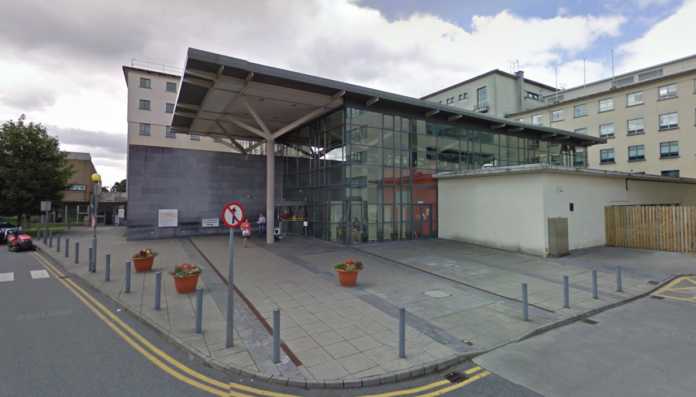
A priest caught masturbating in his car at Blackrock in Salthill received a one month suspended sentence at Galway District Court.
Jerry Carey (60), with an address in Nenagh, Co. Tipperary, pleaded guilty to intentionally engaging in offensive conduct of a sexual nature.
The court heard that on August 3 of last year, Gardaí received a report of a man masturbating at Blackrock, where Mr Carey was caught in his car.
Mr Carey’s solicitor said that his client was “shocked and remorseful” at his own behaviour, and felt deeply ashamed. That day he had come up to visit Galway
He stepped aside from his professional duties as a priest immediately afterwards, and had been dreading this day for the six months the solicitor added.
At the time he was under a lot of stress due to recent health issues, the court heard. He had no previous criminal convictions, and had never come to Garda attention.
Judge Mary Fahy said that Blackrock is a public area, where families go to swim and relax by the beach, and that this type of behaviour is “highly upsetting” for people to see in public.
She accepted that he was in his own car, but added that he could clearly be seen, as someone reported him to the police.
Judge Fahy sentenced Mr Carey to one month in prison, and suspended the sentence for a year, on the condition that he stay away from the area of the offence.
The court granted leave to appeal the sentence, with recognisance fixed at €200 of his own bond.
Schools in Galway City are being encouraged to work with the city council on creating pedestrianised school streets during drop off and pick up times.
Galway City Councillor Owen Hanley said that the School Streets programme can create a safer and calmer environment for parents and children walking and cycling to school.
The programme involves creating a temporary restriction on motor traffic during school drop off and pick up times in the morning and afternoon.
A pilot programme for the project with Scoil Iognáid in the westside of Galway City began last year.
This saw Palmyra Row, Palmyra Avenue and Raleigh Row pedestrianised between 8:15am and 9:15am, as well as 1:15pm to 2:45pm.
Local residents retained access to the streets during this time, as did ‘blue badge’ holders or cyclists accessing the school.
This project was funded by the National Transport Authority, and delivered with the support of the Green-Schools Travel programme.
“School streets are a practical way we can make walking and cycling to school a more realistic option for parents, children and staff,” Owen Hanley said.
“There’s never been a better time to make positive changes to the way traffic moves at peak times,” said Councillor Hanley. “School streets involve installing traffic calming measures and creating more safe crossings.”
Councillor Hanley said that parents have been in contact with him to express concerns about the “dangerous environment” children face on their way to school.
The Social Democrats Councillor said that a project like this should be part of a transport strategy that includes public transport and cycling infrastructure.
“Ensuring that access to schools are a safe landing point for anyone walking or cycling is vital, and when combined with public transport and cycling infrastructure connects the dots on complete journey from the home to school that is safe, fun and quick.”
He added that this year it is expected that more collaborations with schools across the city will be possible as the city draws down NTA funding for school transport measures.
Owen Hanley said “We need schools to engage with the concept and work out with the Council the best way we can create school zones that works for everyone.”
The number of people receiving pandemic unemployment payments in Galway has continued to decline for the third week in a row.
There are 25,082 people in Galway who are receiving a pandemic unemployment payment today, down 222 on last week.
The Department of Social Protection is paying €140.34 million in PUP to 468,847 today. This is 4,566 fewer than last week.
Galway remains the county with the third highest level of PUP recipients, behind Dublin (147,241) and Cork (47,535).
But in the past week Galway has seen 450 people close their PUP account with the Department as they were returning to work.
Minister Heather Humphreys said that the continuing declines reflects that economic activity is ongoing in essential industries.
“But it also reflects the ability of employers to find innovative ways to operate within the public health guidelines including through the use of remote working and online service delivery.”
“It is really important that where possible, employees are facilitated in terms of working from home.”
“I want to commend employers for their efforts in facilitating remote working to date and I am encouraging them to maintain these arrangements, where possible, while Level 5 restrictions remain in place.”
Construction is the sector that has seen the largest decrease in the number of people receiving PUP this week, with 1,210 fewer people receiving the payment compared to last week.
The Manufacturing sector has seen the number of PUP recipients decrease from 26,618 last week to 25,862 this week. This is followed by Wholesale and Retail sector, which has seen the number of PUP recipients decrease from 75,196 last week to 74,589 this week.
These figures are in addition to the 188,543 people who were on the Live Register at the end of January.
One additional death related to COVID-19 to COVID-19 has been reported by the Department of Health today, which occurred in January.
There have also been 687 new cases reported to, of which 40 are in Galway, the fourth highest figure in the country.
The 14-day incidence rate in Galway is now 257.7 cases per 100,000 people. There have been 665 cases reported in the county in the past fortnight.
As of today there are 540 people in Ireland hospitalised due to COVID-19, of whom 120 are in the ICU.
Dr Ronan Glynn, Deputy Chief Medical Officer said “While the number of daily cases and the number of people in hospital and critical care remain high, we continue to make progress.
“In the last 24 hours, we have had no new admissions to critical care, the first time this has happened since St. Stephen’s Day.”
“This is one more tangible signal of the efforts that people continue to make and how those efforts are impacting positively on the trajectory of COVID-19 in Ireland. Please stick with this over the coming weeks.”
There have now been a total of 4,319 COVID-19 related deaths in Ireland, and 220,273 confirmed cases since the start of the pandemic.
Validation of data at the HPSC has resulted in the denotification of one death and six confirmed cases.
The COVID-19 data hub provides up-to-date information on the key indicators of COVID-19 in the community
Professor Pete Lunn, Head of the Behavioural Research Unit, ESRI said that data from surveys tracking public opinion show that 79% of people believe preventing the spread of the disease is more important than the burdens imposed by the lockdown.
“This pattern helps to explain how measures of compliance have been rising in recent weeks and months, despite the frustrations that people feel.”
“Just because we feel a particular way, does not mean that this feeling dictates our behaviour. Rather, the large majority of people in Ireland support the restrictions and are sticking to them, despite the frustrations.”
More than €4 million has been allocated for housing adaptation grants in Galway City and County this year.
The Housing Adaptation Grants are meant for specific home improvements that can help older people and those with a disability to live independently at home.
Minister for Housing Darragh O’Brien today announced a €75 million funding for the scheme this year.
The funding for this scheme is divided in a mix of 80% from the Exchequer, and the remaining 20% coming from the local authority.
Galway County has been allocated a total of €2,920,479 for the scheme in 2021, which includes €2,336,383 from the government and €584,096 local funding.
Galway City is allocated €1,153,836 four housing adaptation grants this year, €923,069 Exchequer funding and €230,767 Council funding.
Galway Senator Aisling Dolan welcomed the announcement, saying that these grants help people to live in their own homes as much as possible.
“These grants are important as they help our older citizens and those with disabilities and mobility issues in Co. Galway to remain living independently in their own homes for longer should they wish and will also facilitate early return from hospital.”
Grants of up to €30,000 are available to assist people with a disability in carrying out necessary works to make a house more suitable for their needs.
Older people can avail of grants of up to €8,000 for necessary repairs or improvements carried out and up to €6,000 for mobility aids.
Senator Dolan said that she receives many requests for information from people seeking to learn about getting a housing adaptation grant, both now and when she was on the county council.
“This fund will now mean more resources available to help older people living on their own in our towns and villages”
Senator Dolan added that this scheme will also have the additional benefits of creating business for local builders, and reduce pressure on the health system by keeping people out of hospital when they can still live at home.
Minister of State for Local Government Peter Burke added “These grants have an huge impact on the quality of life of the many beneficiaries and play a vitally important role in helping people with a disability and people who are reaching an age in life when they are less mobile, to continue to live independently in their own homes.”
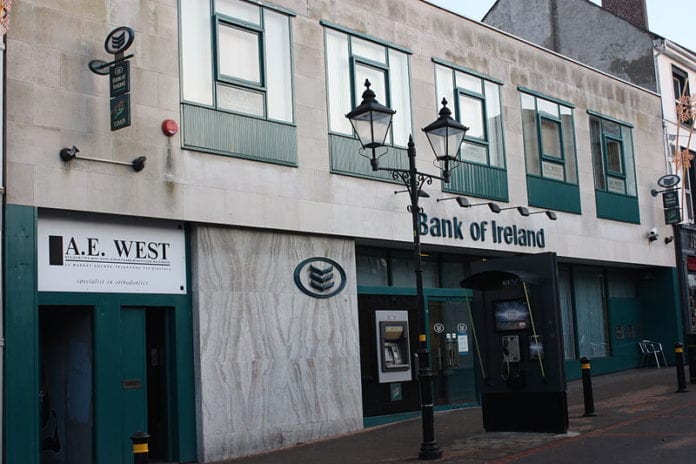
Today’s announcement of branch closures across the island by Bank of Ireland is the “wrong decision at the worst possible time”, a Galway West TD has said.
Mairéad Farrell TD made the comments after the bank announced this morning that it will close over a third of its branches in the Republic and more than 50% of its branches in the North from September.
The announcement comes less than two weeks after Ulster Bank announced its withdrawal from the market in the south.
“It is a huge blow for customers and staff,” said Deputy Farrell. “Bank of Ireland has attempted to justify this announcement based on a fall in branch visits over the past twelve months.
“This is hardly surprising given the entire population has had its movements significantly restricted in response to a public health emergency.”
The Sinn Féin TD argued that in reality, the bank is using Covid-19 for cover, punishing customers for following public health regulations.
“This is not just a cynical move, but a slap in the face that will hurt customers, staff and communities,” she said.
“This knee-jerk reaction will leave vulnerable customers without access to essential services.
“How can Bank of Ireland engage with and prepare these customers for branch closures when public health restrictions are in place? Why was there no consultation and no stakeholder engagement?”
Deputy Farrell said that the only conclusion she can draw is that they ‘have no regard for their customers’.
“Today’s announcement will further damage communities that have already been economically left behind by government policy over the past decade.
“Research has found that bank branch closures reduce SME lending growth by 63 percent in affected areas, rising to 104 percent when it is the last branch in the area.
“We support the call of the Financial Services Union for a moratorium on branch closures until the end of 2022; once this pandemic has ended.
“I will be writing to the CEO of Bank of Ireland, the Minister for Finance and the Governor of the Central Bank in light of today’s announcement.”
Deputy Farrell said that they should reverse the decision immediately and commit to a moratorium on branch closures until the Covid-19 pandemic ends.
NUI Galway Students’ Union have today launched their programme of Seachtain na Gaeilge events which runs until 18 March.
Open to the entire NUI Galway community and suitable for Irish speakers of all levels, the campaign aims to connect speakers whilst making the language accessible and fun for all.
Events taking place include virtual coffee mornings, yoga classes, bingo, a pop-up Gaeltacht and speed friending.
The Union of Students in Ireland (USI) is hosting a range of seminars examining topics like careers in the Irish language and a talk with Irish language activist Linda Ervine.
Students’ Union Oifigeach na Gaeilge Erin Mac An tSaoir said, “There has been a huge increase in interest in the Irish language over the pandemic with people trying to learn it for the first time or brush up on what they might have forgotten by using apps like Duolingo.
“Our own Irish language courses with Conradh na Gaeilge earlier this semester were fully booked with a long waiting list.
“It’s so heartening to see the growth of the Irish language at this time and the way people are using it to connect with each other whilst apart.”
Students’ Union Vice-President/Welfare and Equality Officer Róisín Nic Lochlainn added that NUI Galway is a bi-lingual University, “so we are delighted to have these events which show that the Irish language is a living, breathing part of our community.”
“We want everyone to feel welcome at these events and to get used to using Irish everyday – whether it’s in online lecturers, at a Pop-Up Gaeltacht, or while out for a socially distanced walk,” said Róisín.
The Saolta University Health Care Group is looking for healthcare professionals who are qualified to administer vaccines for a three month contract, which could be extended.
Saolta is recruiting nurses, midwifes, doctors, advanced paramedics, paramedics, emergency technicians and pharmacists for the roles which will be a minimum of 19.5 hours and maximum of 39 hours per week.
The Group is also seeking Health Care Assistants and administrative staff to support the vaccination centres.
Vaccinations Centres will be located in Galway, Sligo, Letterkenny, Castlebar, Carrick on Shannon and Roscommon and the vaccination programme will run seven days a week, 12 hours per day.
Paul Hooton, Chief Director of Nursing and Midwifery at the Saolta University Health Care Group is leading out the vaccination programme on behalf of Saolta alongside colleagues in Community Healthcare 1 and Community Healthcare West.
Mr Hooton said that the COVID-19 vaccination programme is going to be one of the biggest immunisation programmes ever undertaken in the country.
“Our aim is to protect people and reduce the illness and deaths caused by this virus,” he said.
“Since the end of December across the Saolta Group we have administered more than 15,000 first doses and 10,000 second doses of the COVID-19 vaccine to frontline healthcare workers.
“We will shortly be moving towards supporting the public vaccinations centres which will enable the wider vaccination of the general public over the coming weeks and months in a safe and efficient way.”
Mr Hooton said that Saolta is looking for clinical staff to help with the delivery of an effective COVID-19 vaccination programme to frontline healthcare workers, community services and the wider community.
“Specifically we are looking for registered healthcare professionals including Nurses, Midwifes, Doctors, Advanced Paramedics, Paramedics, Emergency Technicians, and Pharmacists who are available to work a minimum of 19.5 hours per week to work in the COVID-19 vaccination programme,” he said.
“We are also recruiting Health Care Assistants and administrative staff to support the vaccination centres.
“We will provide the training necessary and every member of the vaccination team will be given the COVID-19 vaccine. Details are available on the Saolta website at the following link: https://www.saolta.ie/jobs/saoltacovid19vaccteam0221.”
A burst water mains is causing outages to homes and businesses in the Ballybane area of Galway City today.
Irish Water has reported a burst water main on the Dublin Road in Galway City this afternoon.
Repairs to this may cause outages to homes along the Dublin Road and surrounding areas of the city today.
These repair works are currently expected to be completed by 4pm on Monday.
People affected by these outages are advised that it may take 2 – 3 hours after these repairs are completed before their full water supply is restored.
Updates on this situation can be found on Irish Water’s Supply and Service website page.
A new documentary released today gives a snapshot into how people living with dementia are using music and technology at home.
‘Music, Technology & Dementia’ by Galway native Lisa Kelly was released today to coincide with World Music Therapy Day.
Lisa Kelly, a music therapist and Research Assistant with Lero, was providing music therapy before the pandemic in a residential care facility for people living with dementia.
“The residents’ response to music was incredible and provided them with a way to connect when verbal interaction became difficult,” Lisa said.
“The Covid-19 pandemic necessitated us to move to technology to stay connected with one another while safely staying apart, so I was no longer able to provide in-person services.”
Lisa has recently started a PhD on this topic, and said her thoughts went out to those living in rural or isolated areas who may have reduced mobility, or live alone.
“Could technology and online working be the solution to bridge this gap and help people living with dementia through music?
“It sparked my curiosity. It spurred me to begin my PhD studies at the interface of music therapy, technology and dementia.
“As part of this, I wanted to connect with people living with dementia using technology and music daily, as well as those who facilitate online music programmes for people with dementia.”
Among the contributors to the documentary which was funded by Lero, the Science Foundation Ireland Research Centre for Software, is Dr Hilary Moss, MA Music Therapy Course Director at the University of Limerick.
Dr Hilary Moss said we know that people can still respond to music in the later stages of dementia.
“When they can’t have a conversation with you, they can sing a song, recall song lyrics, even still play instruments that they learned during their life.
“I think it’s really important that we investigate and develop online music therapy services for people living with dementia.
“We are keen to support people who are living at home. We all want to remain at home for as long as possible,” said Dr Moss.
An eight-week ‘Start Here’ social media campaign has been launched by NUI Galway’s Active Consent, the Union of Students in Ireland and Galway Rape Crisis Centre.
The national campaign, launched online today, empowers college students and staff with basic information to respond to disclosures of sexual violence and harassment.
The new campaign tools include a downloadable card of tips on disclosure, a series of short videos that work through these tips, and open access to Active* Consent’s 45-minute eLearning module on consent, sexual violence and harassment.
Active* Consent and the Union of Students in Ireland have partnered with Galway Rape Crisis Centre to turn these findings into a set of tools that can give college students and staff access to key information.
“I would like to pay tribute to NUI Galway’s Active* Consent, USI and the Galway Rape Crisis Centre for developing the “Start Here” campaign,” said Minsiter Simon Harris.
“My Department is determined to tackle sexual harassment and sexual violence in our Higher Education Institutions and this eight-week social media campaign will help empower students and staff with information and advice on how to respond practically and compassionately to disclosures of sexual violence and harassment.”
Over the next eight weeks, ‘Start Here’ will offer:
Basic do’s and dont’s of receiving a disclosure
Key information on support services and how to access them nationally
Current research statistics on college students’ experiences of sexual violence and harassment
Open access to Active* Consent’s self-guided 45-minute eLearning module on consent, sexual violence and harassment
The opportunity to access online student-tailored disclosure training by Galway Rape Crisis Centre
Ongoing interactive content diving deeper into all of this information in detail through quizzes, stories and other forms of direct engagement
Charlotte McIvor, co-lead of Active* Consent and lead on this campaign with Alexandra Black at NUI Galway, said that key to Active* Consent’s mission is “doing the research and then creating tools and experiences that build knowledge and engagement for students and staff regarding consent, sexual violence and harassment.”
“‘Start Here’ meets this aim by taking an intimidating topic for many and translating it into sound bites and concrete steps that college staff and students can make use of in the real world.”
As part of this launch, Active* Consent also announced the full details of their staff training programme which is now accessible, including a 15-minute animation to introduce all college staff to basic information about consent, sexual violence and harassment and a First Point of Contact training programme created in partnership with Galway Rape Crisis Centre.
Union of Students in Ireland President, Lorna Fitzpatrick said that USI is delighted to partner with the Active* Consent team on this national campaign aiming to advise students on how to best support their friends or classmates during and after a disclosure of sexual violence or harassment.
“The results from the Sexual Experiences Survey emphasised the crucial role friends and other peers play when it comes to supporting survivors of sexual violence and assault.
“The main objective of this campaign is to provide students with practical knowledge and understanding of how to support someone who discloses to them.
“This campaign has the potential to make a significant impact on creating a supporting environment for survivors of sexual violence, assault and harassment.”
Cathy Connolly, Executive Director, Galway Rape Crisis Centre, added that Galway Rape Crisis Centre has been supporting survivors of sexual violence for almost 40 years.
“One of the key things we have learned is that the response a survivor receives when disclosing their experiences can have an impactful and long lasting effect,” said Cathy.
“GRCC are delighted to be partnering with the Active*Consent team and the Union of Students in Ireland on this national campaign.
“The campaign aims to give students and young people access to information on how to best support their friends and themselves when a disclosure of sexual violence or harassment happens, and offers the opportunity to build further skills in this area.
“Part of GRCC’s mission is to work towards ending cultural and societal tolerance of sexual violence and this campaign is a positive step in this direction.”
Six more dealths related to COVID-19 have been recorded by health officials, who this evening also reported an additional 612 cases of the virus in the state.
Of the new cases, 33 are in Galway – which now has the fifth highest 14-day incidence rate in the country with 278.6 cases per 100,000 people.
A total of 719 cases have been confirmed in the county over the past fortnight.
The median age of the deaths reported today was 63 years and the age range was between 41 and 86 years.
72% of today’s cases are under the age of 45, while the the median age of the new cases is 32 years old.
As of 8am today, 554 COVID-19 patients are hospitalised, of which 133 are in ICU. There have been 19 additional hospitalisations in the past 24 hours.
Deputy Chief Medical Officer Dr Ronan Glynn said that since the first case of COVID-19 was confirmed in Ireland last February, our lives have changed in ways we never thought possible.
“More than 6,300 people on our island have lost their lives with COVID-19. We remember them, and their families and friends, as well as the many people who remain seriously ill or who are dealing with long-term health issues because of this disease,” said the Deputy CMO.
“The response of colleagues across all parts of our health system has been remarkable. We should be extraordinarily proud, and take great heart, from the dedication and resilience which has been – and continues to be – shown by everyone involved in this response.”
Dr Glynn sad that almost all sectors and communities have experienced loss and have been tested in ways unimaginable to us this time last year.
“This pandemic and the public health response to it has had a profound impact on lives and livelihoods,” he said.
“But it has also demonstrated the best of us as a people, working together and buying in as a collective to what has been necessary to protect one another.
“Last Spring, we met the challenge presented to us with collective enthusiasm. Ironically, while that enthusiasm has understandably waned and gone, there are more concrete reasons for hope and optimism now than at any time over the last 12 months.”
Galway County Council has responded to widespread illegal dumping and littering in the county by allocating more resources to tackle the issue.
Cllr Evelyn Parsons said that two additional litter enforcement officers are being resourced and a new geo mapping initiative will be be used to combat illegal dumping.
The councillor said that this will be “another huge step forward in identifying non-compliant individuals in this war on waste.”
“People need to urgently take personal responsibility for how their rubbish gets managed,” said Cllr Parsons.
“The Bills office are progressing appropriate legislation for CCTV use which will be another important tool to help identify and prosecute offenders.”
Planning permission is being sought for an overhaul of the Oranmore Community Centre that will include a new all weather spectator stand and external wall.
Oranmore Park Committee has submitted plans for 272 seat covered Spectator Viewing Stand at the existing community centre pitch on the Dublin Road.
The new stand is needed due to “growing importance and interest” in the hurling and football which is the “focal point” of activities at the centre the application states.
“Under the current configuration, during games spectators congregate at the low level enclosure barrier surrounding the pitch area to watch games.”
Due to this, crowds are “completely exposed to the prevailing weather conditions with so suitable cover except the remote shelter of the community centre building and it surrounds.”
The new covered seating stand would be located at the southern end of the site, running parallel to the main pitch.
It is also proposed to carry out works that will enhance the appearance of the centre by replacing the existing external wall and gateway with a more aesthetically pleasing choice.
Galway County Council is due to make a decision on this planning application by March 31.
Robert O'Reilly of Coláiste Éinde, Salthill. Photo: Andrew Downes, xposure.ie
Transition Year students from Galway and across Ireland are taking part in the Bar of Ireland’s annual ‘Look into Law’ Programme which kicked off last week.
The programme, now in its sixth year, has a schedule of recorded webcasts and content aimed at giving TY students a first-hand look at the life of a barrister and how the justice system works.
It usually has a maximum of 100 participants, with a minimum of 20% of places reserved for students from DEIS schools – but this year because of Covid, it will be run entirely online over five weeks.
Some 10,000 students are participating from 320 schools across the state this year, and more than 50 of the schools participating are DEIS schools.
Galway schools are well-represented on the programme too, with almost 20 schools and 618 students taking part from across the city and county.
Pictured tuning into The Bar of Ireland’s Look into Law Transition Year Programme last week is Robert O’Reilly, Coláiste Éinde, Salthill, and his mother Paula McGrath. Photo: Andrew Downes, xposure.ie
Each week a new pre-recorded module will be shared with teachers and students, which will begin with an introductory ‘Faces of the Bar’ where a selection of barristers will share their career highlights and experience with students.
Chair of the Council of The Bar of Ireland, Ms Maura McNally SC who opened the programme last week, said that the core aim of the Look into Law programme is for students to understand the mechanics of law, but also to experience the human face and realities of those working in the field.
“The Programme is always oversubscribed so while we are sorry to not be in a position to welcome the students to Dublin like we usually do, the silver lining of the situation is that we are able to reach more students with our online version,” said Maura McNally.
“We are looking forward to virtually welcoming our students from Galway, who are always superb participants of the Programme.
“The five modules provide students with a real sense of the Irish legal landscape and hopefully inspire some students to pursue a career at the Bar.”
Ms Katherine McVeigh BL. and Ms Emily Gibson BL. have helped to design the Programme for the 10,000 students and their teachers.
Ms Katherine McVeigh BL. said that students will have the opportunity to hear from some of the most distinguished and accomplished legal professionals in Ireland, including the Chief Justice and Court Presidents.
“The law forms an intrinsic part of our everyday lives and the aim of our Programme is to give students from all backgrounds the opportunity to learn about the various aspects of law, ranging from how to forge a legal career and what happens at trial, right through to the different types of law and the importance of each,” said Katherine McVeigh.
Teachers and students will receive at least two hours of module material each Monday morning comprising recoded webcasts, external links, quizzes and exercise and research material.
The Programme is hosted on a secure platform by The Bar of Ireland and there are options for students to work on creative and research projects during the Programme.
Robert O’Reilly, a Transition Year Student from Coláiste Éinde in Salthill said that he was really looking forward to the 5-week TY Programme with The Bar of Ireland.
“My sister completed the Programme a couple of years ago and is now in her final year studying Law in NUIG,” he said.
“Law has always been an area of interest for me too, so I am excited to get a glimpse into the life of a barrister and learn about Ireland’s legal system through the Programme with TY students across the country”.
Ahead of launching the TY Programme last week, The Bar of Ireland surveyed thousands of participating students on their views and opinions on varying areas such as education, freedom of movement and how Covid has impacted on them.
The findings from the survey will be revealed during The Bar of Ireland’s Justice Week 2021 which runs from March 1 to 5, with a focus on the impact that COVID-19 has had on citizens’ rights and the administration of justice.
After recent spells of sunshine and brighter days across Galway, the spring-like weather is set to continue into the new week with dry and sunny conditions forecast for the coming days.
Met Éireann says that high pressure will dominate for much of this week, bringing some much-needed sunshine in temperatures of around 11 degrees in the afternoon.
Today, Sunday will be mostly sunny and dry in Galway with high temperatures of 10 or 11 degrees in light southeasterly breezes.
Tonight will be dry and clear for the most part, with mist and fog forming in a light easterly breeze. Some dense pockets of fog could develop towards dawn and there is a slight risk of frost with lowest temperatures of 1 to 4 degrees.
Monday is set to be a bright, clear and mostly sunny day, with high temperatures of around 10 degrees mid-afternoon after frost and fog clear gradually throughout the morning.
Monday night will again be mostly clear and dry, with frost and fog possible in parts in cold temperatures of between 1 and 4 degrees Celsius.
Another nice day is in store on Tuesday, which will be mostly sunny across Galway for much of the day and temperatures up to 12 degrees.
Wednesday will be generally dry again but a little cloudier than previous days. There is a risk of some patchy light rain in the south and east, but overall amounts will be small. Highest temperatures of 8 to 11 degrees in a light variable breeze.
Met Éireann’s early forecast for Thursday and Friday and into the weekend is that it will remain dry and bright, but somewhat cloudier than early in the week and a bit colder – with daytime highs of just 5 to 7 degrees and sharp frosts at night.
Mixed-gender software development teams perform better than male-only teams and female developers help offset psychopathic traits of some male developers.
That’s according to researchers at Lero, the Science Foundation Ireland Research Centre for Software, who surveyed 483 software engineers for their study ‘Gender Differences in Personality Traits of Software Engineers’.
The first research that investigates objective reasons for better gender balance in the IT world, the study also found that women improved reduced workplace delinquency, such as absenteeism and alcohol abuse.
Lero’s Dr Klaas-Jan Stol, a lecturer at UCC and Dr Daniel Russo, now with the University of Aalborg in Denmark, said their research suggests that women score significantly higher in openness to experience, honesty-humility, and emotionality, while men show higher psychopathic traits than women.
“Companies should recruit more women to their development teams not only for obvious ethical reasons but because this will improve performance,” the researchers argue.
“Indeed, women software engineers significantly differ from men in terms of personality traits, which are related to higher job performance, ethics, and creativity.
“Men, despite having lower scores on emotionality, exhibit higher scores on the psychopathy trait, which may lead to a reduced level of team performance.”
Dr Russo and Dr Stol said it is clear from these studies that gender plays a critical role in effective software development in corporate teams and open source communities. They point out that women are remarkably underrepresented in STEM jobs.
“Therefore, developing an understanding of personality traits and gender-based differences among can greatly help software teams and managers to build diverse and effective teams.”