Home Blog Page 663

NUIG adds new scholarships for refugees and Travellers

0
Galway Daily news Galway universities awarded over €2 million for new research equipment
To mark World Refugee Day today, NUI Galway has announced it will expand its University of Sanctuary Scholarship Programme in the coming year from nine scholarships to twelve.

Scholarships for both undergrad and postgrad courses will be open to asylum seekers, refugees, vulnerable immigrant groups, and Irish Travellers.

As a designated University of Sanctuary, NUI Galway says that it is committed to addressing low levels of participation at third level amongst vulnerable groups.

Professor Ciarán Ó hÓgartaigh, President of NUI Galway said: “In our recently-launched strategy, Shared Vision, Shaped by Values, we as NUI Galway, and as a recently-designated University of Sanctuary, committed ourselves to the public good and to shared values of respect, openness, excellence and sustainability.

“We committed ourselves to respect all members of our community and to be open to – to embrace – all of our communities, including and especially those who have not found our context to be their own.”

He said that they stand with people in the local community and across the world who have ‘felt the pressure of discrimination and dispossession on their necks’.

“We stand and we are not silent. We stand and we stand in solidarity, knowing that we need to do right and that we need to sometimes do better too.

“Black Lives Matter. This matters to us all.”

Professor Anne Scott, NUI Galway’s Vice President for Equality and Diversity, added that the COVID-19 crisis has further exposed divisions in our society between those who can access educational resources and those who due to social circumstances are struggling to reach their potential.

“The University’s commitment to expanding this scholarship scheme at a time when we face straitened financial resources highlights our belief that now more than ever we need to offer greater supports to broaden access to education and tackle inequality,” she said.

The application process will open in early July, and potential applicants can visit www.nuigalway.ie/sanctuary, or email uni.sanctuary@nuigalway.ie   for details.

Celebrate World Tapas Day with 5 simple & beautiful tapas

0
galway daily salmorejo cordobes tapas day
It sounds strange, but it’s true. Tapas are almost a way of life in Spain, as well as a way of eating.

On World Tapas Day, people across the globe flock to their nearest tapas bar or restaurant to experience this way of life, whereas others cook great Spanish food at home.

It takes place on the third Thursday of June every year, but if you missed it this week, worry not – because below are five delicious Spanish tapas along with easy-to-follow YouTube videos explaining exactly how to make them!

Gambas al ajillo (Prawns in garlic)

Gambas al ajillo takes a matter of minutes, but it’s not convenience that make this tapa so great. It’s made with just a few main ingredients including prawns, garlic and olive oil. And if these ingredients are good, you won’t be able to put your fork down once you start eating.

Gambas al ajillo is eaten mostly in the south and centre of Spain but is enjoyed across most of the country, including the islands. Give it a try with fresh, local Irish prawns and a roll from the bakery – you won’t be disappointed!

How to make gambas al ajillo (in English)

Salmorejo cordobés

One of the tastiest (if not the tastiest) tapas from Andalucía is Salmorejo cordobés. As the name suggests, it originated in Córdoba, like many other famous dishes like Rabo de Toro and Flamenquín.

Salmorejo is most popular in Córdoba, where it is almost taken for granted that it will be included in any order of tapas, but is also enjoyed across the other provinces of Andalucía and in other regions of Spain.

Sometimes described as a cousin of gazpacho, it’s simpler and thicker, and the ingredients combine together to produce something incredible. It’s best eaten with a good chunk of bread and all you need are tomatoes, garlic, salt, yesterday’s bread and some good extra virgin olive oil. And maybe some chopped jamón and a diced boiled egg for serving … y ya está – that’s it!

How to make salmorejo cordobés (with English subtitles)

Tortilla de patatas (Spanish omelette)

The famous Spanish omelette is another dish with very few ingredients. Tortilla de patatas – or Tortilla española – is popular across most of Spain, and is best eaten with some bread and a smidgen of mayonnaise on the side (and of course an array of other tapas!) Forget about bacon, cheese and a random mix of herbs and vegetables because a tortilla has just fried potatoes, olive oil and eggs. Onions are optional – some bars in Spain add onions, some don’t. So that’s up to yourself!

How to make Spanish tortilla (in English)

Croquetas (croquettes)

Croquetas or croquettes are also one of the most popular tapas in many regions in Spain – and for a good reason. They’re delicious. They normally have a ‘filling’ (mixed into the béchamel) – jamón is probably the tastiest – but you can add oxtail, mushrooms or chicken. Or anything you like really, within reason. Vegetarians can enjoy croquetas too by not adding meat!

How to make croquetas (with English subtitles)

Pulpo a la Gallega (octopus)

Octopus is not something we tend to eat too often in Ireland – but we’re missing out. It is considered a delicacy in many countries – and its popularity is rising here too. With the meaty octopus, simplicity is key. The pulpo is the star of the show, always, but there might be room on the plate for a little bit of mashed potatoes or purée. Pulpo a la Gallega – from Galicia is one of the most famous tapas in Spain, and you just must try it… It’s indescribable.

How to make Pulpo (choose English translated subtitles [Cc])

Check out Cava Bodega for authentic tapas in Galway City! And have a look at our restaurants page for more restaurants from across the city and county!


9 people in Galway have died from COVID-19, new figures show

0
covid-19 coronavirus vulnerable groups
New figures show that a total of nine people have died after being diagnosed with COVID-19 in Galway since the start of the pandemic.

The Central Statistics Office figures account for all deaths in the county related to COVID-19 up until 12 June.

Galway has one of the lowest death tolls in the country, with Donegal having four times as many deaths despite its smaller population.

The median age of the deaths in Galway is 84, whereas the median age of cases in the county is 38.

The number of cases in Galway remains 485 after today’s figures showed no increase. Only four cases have been reported in Galway since the start of the month.

The vast majority of deaths have occurred in the East with DUblin and Kildare being the worst affected.

Eighty-six people under the age of 64 have died after being diagnosed with the disease – but no deaths under the age of 45 have been reported.

County Deaths Median age Cases Median age of cases
Carlow 14 81 165 55
Cavan 38 86 859 46
Clare 32 82 370 56
Cork 49 83 1,534 47
Donegal 40 86 468 54
Dublin 742 84 12,366 48
Galway 9 84 489 38
Kerry 6 81 307 48
Kildare 132 82 1,347 51
Kilkenny 11 81 354 47
Laois 15 76 263 47
Leitrim .. 72 86 53
Limerick 30 80 582 49
Longford 7 83 280 39
Louth 49 82 778 50
Mayo 41 82 558 54
Meath 53 82 802 48
Monaghan 50 85 535 53
Offaly 13 79 482 43
Roscommon 10 87 345 44
Sligo 7 88 132 50
Tipperary 18 88 544 45
Waterford .. 80 150 48
Westmeath 23 84 671 47
Wexford 18 76 216 49
Wicklow 35 83 622 50

Coronavirus: Just 4 cases in Galway since end of May

0
Galway Daily news 25 percent drop in COVID cases in Galway hospitals
Two more deaths related to the coronavirus have been recorded in the Republic of Ireland, as well as 13 new confirmed cases.

There are now 25,368 confirmed cases in the state, and 1,714 people have sadly lost their lives after being diagnosed with the disease.

There were no new cases reported in Galway again in today’s figures, which means the number of cases in the county remains 485.

Just four new cases of COVID-19 have been confirmed in Galway since the end of May.

Speaking this evening, Dr. Tony Holohan said: “The importance of people exercising their own judgement and taking personal responsibility in protecting themselves and others cannot be overstated at this crucial point in the pandemic.

“Hand washing, physical distancing, cough/sneeze etiquette, face coverings and knowing the symptoms of COVID-19 – and what to do immediately when experiencing symptoms – is how every individual can equip themselves to live safely as restrictions are eased.”

Today’s data from the HPSC, as of midnight, Wednesday 17 June, reveals:

  • 57% are female and 43% are male
  • the median age of confirmed cases is 48 years
  • 3,286 cases (13%) have been hospitalised
  • of those hospitalised, 416 cases have been admitted to ICU
  • 8,154 cases are associated with healthcare workers
  • Dublin has the highest number of cases at 12,248 (48% of all cases) followed by Cork with 1,535 cases (6%) and then Kildare with 1,439 cases (6%)
  • of those for whom transmission status is known: community transmission accounts for 37%, close contact accounts for 61%, travel abroad accounts for 2%

Warning notices go back up at two city beaches

0
Galway Daily news Swimming ban at Ballyloughane Beach due to E. Coli

Prior Warning notices have been put back up at Ballyloughane and Grattan beaches in Galway City ahead of bad weather forecast for this weekend.

The city council is warning people swimming at either beach of possible bacterial contamination due to “forecasted increased rainfall and possible activation of storm overflow.”

Galway is forecast to get heavy rain on Satuday, which will slack of somewhat on Sunday but persist into next week.

A Status Yellow weather warning for high winds has also been issued for Galway by Met Eireann, which will be in force from 9am to 8pm tomorrow.

These Prior Warning notices are expected be in force from Saturday through to Monday.

This is the second weekend in a row that these two beaches have had warnings like these in place.

They were erected at Ballyloughane and Grattan on Friday of last week as bad weather was also expected then.

Galway and much of the country were indeed battered by heavy rain and thunderstorms on Sunday and Monday.

However the notices came down last Wednesday after water sampling tests came back showing “excellent” water quality.

An update on these fresh warnings will be provided by the city council on Wednesday of next week after the results of water quality tests are returned.

In the meantime, anyone using either of these two beaches is advised to:

  • Avoid swallowing or splashing water
  • Wash your hands before handling food
  • Avoid swimming with an open cut or wound
  • Avoid swimming if you are pregnant or have a weakened immune system.

Aran Islands lifeboat performs two medical evacuations in a matter of hours

0
Galway Daily news Aran Islands lifeboat performs two medical evacuations in matter of hours

Two medical evacuations from the Aran Islands were carried out within just a few hours of each other by the islands’ volunteer lifeboat crew this week.

On Monday the volunteer crew from the islands’ RNLI station were called to both Inis Oírr and Inis Mór to help two women in need of medical assistance.

The first callout came at 4:49pm on Monday, when the Coast Guard requested that the lifeboat help a woman on Inis Oírr who needed medical help.

The all-weather lifeboat launched with a full crew under coxswain Declan Brannigan in good seas, and brought the woman to Rossaveal Harbour where she was transferred to a waiting ambulance.

Showing that RNLI volunteers are on call both day and night, the Aran Islands crew responded to yet another call that night at 10:25pm.

Again led by Declan Brannigan, the lifeboat went to the aid of a woman on Inis Mór with a suspected broken arm, and brought her to the mainland for medical care.

The RNLI is charity which performs life saving search and rescue operations at sea and on waterways from its 238 lifeboat stations in the UK and Ireland.

Since the RNLI was founded in 1824, its lifeboat crews and lifeguards have saved over 142,700 lives.

Speaking after the call outs, Declan Brannigan said: ‘Our volunteers didn’t hesitate to answer both calls today and we would like to wish both women a speedy recovery.”

“As we approach the summer, we would remind everyone that should they get into difficulty or see someone else in difficulty, to call 999 or 112 and ask for the Coast Guard.”

Online Book of Condolences for Brendan Coffey

0
Galway Daily sport Online Book of Condolences for Brendan Coffey

An online Book of Condolences has been opened for the much loved Galway character Brendan Coffey, who passed away last Sunday night.

A fixture of Galway for many decades, Brendan was known for his avid support of Galway GAA and his signature greeting, calling all he meet Boss with a booming voice.

Aged in his 70s, he passed away on Sunday after an illness.

Born in Dublin in 1945, Brendan Coffey lived in Renmore with the assistance of the Brothers of Charity.

Mayor of Galway City, Councillor Mike Cubbard, opened the online Book of Condolences for him, and it will be available to the public for the entry of messages of sympathy.

Mayor Cubbard said that Brendan Coffey was “One of Galway’s larger than life characters and will be greatly missed by many.”

“He was a loyal Galway GAA fan and loved the maroon and white. My thoughts and prayers are with his Brothers of Charity friends and family, his GAA friends and family, and all his other dear friends near and far at this sad time”.

The Book of Condolences is available at galwaycity.ie/brendan-coffey and will remain open until Friday 26th June 2020.


image credit: rip.ie

Met Éireann issues weather warning for Galway

0
Galway Daily news Storm Amy
Met Éireann has issued a status yellow weather warning for Galway which will come into effect tomorrow (Saturday) morning.

The weather warning for wind has been issued as southerly winds will reach speeds of 45 to 60 km/hr with gusts of 80 to 100 km/hr in coastal areas and on exposed hills and mountains.

It will come into effect at 9.00am on Saturday and last until 8.00pm.

Galway has again escaped the weather warning for heavy rain, as just three counties in the south are included in a new status yellow advisory.

But there will be some heavy rain as well as the strong winds in places tomorrow afternoon after some bright and sunny spells in the early morning.

These bright spells will soon give way to cloud from the Atlantic with patchy rain and drizzle developing during the morning.

Met Éireann say that more persistent rain will move in from the southwest during the afternoon, with some heavy bursts in places.

Maximum temperatures will be between 16 to 18 degrees.

Sunday will bring a mix of cloud, sunshine and passing showers across the country, with more frequent showers in the West.

Some of the showers could be heavy and possibly thundery.

Follow Galway Daily on Facebook and Twitter for all the latest weather news from Met Éireann.


NUIG Biomedical Engineer named as ‘visionary’ in list of Innovators Under 35

0
galway daily dr eimear dolan nui biomedical engineer
Dr. Eimear Dolan of NUI Galway. Photograph by Aengus McMahon
A Biomedical Engineer at NUI Galway has been named as one of ten global visionaries in MIT Technology Review’s prestigious annual list of Innovators Under 35.

Dr Eimear Dolan, from Garrymore, Co. Mayo, developed a soft robotic device to improve the long-term performance of implanted medical devices

Dr Dolan and her colleagues’ innovation helps the body counteract the ‘foreign body response’ – which happens when the body makes protective tissue to defend against implanted objects.

This response is one of the main reasons why medical implants fail.

Reacting to the prestigious honour, Dr Eimear Dolan said that it is ‘a real honour’ to be listed as a visionary on MIT Technology Review’s Innovators under 35 list.

“It is very exciting to receive this acknowledgement which highlights our work nationally and internationally.

“I have been very fortunate to have excellent mentors, colleagues and collaborators throughout my career so far and am delighted to be part of the innovative and vibrant community at NUI Galway,” said Dr Dolan.

NUI Galway’s Dean of Science and Engineering Professor Walter Gear said that this acknowledgement of Eimear’s work is a fitting testament to her innovation and drive, and highlights the culture of excellence in NUI Galway and our region’s MedTech hub.

“By joining such notable figures as the co-founders of Google with this recognition, Dr Dolan is firmly on the map as an innovator who will make a global impact.  We are pleased and proud to welcome such a world-class innovator back to her alma mater,” he said.

Gideon Lichfield, editor in chief of MIT Technology Review, said: “MIT Technology Review’s annual Innovators Under 35 list is a chance for us to honor the outstanding people behind the breakthrough technologies of the year that have the potential to disrupt our lives.

“These profiles offer a glimpse into what the face of technology looks like today as well as in the future.”

Tuam residents urged to have their say on redevelopment masterplan

0
Galway Daily news Calls for upgrades to Tuam roundabouts

The people of Tuam are being urged to have their say on a masterplan being drawn up for a new transport hub in the heart of the town.

The masterplan relates to the redevelopment of the town centre, including a 14 acre site by the railway station, which Galway East TD Seán Canney says would make an excellent state of the art transport hub.

“This could become a centrepiece for Tuam that will showcase our town as a great place to live in, to work in and to visit,” Canney said.

The Independent TD suggested that this transport hub could contain a park and ride facility, a bus park, a taxi rank, a cafe and shop, tourist information centre, and public toilets.

He added that he has been in contact with both the count council and Irish Rail as “both can make this possibility a reality” with funding now provided by his department to draw up a masterplan.

The funding of €175,000 was allocated last year under the Rural Regeneration and Development Fund to draw up plans for the town centre, including the railway station site.

Anyone interested in giving their input to the can engage with the consultation process by emailing regeneration@galwaycoco.ie.

“The masterplan is our opportunity to determine the development of Tuam for future generations and I would urge everyone interested to contribute.”

County Council announces Kinvara housing plans

0
Galway Daily news Galway County Council shortlisted for Excellence in Local Government Award

Galway County Council has announced its plans to build a 10 unit housing development in Kinvara.

The council has given notice this week that it intends to build an estate with ten houses at Cartron, Kinvara in accordance with Part 8 planning requirements.

The development will consist of 2 single-storey, two-bed dwellings; 4 dormer, two-bed dwellings; and 4 two-storey, two-bed dwellings.

“Proposals include estate access road, realignment of existing local road, signage, landscaping, connections to existing services and all ancillary site development works.”

A preliminary examination for an Environmental Impact Assessment was undertaken for this development, which concluded that there would not be any significant environmental effects.

Because of this the council has said that a full EIA is not required for this housing development.

Similarly the council has also said that a full Natura Impact Statement is not needed after a Stage 1 Appropriate Assessment screening took place.

The plans for this housing project will be available for viewing or purchase at county hall and the council’s Loughrea offices during normal office hours, Monday – Friday, until July 20.

Public submissions related to this project can be made to the county council until August 4.

Spanish Arch and Claddagh Basin reopened

0
Galway Daily news More bins needed at the Spanish Arch to combat littering

The Spanish Arch and Claddagh Basin have reopened to the public as of Thursday after being closed for the past three weeks.

The City Council decided to shut both amenities at the end of May due to social distancing issues less than a fortnight after the first easing of lockdown restrictions began.

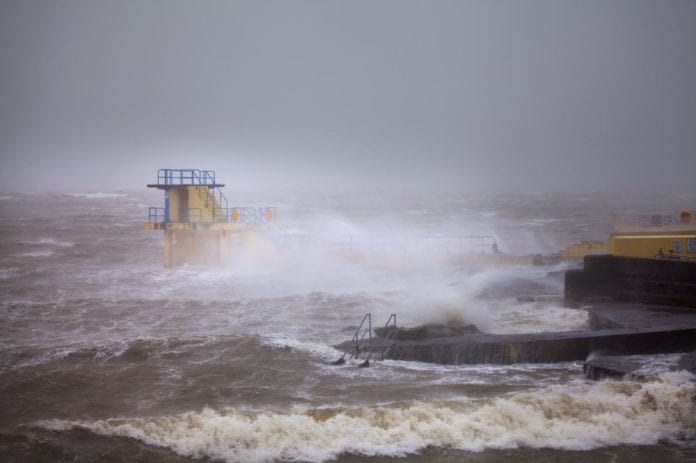
Along with these popular areas, the diving tower at Blackrock and path behind the golf course were also closed, as was the at Silverstrand and Ballyloughane beaches.

Blackrock Tower and Silverstrand car park were reopened last Friday, but the Spanish Arch and Claddagh Basin were not.

The council confirmed on Thursday evening that the barriers put up to keep people out have been removed, and the two attractions are now free for public use again.

“Barriers at the Spanish Arch and Claddagh Basin have been removed today and the area has now re-opened to the public.”

Ballyloughane car park has also been reopened. The city council is reminding people that they should still obey social distancing guidelines in outdoor areas.

Galway has now gone four days without any new confirmed cases of COVID-19 in the city or county, with 485 confirmed cases.

Thursday’s figures actually showed an overall drop of one case due to validation of data and address checking.

Since the start of June there have only been five cases of COVID-19 confirmed in Galway.

Galway City’s population could rise by 55% in plan published today

0
galway daily city population increase
Galway City’s population could rise by between 50% and 55% by 2040 in a plan which has suggested population growth as a way of balancing the economic disparity between the West and the East of the country.

The strategy would see the growth of urban centres in the West and North-West, through investment in infrastructure and services to meet the demand arising from the population increases.

Letterkenny, Sligo and Athlone are also included in the Regional Spatial and Economic Strategy, which was published today by the Northern and Western Regional Assembly (NWRA). These towns are forecast to have population increases of 40%.

The first ever Metropolitan plan envisages Galway becoming a leading European city, “renowned for its quality of life, its history, its culture and people” and says it will be a city which “embraces modern technologies and high standards of education”.

If the targets are met, the city would have to be transformed to allow the population of the city to increase to over 120,000 in the next twenty years.

The NWRA’s strategy says that it provides for the necessary increase in housing, sustainable transport and it must also “promote a range of house types, sizes and tenures”.

Galway City Councillor Cllr Declan McDonnell, who is also Cathaoirleach of the NWRA, said: “The strategy is essentially a contract between local, regional and national leaders on priorities to attract, retain and grow investment, business and talent, to create jobs, and to support sustainable economic growth in the West and Border region.

“The challenge for central government and our region is to build long-term competitiveness so that all regions can contribute and share in the benefit of growth.”

John Moran, chairperson of the Land Development Agency, added: “What’s nice about this plan is that it puts people and place at the top of the list of priorities, which is essential for Galway to reach its growth potential and attract or retain talent.

“If we are to develop a counterbalance to a dominant Dublin it is critical that cities like Waterford, Limerick, Cork and Galway develop in collaboration with towns like Sligo, Letterkenny and Athlone to form a coherent alternative cluster.”


Coronavirus: 4 COVID-19 deaths, no new Galway cases

0
Galway Daily news 25 percent drop in COVID cases in Galway hospitals

There were four more deaths of people with COVID-19 reported to the Department of Health today, along with 16 new confirmed cases.

The number of deaths in the Republic of Ireland from the COVID-19 crisis now stands at 1,714 people, and there have been 25,355 confirmed cases in the state.

There were no new cases reported in Galway today, and the total number confirmed in the city and county has actually declined by one to 485.

The HPSC has said that in the process of validating data and reviewing addresses, cases may be assigned to a different county than where they were first reported, and two previously confirmed cases have also been denotified today.

Dr. Tony Holohan, Chief Medical Officer, said that over half of people diagnosed with COVID-19 in the community took more than two days to contact their GP after first getting symptoms.

“The most important actions anyone can take from the moment they experience symptoms associated with COVID-19 are to self-isolate immediately, restrict the movement of household contacts and make phone contact with their GP.”

Dr Siobhán Ni Bhriain, Consultant Psychiatrist and HSE Integrated Care Lead added that many of the symptoms of COVID-19 are common, and people might not be inclined to contact a doctor over a cough or a shortness of breath.

“In the context of this pandemic we are asking you to do so, to help us limit the spread of COVID-19,” she emphasised.

Today’s data from the HPSC, as of midnight, Monday 16 June (25,399 cases), reveals:

  • 57% are female and 43% are male
  • the median age of confirmed cases is 48 years
  • 3,282 cases (13%) have been hospitalised
  • of those hospitalised, 417 cases have been admitted to ICU
  • 8,147 cases are associated with healthcare workers
  • Dublin has the highest number of cases at 12,239 (48% of all cases) followed by Cork with 1,535 cases (6%) and then Kildare with 1,436 cases (6%)
  • of those for whom transmission status is known: community transmission accounts for 37%, close contact accounts for 61%, travel abroad accounts for 2%

“The reproductive number is now estimated to be close to 0.7,” said Professor Philip Nolan, Chair of the NPHET Irish Epidemiological Modelling Advisory Group.

“It is heartening to see that none of the data suggests that there is a significant increase of transmission of COVID-19 in the community since the commencement of Phase 2.”

Galway Weather: Plenty of rain forecast, but it could be worse

0
Galway Daily weather Weather warning for heavy rain in Galway tonight
Met Éireann’s status current Status Yellow weather warning for heavy rainfall does not extend as far west as Galway, but rain is still forecast across the county over the next few days.

Galway and five other counties in the west will escape the worst of the heavy downpours though which are affecting much of the country, with this evening staying dry in most parts with just occasional isolated showers.

Tonight will be cloudy with further outbreaks of showery and heavy rain in some parts of Connacht, but south-west Galway will remain largely dry.

The rain will die out during tomorrow morning (Friday) and bright and sunny spells will develop. Some scattered showers will spread from the west during the afternoon which might be heavy at times.

Temperatures will be around 17 degrees in moderate westerly breezes, which will be fresh at times near the coast.

Met Éireann say that Saturday will be a windy day with more rain, which could be heavy at times, forecast across the country. Maximum temperatures will be 15 to 19 degrees in fresh and blustery southeasterly winds, becoming strong at times along the West coast.

The West will be sunnier on Sunday, with temperatures around the mid-teens – but the beginning of next week will bring more unsettled weather.

Follow Galway Daily on Facebook and Twitter to stay up to date with the latest weather forecasts from Met Éireann.

Lidl gets the green light for new store in Westside

0
Galway Daily news Green light for new Lidl supermarket in Moycullen

Planning permission has been granted for the construction of a new Lidl discount supermarket on the Seamus Quirke Road in the Westside area of Galway city.

Lidl Ireland submitted plans last September to demolish the existing Arch Motors premises on the Seamus Quirke Road, and build a single storey discount store in its place.

The building will have a gross floor space of 1,771sq metres and a net retail area of 1,193sq metres including an off licence.

In January the city council made a request for further information on numerous grounds, including concerns from the neighbouring Monaghan’s service station the the building plans encroached on their demesne.

The HSE also sought assurances from the developer that the project would not have any impact on the helipad to the rear of the site serving the hospital.

In their response Lidl submitted a revised layout and site plan which they said resolved this issue, and said that the proposed store is “considerably more distant” from the helipad than many existing hospital buildings, and that no proximity issues would arise.

A number of changes were made to the proposed design of the building at the request of the city council to achieve a higher level of “architectural quality and urban design”.

A glazed facade wrapping around the northeastern corner of the building was added, and landscaping measures were changed to better screen the car park from the street.

A piece of public artwork will also be added to the site at the direction of the council.

Two electric vehicle charging points were also added to the parking provision for the site

Galway City Council granted planning permission with a total of 18 conditions attached.

GMIT awarded €4.7m for 25 upskilling courses

0
Galway daily news Free GMIT food entrepreneurship course course returns

GMIT has been awarded €4.7 million in funding for almost 1,000 upskilling and graduate conversion course places.

The Institute of Technology will receive €2.68m under the HEA’s Springboard+2020 and €2.02m under the Human Capital Initiative to deliver 25 upskilling programmes from November this year.

These will include three new Springboard courses and six new HCI Pillar 1 courses at GMIT.

573 places in total will be available on GMIT’s 25 Springboard/ICT Skills courses, with seven of these courses fully online, and another 308 places will be available on the six new HCI programmes, one of which will be online.

The three newly approved Springboard courses are the Certificate in Industrial Automation, Certificate in Digital Mapping, and Certificate in Building Digital Healthcare Communities.

The announcement of funding for the 2020 initiatives was made on Wednesday by Minister for Education Joe McHugh, along with the Minister of State for Higher Education Mary Mitchell O’Connor and Minister of State for Training Skills, Innovation, Research and Development John Halligan.

Welcoming the news, GMIT President Dr Orla Flynn said “I want to signal how important these awards will be – especially at this point in time – for participants, for industry, and for the wider region.

“I also want to acknowledge the hard work of colleagues across the institute who delivered this result for GMIT; their ongoing partnerships with our many external stakeholders gives a strong indicator of future success.”

Upskilling courses

GMIT’s Springboard 2020 part-time courses are as follows:

Bachelor of Engineering Degree (Add-on) in Manufacturing Engineering (L7), Galway campus

Certificate in Blockchain for Business (L8), fully online

Certificate in Building Digital Healthcare Communities (L8), Mayo campus

Certificate in Business Analytics (L8), fully online

Certificate in Culinary Skills (L6), Galway campus

Certificate in Certificate in Digitalisation for SMEs (Digital Media and Marketing) (L6), Mayo campus

Certificate in Climate Resilience for Business (L8), Mayo campus

Certificate in Digital Mapping and GIS (Geographical Information Systems) (L8), Mayo campus

Certificate in Digital Media and Marketing (L9), Mayo campus

Certificate in Food Innovation and Entrepreneurship (L9), Galway campus

Certificate in Industrial Automation (L7), Galway campus

Certificate in Information Technology Project Management (L7), Mayo campus

Certificate in Network Cybersecurity (L7), Mayo campus

Certificate in Quality for the Medical Device Industry (L8), Galway campus
Certificate in Sustainable Building Technology (L8), Mayo campus

Higher Diploma in Science – Computing (Data Analytics)-12 Months, fully online

Higher Diploma in Science – Computing (Data Analytics)-18/24 Months, fully online

Higher Diploma in Science – Computing (Software Development)-12 Months, fully online

Higher Diploma in Science – Computing (Software Development)- 8/24 Months, fully online

GMIT’s six HCI graduate conversion courses, detailed below, will be delivered in a blended format (mix of online and on campus), except for the Higher Diploma in Business Analytics which is delivered fully online:

Higher Diploma in Cybersecurity Risk & Compliance (L8), Mayo campus

Higher Diploma in Advanced Analytical Chemistry (L8), Galway campus

Higher Diploma in Business Analytics (L8), fully online

Postgraduate Diploma in Building Information Management (BIM) and Digital Construction (9), Galway Postgraduate Diploma in Advanced Biopharmaceutical Science (L9), Galway campus

Circular Economy for a Sustainable Built Environment (L9), Galway campu

Historic moment for East Galway as Quiet Man Greenway gets thumbs up

0
galway daily quiet man greenway
Today has been described as a ‘historic moment’ for East Galway after the Quiet Man Greenway was included in the NWRA’s spatial and economic strategy.

The inclusion makes the greenway a certainty, and means that local authorities from Sligo, Mayo and Galway are now obliged to work collectively to deliver the greenway.

The North West Regional Authority, the body responsible for planning the economic and social development of the region, published its plans today which cover the period from 2020 to 2032.

East Galway TD Ciarán Cannon, who has been vocal in his support for the amenity, said that he is delighted that the strategy specifically names the Quiet Man Greenway from Athenry to Collooney in Co. Sligo as one of the key projects.

“This thumbs up from our regional economic authority makes this a historic moment for East Galway and for those of us campaigning to create a significant new amenity which will serve Athenry, Tuam, Milltown and Ballyglunin,” he said.

“We have consistently argued that the Quiet Man Greenway will transform our region and this affirmation from the North West Regional Authority is most welcome.”

He added that thanks to the work of so many who made submissions, “we now have a truly ground-breaking commitment and local authorities must now work collectively and collaboratively to deliver a greenway that will benefit the people of our region”.

“There could be no clearer endorsement of the value of an amenity like this, both in terms of its potential for local economies and for the health and wellbeing of the communities that will use it.

“I am more than confident that the Quiet Man Greenway will be the gift to this region that keeps on giving for decades to come.”

Minister Cannon supports calls for improvement to Freedom of Information Act

0
greenway galway daily
East Galway TD Ciarán Cannon has said it is clear that the Freedom of Information Act needs to be improved.

Minister Cannon made the comments after what he calls ‘inexplicable denials of perfectly legitimate requests’ from supporters of the Quiet Man Greenway for access to the rail review.

The Fine Gael TD said that he is pleased to note that the Information Commissioner is urging the incoming government to review the Act and that he has stated there is ‘considerable room for improvement’ with the legislation.

“I especially welcome the recommendation of an administrative tribunal to consider appeals which would certainly be a less costly approach than engaging in court proceedings,” said Minister Cannon.

The call for a review of the Act will also resonate with supporters of the Quiet Man Greenway, from Athenry to Tuam and beyond, the Fine Gael TD said. Many of these supporters submitted requests to access the contents of the rail review – but were met with ‘inexplicable denials’ along the way.

“A proposal such as reopening a rail service which has been closed for nearly half a century and is likely to cost the taxpayer anything up to €150m should be open to the fullest scrutiny.

“Almost nine months on from the delivery of that review to the Minister for Transport, people in East Galway are none the wiser as to its conclusion on the business case for this proposal and that is in no way an acceptable situation,” added Minister Cannon.

Man buried in Newgrange was an inbred Royal, research shows

0
galway daily newgrange
Research into a man buried in the Newgrange passage tomb indicates that he was born to first-degree incest, suggesting he was a member of the ruling social elite similar to the Egyptian pharaohs.

The research into the earliest periods of Ireland’s human history was carried out by a team led by TCD, along with colleagues from a number of universities including NUI Galway.

The survey of ancient Irish genomes shows that the man who was buried in the Newgrange chamber had parents who were first-degree relatives.

Older than the pyramids, Newgrange passage tomb is famous for its annual solar alignment where the winter solstice sunrise illuminates its sacred inner chamber in a golden blast of light.

However, little is known about who was interred in the heart of this imposing 200,000 tonne monument or of the Neolithic society which built it over 5,000 years ago.

“I’d never seen anything like it,” said Dr Lara Cassidy, Trinity, first author of the paper.

“We all inherit two copies of the genome, one from our mother and one from our father; well, this individual’s copies were extremely similar, a tell-tale sign of close inbreeding.

“In fact, our analyses allowed us to confirm that his parents were first-degree relatives.”

Brother and sister unions are a universal taboo for cultural and biological reasons and the only confirmed social acceptances of first-degree incest are found among the elites – typically within royal families.

By breaking the rules, the elite separates itself from the general population, intensifying hierarchy and legitimizing power. Public ritual and extravagant monumental architecture often co-occur with dynastic incest, to achieve the same ends.

“Here the auspicious location of the male skeletal remains is matched by the unprecedented nature of his ancient genome,” said Professor of Population Genetics at Trinity, Dan Bradley.

“The prestige of the burial makes this very likely a socially sanctioned union and speaks of a hierarchy so extreme that the only partners worthy of the elite were family members.”

The team also unearthed a web of distant familial relations between this man and other individuals from sites of the passage tomb tradition across the country, namely the mega-cemeteries of Carrowmore and Carrowkeel in Co. Sligo, and the Millin Bay monument in Co. Down.

“It seems what we have here is a powerful extended kin-group, who had access to elite burial sites in many regions of the island for at least half a millennium,” added Dr Cassidy.

Interestingly, one of the authors of the study, Dr Ros Ó Maoldúin, a Senior Archaeologist with Archaeological Management Solutions who received his PhD from NUI Galway recognised that a medieval myth resonates with these results and with the Newgrange solar phenomenon.

First recorded in the 11th century AD, four millennia after construction, the story tells of a builder-king who restarted the daily solar cycle by sleeping with his sister. The Middle Irish place name for the neighbouring Dowth passage tomb, Fertae Chuile, is based on this lore and can be translated as ‘Hill of Sin’.

“Given the world-famous solstice alignments of Brú na Bóinne, the magical solar manipulations in this myth already had scholars questioning how long an oral tradition could survive,” said Dr Ó Maoldúin. “To now discover a potential prehistoric precedent for the incestuous aspect is extraordinary.”

The genome survey stretched over two millennia and unearthed other unexpected results. Within the oldest known burial structure on the island, Poulnabrone portal tomb, the earliest yet diagnosed case of Down Syndrome was discovered in a male infant who was buried there five and a half thousand years ago.

Isotope analyses of this infant showed a dietary signature of breastfeeding. In combination, this provides an indication that visible difference was not a barrier to prestige burial in the deep past.

Other significant findings came from the analyses of individuals buried in the Parknabinnia court tomb which was excavated by a team led by NUI Galway archaeologist Dr Carleton Jones.

Here, a significant difference in the frequency of two Y chromosome haplogroups was found between individuals buried in the Parknabinnia monument and those buried in the nearby Poulnabrone portal tomb which suggests that distinct male line descent groups built and used these monuments.

This is a remarkable discovery as the use of these two monuments overlapped for several centuries and they are both located on the Burren only 10km apart.

The people who built and used both Parknabinnia and Poulnabrone were some of the earliest farmers in Ireland, descended from groups that arrived in Ireland shortly after 4000 BC, but what became of the earlier hunter-gatherer groups that inhabited Ireland for many thousands of years before these farmers arrived has long been an open question.

One of the individuals from Parknabinnia tested in this study goes some of the way to answering this interesting question.

“This individual could trace their ancestry to both the newly arrived farmers and to the indigenous hunter-gatherers of Ireland, showing that at least some mixing of these disparate populations occurred”, said Dr Carleton Jones.

Genomes from the rare remains of Irish hunter-gatherers themselves showed they were most closely related to the hunter-gatherer populations from Britain (e.g. Cheddar Man) and northwest mainland Europe.

However, unlike British samples, these earliest Irelanders had the genetic imprint of a prolonged island isolation. This fits with what we know about prehistoric sea levels after the Ice Age: Britain maintained a land bridge to the continent long after the retreat of the glaciers, while Ireland was separated by sea and its small early populations must have arrived in primitive boats.

This work was funded by a Science Foundation Ireland/Health Research Board/Wellcome Trust Biomedical Research Partnership Investigator Award to Dan Bradley and an earlier Irish Research Council Government of Ireland Scholarship to Lara Cassidy.