6.2 C
Galway
Home Blog Page 2

€16.4 funding million for two new fire stations in Galway

0
Galway Daily news Retained firefighters vote to accept WRC proposals to end industrial dispute

€16,400,000 in funding has been allocated for the construction of two new fire stations in Galway over the next five years.

The larger of the two Galway projects is a new fire station for Galway City, for which €13,000,000 has been allocated. Another €3,400,000 has been awarded for the construction of a new station in Loughrea.

Minister for Housing, Local Government and Heritage James Browne this week announced €328.5 million in funding under the Fire Services Capital Programme (2026–2030).

A total of €178.6 million will be invested in building or refurbishing 39 fire stations across the country.

Another €86.9 million will be invested in the national fire fleet, delivering a total of 40 vehicles. Galway County Council will receive two vehicles from this.

A €29.5 million programme of works upgrading the fire service’s national training capabilities will be delivered, €23 million is being invested in frontline and specialist response equipment, and €10.5 million will go towards the national mobilisation and communications system.

Minister Browne emphasised, “This programme represents a significant investment in the safety, resilience and wellbeing of communities across Ireland.”

“It ensures our fire services across the country will have a modern fleet, upgraded facilities and equipment required to meet the challenges they face, with a changing climate, a growing population and increasingly complex emergency risks.”

“This investment in the fire service will reinforce public safety in our communities and ensure that our critical infrastructure and essential services are protected.”

“Having fire services that are recognised as dependable, well-trained and well-equipped is crucial to the communities they serve, and this injection of significant funding will future-proof the service they provide.”

Public meeting on Cong Relief Road plans this week

0
Galway Daily news

A public meeting will take place this week to discuss proposals for a relief road for Cong Village on the Galway / Mayo border.

Proposals for a relief road scheme are currently being developed by the two county councils with the Department of Transport.

A public information event on the proposed relief road is being held this week at Cong Community Centre.

It will take place on Thursday, April 9 from 2pm until 6pm where staff from Mayo County Council and the project’s consultants will be available to answer questions.

The relief road would have a significant footprint in Galway and Mayo to address traffic and transport needs in the village.

There are three emerging options for the relief road scheme. These can be viewed on https://congreliefroad.com/.

Public submissions on the emerging options can be made online until Friday, April 17.


Cystic Fibrosis Ireland calls on Galway people’s support on 65 Roses Day

0

People in Galway are being urged to help Cystic Fibrosis Ireland (CFI) meet its fundraising target of €300,000 on 65 Roses Day, taking place this year on Friday, April 10.

Volunteers across the country will be selling purple roses to support fundraising in Dunnes Stores branches, shopping centres and other participating outlets, including:

  • Dunnes Stores: Briarhill, Galway
  • Dunnes Stores: Edward Square, Galway
  • Dunnes Stores: Knocknacarra, Galway
  • Dunnes Stores: Terryland, Galway
  • Dunnes Stores: Westside, Galway
  • Shopping Centre: Galway Shopping Centre, Headford Rd, Galway
  • Shopping Centre: Tuam Shopping Centre, Abbey Trinity Rd, Tuam

Cystic Fibrosis (CF) is an inherited condition that affects multiple systems, including breathing, digestion and reproduction.

Ireland has the highest rate of CF per capita in the world, with more than 1,400 people living with CF, 33 new cases diagnosed each year and many people living with the most severe forms.

There is no cure, and CF often becomes more severe over time. Thanks to multidisciplinary care and the introduction of modulator therapies, many people with CF are living well into adulthood.

However, as people age, new challenges can emerge, including CF‑related diabetes, osteoporosis and an increased risk of colorectal cancer.

Today, CFI is investing in research to better understand the emerging issues, and provides essential supports including:

  • A dedicated information and support line offering guidance,reassuranceand advice 
  • Targeted financial assistance through a range of grants that help ease the cost of living with CF
  • Monthly online peer‑support groups that connect people with CF and strengthen the community

Encouraging people in Galway to go out and support Cystic Fibrosis Ireland on 65 Roses Day this year is Billy O’Toole from Galway.

“This year I am turning 40. That’s unreal. I have CF, diabetes, epilepsy, and borrowed lungs, but none of that stopped me from getting here.”

“I am so thankful to every researcher, every doctor, every nurse, every scientist, every fundraiser, every drug trial, every person who said, ‘We can do better’”.

“Now I am looking forward with so much hope, but as we age, there are still so many unknowns and so much more work to do.”

“So this 65 Roses Day, I am asking for your continued support for people with CF in Ireland – buy a rose, visit our stands in Dunnes Stores or donate online – we really appreciate it.”

‘Rewriting Tomorrow’ exhibition  

As part of 65 Roses Day 2026, Billy and other CFI Ambassadors have penned letters to their future selves, imagining milestones and plans for futures that once felt out of reach.

Children living with CF also took part in a workshop with cartoonist Brendan Lonergan, creating self-portraits of themselves both now and as they envision their future selves.

These letters and artworks, which capture this hopeful shift through deeply personal reflections, form the foundation of a powerful new exhibition, ‘Rewriting Tomorrow’.

Taking place at The Copper House in Dublin city centre during 65 Roses Week 2026, the exhibition opens on Tuesday, April 7, and will run until Sunday, April 12.

CFI is calling on people from Galway to support its annual 65 Roses Day so that vital services for people living with CF can continue nationwide.

Public generosity enables the organisation to provide essential support to everyone who needs it, while also driving investment in hospital facilities, clinical teams and research.

CFI remains firmly committed to advancing care and improving outcomes for people with CF — and will continue this work until the day a cure is found.

People can support Cystic Fibrosis Ireland on 65 Roses Day by purchasing a purple rose at Dunnes Stores and other participating outlets. For more information and to donate online, visit www.65roses.ie.

Six week roadworks in Ballybane to disrupt traffic

0
Galway Daily news Roadworks to disrupt traffic near Portumna on Tuesday

Roadworks in the Ballybane area will disrupt traffic for the next six weeks, with rolling road closures in place.

Galway City Council has been carrying out roadworks on Castlepark Road and Ballybane Road for the new active travel scheme in the area.

The final phase of these works will involve the full resurfacing of the carriageways on both roads. Work began on Castlepark road this week.

To ensure the safety of the public and workers during these works, temporary road closures are planned during this time.

Road Closures will be in place from 9:30am – 4:00pm, Monday to Friday, on the following dates:

  • From Tuesday, April 7, for approximately three weeks on Castlepark Road.
  • From approximately Monday, April 27, for approximately three weeks on the Ballybane Road.

Works on Ballybane Road will not begin until the resurfacing of Castlepark Road is complete.

Local vehicle access will be maintained on both roads, with signage and marshals in place to inform locals of the diversion routes to reach their properties. Pedestrian and wheeler access will be maintained at all times.

Between the hours of 9.30am – 4.00pm, Monday to Friday, bus services will be diverted away from Castlepark Road and will follow diversions. Buses will run as normal at all other times.

Signage will also be erected at each bus stop to alert passengers to the alternative bus stop, which will be either on the Ballybane Road or the Monivea Road.

Galway woman face Arctic Challenge for charity

0

A Galway woman has taken on a gruelling, week-long Arctic Challenge to raise vital funds for the Irish Heart Foundation.

Sinead Leyne from Ballinderreen was part of a team of 14 who signed up for the week-long expedition.

She got involved to raise vital funds and awareness of the impacts of stroke, heart disease and other cardiac conditions.

The 14 participants travelled 350km north of the Arctic Circle, where they trekked across a frozen lake, hauling their equipment and tents to sleep overnight, outdoors, amongst the stars in subzero temperatures of -5C.

The group left Dublin for Kilpisjärvi, Northern Finland on March 16 and for some, it was a personal journey to highlight the importance of heart health after loved ones suffered serious cardiac issues.

Each challenge participant raised a minimum of €6,500 and Sinead has raised €7,750, while the entire group has raised nearly €112,000 so far.

Funds raised go towards essential supports that help people who have been affected by heart disease or stroke.

These include free professional counselling services and a nurse support line, support groups and other programmes to help improve the quality of life and wellbeing of people after a cardiac event or stroke.

“A stroke or heart event can turn someone’s world completely upside down,” said Tom Hickey, Director of Development with the Irish Heart Foundation.

“This challenge shows how difficult it is to learn new skills in a tough environment and to persevere even when it’s hard.

“That’s what those living with the effects of a stroke or heart condition must do each and every day.

“Cardiovascular disease is a leading killer in both men and women. It kills six times as many women as breast cancer does.

“But the hopeful reality is that 80pc of early heart disease and stroke cases are preventable.

“Through the kindness of our fundraisers and donors, we can work hard every day to help prevent cardiovascular illness in the first place.

“Together, we can stop so many lives being damaged, shortened or lost.”

The charity is asking the public to support Sinead and the other Arctic Challenge participants on their fundraising pages at https://fundraise.irishheart.ie/event/arctic-challenge-2026/leaderboard or to donate on irishheart.ie.

Repairs underway to burst water mains causing outages

0
Galway Daily news Moycullen water outage

Uisce Éireann crews are working to repair a major burst water main in Ballyconneely and restore water to customers affected.

Customers in Ballyconneely, Mannin, Derrygimia, Derrigimlagh and surrounding areas in Co Galway may experience water outages or other supply disruptions today as a result of this burst.

Uisce Éireann’s Ciarán Conneely has assured customers that every effort is being made to restore a full water supply as quickly as possible.

“We understand the inconvenience of an unplanned outage, and we thank customers for their support while our works continue.”

Repairs are expected to be completed by 3pm today.

Typically, it takes two to three hours following repairs for normal supply to restore to all customers affected by an unplanned outage.

However, it may take longer for normal supply to be restored to customers at the end of the network or on higher ground as the system recharges.

To ensure the safety of the crews carrying out the repairs to the burst and the safety of the public, traffic management will be in place and will be clearly signposted.

Ireland’s New Gambling Regulations – Where Are We Today?

0
business person hand throw the dice, business gambling game concept

After years of legislative back-and-forth, Ireland has finally introduced major reforms to its gambling laws.

Those changes mean Ireland now has a dedicated regulator to oversee the gambling industry, with a host of new regulations set to take effect through 2026. 

With change afoot and a lot of information to unpack, we’ve partnered with MyBettingSites.com/ie, which keeps track of all the latest developments in the Irish betting market, to break down the key points.

The need for change

For too long, Ireland has made do with an outdated set of laws simply not fit for purpose. The new Irish Gambling Regulation Act replaces the old Betting Act of 1931 and introduces a framework in line with today’s online betting landscape.

Ireland’s growing issue with problem gambling and the need to better protect children from the dangers of gambling were also reasons for implementing a new set of rules.

It’s estimated that one in 30 adults in Ireland struggles with problem gambling. At the same time, a recent study also suggests that children exposed to gambling experiences in their childhood are more likely to suffer from problem gambling in the future.

What’s happened so far?

Since the new Irish Gambling Regulation Act was officially passed and signed into law in October 2024, we’ve seen a couple of major developments. 

The first of those came in March 2025 with the establishment of Ireland’s new independent gambling regulator, the Gambling Regulatory Authority of Ireland (GRAI), which replaced the Revenue Commissioners and signalled the start of a new era for Ireland’s gambling sector. 

More recently, the window for new license applications opened in February 2026. The new licensing system applies to both online and in-person betting, with new licenses effective from 1st July 2026. This is when existing licenses for online bookmakers, issued by the Office of the Revenue Commissioners, expire.

What else is going to change exactly?

Under the new act, there will be a ban on adverts across TV platforms and radio stations between 5.30am and 9.00pm, a tightening of the rules for gambling related ads on social media and a ban on betting companies using inducements to encourage individuals to bet.

The GRAI also plans to introduce a Social Impact Fund to help tackle gambling addiction. Licensed operators will pay a mandatory levy to ensure research, education and treatment services are available for those in need.

A national gambling exclusion register, similar to what’s available in the UK, will also be introduced in Ireland. A further key change includes prohibiting the use of credit cards to deposit funds, which also follows the UK’s lead.

In addition to enforcing the new regulations, the GRAI will better monitor operators and have the power to fine companies that fail to comply up to €20 million.

The challenges that lie ahead

As is always the case when introducing a new regulatory system, bumps in the road are likely.

The biggest potential issue is that the stricter regulations placed on bookmakers push users towards unlicensed bookmakers.

There are concerns within the industry that a toning down of advertising leads to fewer betting promotions, resulting in users turning to offshore sites in search of bigger, more generous bonuses, though, it must be said, this is just speculation right now.

But when you also consider that the new rules will undoubtedly bring more verification and responsible gambling checks – resulting in more friction for users – offshore gambling sites could pose a greater problem than they do already. 

Change for the bettor!

For the average punter, it may feel as if not a lot has changed so far. And, in truth, the changes highlighted are unlikely to be that noticeable for customers logging in to their betting accounts day-to-day.

As touched upon, it remains to be seen if the restrictions on advertising and marketing result in fewer sign-up offers and promotions further down the line – one to keep an eye on.

However, a stricter set of regulations and the introduction of a more visible, active regulator mean Ireland moves from a lightweight regulatory gambling market to one of the most structured and protective in Europe, ensuring that Irish customers are protected from the dangers of gambling like never before.

Cyclist seriously injured in Claregalway collision

0
Galway daily news

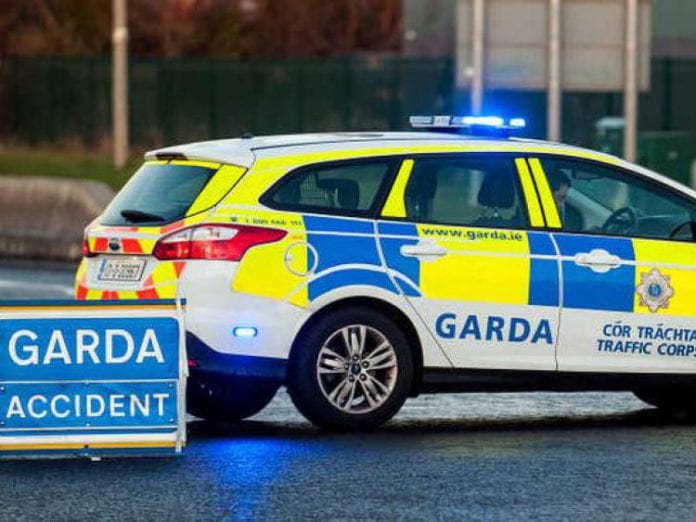
A teenage cyclist is in hospital with serious injuries after a collision involving a car in Claregalway earlier this week.

Gardaí are appealing for witnesses following a serious injury road traffic collision on Tuesday night.

At around 8:00pm, Gardaí and emergency services responded to a collision involving a car and a pedal cyclist at Claregalway on the N83 (formerly the N17).

The cyclist, a teenage boy, was brought by ambulance to University Hospital Galway, where he is being treated for serious injuries.

A technical examination of the scene was carried out by Garda Forensic Collision Investigators, and the road has since been fully reopened.

Gardaí are appealing to anyone who witnessed the incident to come forward.

Road users who may have camera footage, including dash-cam footage between Loughgeorge and Claregalway between 8:00pm and 8:30pm are asked to make this available to investigating Gardaí.

Anyone with information is asked to contact Oranmore Garda Station on 091 388030, the Garda Confidential Line on 1800 666 111, or any Garda Station.

Storm Dave to bring heavy winds over Easter weekend

0
Galway Daily weather Ice warning issued as Met Eireann warns of hazardous conditions

Galway and the rest of the country are in for a windy weekend, with Storm Dave set to bring strong winds on Saturday.

An area of low pressure will start to develop out in the Atlantic on Friday night, developing into Storm Dave as it undergoes rapid cyclogenesis in a right jet entrance and tracks north-eastwards towards the west and northwest coast of Ireland later Saturday.

Met Éireann has issued a status yellow wind warning for the entire country tomorrow, with multiple hazards likely from storm damage.

The weather warning will be in effect from 2pm until 11pm on Saturday, bringing very strong southerly winds, veering westerly by the evening with severe gusts and coastal gales.

It will bring with it a risk of fallen trees and branches, loose debris, and wave overtopping, all creating difficult travelling conditions.

The strongest of the winds will be in the northwest, with the possibility that changes in the forecast position and intensity of storm Dave could lead to updates to the warnings, with the slight chance that Donegal could be upgraded to an orange-level warning for a time.

Further warnings may be issued throughout the Easter weekend, with a weather advisory in place until the end of Monday.

The weather is forecast to remain unsettled and mixed over Easter with a mobile Atlantic flow affecting Ireland.

High spring tides coinciding with storm surge and persistent onshore winds will further increase the risk of coastal flooding. Areas along the west and north coasts are particularly vulnerable.

The most disruptive spell of windy weather will be on Saturday afternoon and into Saturday night, when a nationwide yellow wind warning comes into effect, with the potential for some severe gusts, as storm Dave tracks by the west and northwest coast.

Storm Dave was named by the UK Met Office on Thursday morning, with stormier conditions expected over Scotland on Saturday night.

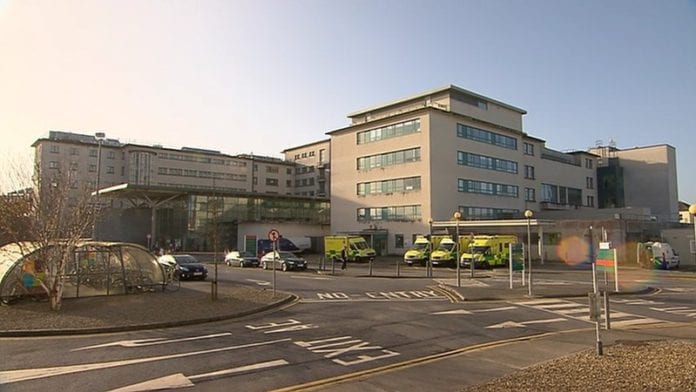
Consider options before coming to the Emergency Department HSE urges for Bank Holiday

0
Galway Daily news People in Galway urged to know their healthcare options for Bank Holiday

The HSE has cautioned that people may experience long waiting times if they come to the emergency department this weekend, and is urging them to know all their healthcare options.

With services traditionally experiencing increased demand during holiday periods, the HSE is advising patients to plan ahead and consider all available care pathways before attending Emergency Departments.

Ann Cosgrove, HSE Healthcare Manager, Galway and Roscommon, said, “We want to ensure that patients receive the right care, in the right place at the right time this Easter weekend.”

“Emergency Departments are there for people who are seriously ill or injured, but there are many other options available in the community that may be more appropriate and quicker for less urgent needs.”

“We have plans in place right across our hospitals and community services to manage high attendances at emergency departments over the Easter holiday weekend.”

“However, we are asking the public to consider pharmacies, GP services, and Injury Units where appropriate.”

“We wish everyone a safe and healthy Easter weekend. Our hospitals and staff remain available to provide care in the event of an emergency.”

“All patients who attend an Emergency Department will be assessed and treated, with those who are most seriously ill or injured prioritised.”

Care options available this Easter Bank Holiday weekend include:

  • GP Out-of-Hours Service (Westdoc):
    If you urgently need to see a GP over the bank holiday weekend, you should contact your local out-of-hours GP service, Westdoc. The service operates across the weekend, appointments must be made in advance. GP Out of Hours information is available on the HSE website here.
  • Your local pharmacy 
    Community pharmacists provide expert advice and over-the-counter treatments for a wide range of minor illnesses. In addition to this expert advice, a new service is available which allows pharmacists to supply prescription-only medication without the need to see a GP.
    The following common conditions can be treated under the Common Conditions Service; allergic rhinitis, cold sores, conjunctivitis, impetigo, oral thrush, shingles, cystitis (uncomplicated urinary tract infection), vaginal thrush. Information about the scheme is available on the HSE website here.
  • Injury Units – Roscommon Injury Unit:
    Roscommon Injury Unit is open from 8am to 8pm, seven days a week, including bank holidays. It treats non-life-threatening injuries such as broken bones, dislocations, sprains, wounds, scalds and minor burns. The unit provides services such as X-rays, plaster casts, and wound care. No appointment is required; patients can attend directly. You can find your local injury unit here.
  • Mental health supports
    Information about when to get help, organisations that provide mental health services and types of specialist services are available here.

A Night Out Without Leaving Galway: How the City’s Entertainment Scene Has Evolved

0
Galway Daily news Iconic Galway nightclub reopening this weekend

Galway has always known how to keep people entertained.

From the session music spilling out of pubs on Shop Street to the packed terraces during a Connacht match, the city has never had a shortage of ways to fill an evening. But the options have quietly multiplied in recent years, and how Galway people choose to spend their leisure time looks noticeably different from how it did a decade ago.

New habits have layered on top of old ones, some driven by technology, some by a changing demographic, and some simply by the fact that Galway’s cultural offering has grown into something genuinely impressive for a city of its size.

The Pub Scene: Still the Heart of It

No guide to Galway entertainment starts anywhere other than the pub, and that’s unlikely to change any time soon. The city’s bar culture remains one of the most distinctive in Ireland, not just for the Guinness, but for the kind of atmosphere that’s genuinely hard to manufacture elsewhere.

Tigh Neachtain, Taaffes, The Crane Bar: these aren’t tourist traps, they’re living rooms for half the city on any given weekend.

The tradition of live traditional music in Galway is something that resists easy explanation to anyone who hasn’t experienced it. You walk past a door, hear a fiddle, and an hour later, you’re still there. That pull is real, and it hasn’t weakened. If anything, the city’s reputation as one of the best places in Ireland for a spontaneous night out has grown stronger, drawing visitors from across the country who’ve heard the stories and want to see for themselves.

Live Sport and the Social Ritual Around It

Galwegians take sport seriously, and the communal experience around it is as much a part of the evening as the match itself. Whether that’s following the Tribesmen in Pearse Stadium on a summer afternoon, catching a Connacht rugby fixture under the lights at the Sportsground, or gathering around a screen in a packed bar for a big Champions League night, the pattern is familiar: the pre-match pint, the running commentary, the post-match debrief that stretches longer than it should.

Galway does this particularly well because the city is compact enough that you’re rarely more than a short walk from wherever the crowd has gathered. Sport here isn’t just something you watch; it’s a reason to be somewhere together.

Arts, Culture and the Unexpected Night Out

One thing that surprises people who don’t know Galway well is just how strong the city’s arts and culture calendar is.

The Town Hall Theatre consistently puts on productions that would hold their own in any European city. Druid Theatre has an international reputation that belies its Galway roots. The Galway Film Fleadh draws filmmakers and audiences from across the world every summer.

And then there are the festivals: the Arts Festival, Galway Race Week, the Oyster Festival, each one bringing a different energy to the streets and a different crowd through the door. For a city of under 100,000 people, the cultural output is quietly remarkable, and locals who’ve lived here long enough tend to take it slightly for granted until someone from outside points it out.

Online Entertainment That’s Found Its Footing

One shift worth noting, and you’ll hear it mentioned in conversation more than you might expect, is the growing number of people mixing a quiet night in with online entertainment that actually feels engaging rather than passive.

Streaming has been part of that for years, but live interactive platforms have added something different. Gaming casino platforms in particular have picked up a notable following, with options like NetBet live casino giving players access to live table games anytime.

The appeal isn’t hard to understand. It’s a format that works for similar reasons that Galway’s pub culture does: there’s a human element built into it, real interaction rather than just clicking through a screen alone.

A live blackjack table with a real dealer is a different experience from a slot machine, in the same way that a session in a snug is a different experience from listening to a playlist. It won’t replace a Friday night out, but as one option among many for an evening’s entertainment, it has clearly found its audience.

What Hasn’t Changed

What ties all of this together is something Galway has always had: a preference for entertainment that involves other people in some form, whether that’s a crowd filling a stand, a session spilling onto the street, or a live dealer on a screen at midnight.

The formats available have multiplied, and the technology has changed, but the underlying instinct remains the same. Galway people want to feel like they’re part of something, even when they’re at home.

That’s not a new trait. It’s just finding new expressions.

Champions League 2026 Power Ranking: Europe’s Strongest Squads

0

The bracket has started to sort the noise from the real thing. UEFA’s final is set for May 30 in Budapest, the round of 16 opened on March 10, and Arsenal reached this stage with a perfect eight-win league phase that left it on the cleaner half of the draw, while most of the recent winners landed on the other side. That matters. The title favourite does not always come from the best domestic table; it often comes from the squad that gets one extra week of clarity and one less collision in April.

Arsenal has the clearest route

Arsenal belongs near the top of any current list because its case is built on both form and path. It leads the Premier League with 70 points from 31 matches, it finished first in the Champions League league phase with eight wins from eight, and the draw gave it Bayer Leverkusen, followed by either Sporting CP or Bodø/Glimt rather than one of the heavyweight repeat winners. Mikel Arteta still has an injury problem, with Martin Ødegaard ruled out of the first leg against Leverkusen. Still, William Saliba is fit again, and that changes the rest-defence shape immediately. A side that can protect transitions and still carry Bukayo Saka’s late-game threat is not guessing its way through March.

Bayern looks the most complete right now

Bayern München has the strongest recent performance on the board. It went to Bergamo on March 10 and beat Atalanta 6-1, with Josip Stanišić, Michael Olise, and Serge Gnabry pushing it 3-0 ahead inside 25 minutes before Nicolas Jackson, Olise again, and Jamal Musiala finished the job after the break. That kind of score can flatten analysis, but the useful detail is the speed of the first wave: Atalanta never got settled enough to press the second ball, and Bayern kept finding the lane behind the midfield line before the match had shape. Vincent Kompany’s side also leads the Bundesliga on 70 points, 9 clear of Borussia Dortmund, which gives it more room to rotate than most of the field.

Barcelona still feels like a late-round team

Barcelona remains in the top tier because it keeps surviving difficult European nights without needing a clean script. At Newcastle on March 10, anyone using betting apps (Arabic: برامج المراهنات) got a sharp reminder that an away draw can hide a ragged hour: Joelinton had a goal ruled offside, Harvey Barnes scored in the 86th minute from Jacob Murphy’s cross, and Barcelona only escaped when Malick Thiaw fouled Dani Olmo in stoppage time. Lamine Yamal converted the penalty with the final kick. The result was only 1-1, but the squad’s reason remains strong. It had already qualified directly for the last 16 by finishing fifth in the league phase, and Yamal at 18, Robert Lewandowski in the box, and Dani Olmo between lines still give it answers when the game stops being tidy.

The Madrid tie could define the tournament’s trajectory

The other half of the draw remains especially demanding, which only increases the significance of Real Madrid’s path. The Spanish side narrowly missed automatic qualification after a 4–2 defeat to Benfica on January 28, forcing them to take a more complicated route through the knockout stages. Now, Real Madrid faces a high-stakes challenge, knowing that a quarter-final clash against Bayern awaits. Alvaro Arbeloa’s team has shown resilience throughout the season and currently sits second in La Liga with 69 points, demonstrating consistency despite setbacks. With no margin for complacency, Real Madrid must maintain focus and intensity as the competition enters its decisive phase.

PSG and Liverpool still have work to do

Paris Saint-Germain is the holder, so it stays on the serious list, but the evidence is less tidy than the badge suggests. Luis Enrique said after the playoff win over Monaco that PSG had faced the toughest schedule in the competition, and it did reach the last 16 by edging that tie 5-4 on aggregate, yet Monaco then won 3-1 at Parc des Princes on March 6 and cut the Ligue 1 lead to four points over Lens. Liverpool is in a similar place: it advanced directly from the league phase, but Mario Lemina’s seventh-minute header gave Galatasaray a 1-0 first-leg win on Tuesday after Victor Osimhen redirected a corner back across the goal. Some supporters will download Melbet APK (Arabic: melbet apk تحميل) and track the second-leg prices at Anfield. However, the football case is less comforting when Liverpool has won only one of its previous seven league matches and still looks loose in transition.

The shortlist is getting shorter

The strongest current shortlist is Arsenal, Bayern, Barcelona, and Real Madrid. Arsenal has the cleanest route and the best league-phase record; Bayern has the most convincing first-leg statement; Barcelona has enough match-winners to live with a messy game state; and the Madrid will carry elite-level experience into the quarter-finals. PSG remains close enough to the front rank to matter, but the domestic wobble is real, and Liverpool needs a sharp turn fast just to restore control of its own tie. Budapest is still months away. The field already looks narrower.

Connemara family raises €10,000 for UHG Patient Comfort Fund in memory of beloved father

0

A generous donation of €10,000 was recently presented to the Patient Comfort Fund at University Hospitals Galway in memory of the late Richard McDonagh from Cill Chiaráin, Connemara, who had been a patient in the Corrib Ward.

The cheque was presented to the Patient Comfort Fund by Richard’s wife, Anne McDonagh, and the rest of the family.

The funds were raised during fundraising efforts organised as a tribute to Richard, whose time in University Hospital Galway left a lasting impression on his family.

Grateful for the care, compassion, and dignity shown to him, the McDonagh family set out to give back in a meaningful way that would benefit future patients and their families.

Through a community-driven raffle at their business Gala Cill Chiaráin and the generous support of friends, neighbours, and customers, the family successfully reached their fundraising goal.

The €10,000 donation will go directly towards enhancing patient comfort, supporting small but impactful improvements that make hospital stays more bearable for those in care and their families.

Speaking on behalf of her family, Anna Nic Dhonnchadha said, “We are deeply thankful to everyone who supported us in honouring our father. Dad was at the heart of our family- kind, hardworking and always thinking of others.”

“His loss has left a huge void in our lives, but we are deeply grateful for the care, dignity, and compassion shown to him by the staff of the Corrib Ward at University Hospital Galway during his time there.”

“The doctors, nurses and staff cared for him with such professionalism and respect, and they gave enormous support to us as a family during one of the most difficult times.”

“They did everything possible to make sure he was comfortable and received the very best end-of-life care. Their kindness will never be forgotten.”

“We hope this contribution will help bring comfort to other patients and families during difficult times.”

Monique Mulholland, Clinical Nurse Manager at UHG, expressed sincere gratitude for the donation, noting the vital role that the Patient Comfort Fund plays in enhancing patient wellbeing.

“This generous contribution from the McDonagh family is a testament to the strength of community and the lasting impact of compassionate care. Donations like this allow us to provide additional comforts that truly make a difference to patients and their loved ones.”

Gardaí out on the roads for Easter Bank Holiday Weekend

0
Galway Daily news

Ahead of the Easter Bank Holiday Weekend, An Garda Síochána and the Road Safety Authority (RSA) are urging all road users to support their efforts to keep themselves and all others on the roads safe.

Gardaí are carrying out a dedicated roads policing operation this bank holiday weekend due to the higher than usual number of people expected on the roads.

This got underway at 7am this morning and will run until 7am on Tuesday, April 7.

Every member of An Garda Síochána on-duty this long weekend will be out conducting road traffic enforcement activity.

Gardaí will be placing a particular emphasis on detecting those driving under the influence of alcohol or drugs this weekend.

An Garda Síochána is urging road users to take extra caution around vulnerable road users, with greater numbers of pedestrians and cyclists out as the evenings become brighter and the weather improves.

2025 saw an increase of 24% in pedestrian road deaths compared to the previous year, with year-to-date figures currently in line with last year.

In 2025, the majority of the 41 pedestrian fatalities occurred on lower speed roads (60km/h or less). Over a third of pedestrians were crossing the road at the time of the fatal collision.

1-in-4 of the pedestrians killed were older people, while young people under the age of 25 accounted for 30% of seriously injured pedestrians in 2025.

Close to half of pedestrians were killed between 4pm and midnight, while a quarter of pedestrians were seriously injured between 4pm and 7pm.

Motorists are reminded to always drive within the speed limit and to watch out for vulnerable road users.

Cyclists and pedestrians should stay visible and observe their surroundings at all times.

Chief Superintendent David Harrington said, “The Easter Bank Holiday weekend is another very busy period on Irish roads, and a lot of people will be on the move this week with schools off for the Easter break.”

“Every Garda who is on duty this weekend will do all that they can to ensure that road users are safe and that those who break road traffic laws are detected.”

“The issues on our roads at present require the attention of every single person. Every driver is responsible for their own driving behaviour.”

“There is no excuse whatsoever to get behind the wheel of a car under the influence of alcohol or drugs. Keep your attention on the road – there is no valid reason to drive while distracted by your phone.”

Minister of State at the Department of Transport, Sean Canney, said, “As we head into the Easter weekend, my message is a simple one: nothing is more important on our roads than behaving responsibly to safeguard the lives of others.”

“As drivers, we must be mindful that we share the road with pedestrians and other vulnerable road users.”

“In recent years, we have seen an increase in the number of pedestrians tragically killed on our roads, and I appeal to all road users, but in particular drivers, to behave responsibly and to make the right choices this Easter weekend.”

“This means – not driving under the influence of drugs or alcohol, putting mobile phones and other distractions away and not speeding. By choosing to behave responsibly, we are protecting our children, our families, and our friends who all share our roads.”

Alison Coleman, Director of People Development and Culture at the RSA, said, “Whether we are walking to school or work, to the shops, or home after a night out, we are all pedestrians at some point every day and safety matters to every one of us.”

“It means using pedestrian crossings where possible and, on rural roads, walking on the right-hand side and wearing hi-visibility clothing and using a torch at night.”

“As drivers, we have a key role to play in protecting pedestrians by driving responsibly and watching out for people walking on or beside our roads.”

“There have been a high number of pedestrian fatalities this year, with 11 of the 41 people killed on our roads to date being pedestrians. That is a stark reminder that we all share responsibility for making our roads safer.”

By-election debate on city traffic issues taking place this month

0
Galway Daily news New access roads needed at Roscam Estates to combat heavy traffic

A debate will be held this month for the Galway West by-election coming up this summer, with traffic expected to dominate the agenda.

A public hustings organised by Galway City Community Network will take place on Wednesday, April 15, in the Park House Hotel.

The event, hosted by Galway City Community Network (GCCN), is titled ‘Community and Public Transport’.

It takes place in partnership with the Galway LUAS campaign (GLUAS), Galway Commuter Coalition and Galway Cycling Campaign.

Organisers say incremental change is no longer enough. They want firm commitments—especially urgent progress on a preferred route for a light rail system for Galway.

“Even if current transport plans proceed, congestion is set to worsen by 2040,” says Brian Doherty of (GCCN). “Our members want ambitious solutions to chronic traffic problems. This event will show which candidates are ready to lead.”

GLUAS campaigner, Brendan Holland, says a proposed light rail could carry 13 million passengers annually. “It could also save families up to €10,000 per year by removing the need for a second car.”

Campaigners say it is essential to support Galway’s future growth, with the city’s population expected to reach 120,000 by 2040. “Major developments could deliver 20,000 homes and thousands of jobs. But without mass transit, that growth will stall,” says Holland.

Pamela Byrne of Galway Commuter Coalition says Galwegians have been trapped in traffic by a lack of ambition, vision, and courage for far too long. “This event will show whether candidates have any.”

Kevin Jennings of the Galway Cycling Campaign said Galway has seen lots of improvement, but needs comprehensive networks which are safe for users aged from 8 to 80.

“Reallocating road space will allow parents to leave their cars at home and cycle with their children, or allow teenage children to travel safely and independently.”

“The city needs protected routes between popular destinations, including schools, hospitals, transport hubs and sports clubs. But most of all, it needs solutions now.”

Mayoral Reception Held in Honour of Galway Sporting Community

0

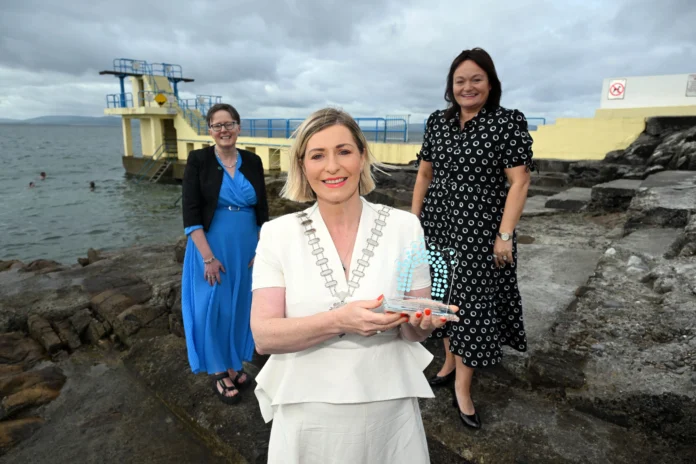
A Mayoral Reception was held last week to celebrate the spectacular achievements of some of Galway’s finest athletes and sporting organisations.

The people and groups being honoured at the reception last Friday included swimmer John Shortt, rower Fiona Murtagh, Castlegar Athletics, and Galway District League.

The ceremony, held in the Clayton Hotel, Galway, acknowledged their achievements in the world of sport – both as outstanding sportspeople, and as ambassadors for Galway and for Ireland.

Mayor of the City of Galway, Cllr Mike Cubbard, acknowledged each group individually for their accomplishments.

Speaking about swimmer John Shortt, Mayor Mike Cubbard said, “In 2025, on top of the challenges of the Leaving Cert, John Shortt took on the World Aquatics Junior Championships in Romania – and returned home as a triple medallist and double world champion.”

“John added to the medal pile at the European Aquatics Championships in Poland at the end of 2025, where he was crowned European 200m Backstroke Champion – his first senior international medal.”

Mayor Cubbard welcomed Fiona Murtagh’s family, as she was unable to travel due to competition commitments.

The Mayor highlighted some of Fiona’s groundbreaking accomplishments, saying, “Having taken up rowing in 2009 after being introduced to the sport by her brother Alan, Fiona Murtagh made history when she brought home Irish Rowing’s first women’s Olympic medal, winning a Bronze Medal in the Women’s Four at the 2020 Tokyo Olympics”

“Indeed, Fiona is a double Olympian, having also represented Ireland in the 2024 Paris Olympics, with a number of European and World medals achieved to date.”

Castlegar Athletics were honoured for reaching a milestone of 50 years as a community in sport. Castlegar AC was founded in October 1975, inspired by a parish sports day on Sunday, June 8 of that year, organised by the Castlegar GAA ladies committee.

Mayor Cubbard acknowledged the dedication and volunteerism of all involved. “For five decades, volunteers have come together to train athletes, to transport them to competitions, to raise money, to host events, and to create a vital and supportive community for their athletes.”

The final group recognised at the event was Galway District League. In February 2026, Galway District League delivered a 5-0 win over Limerick District League in Eamon Deacy Park – to take home the FAI Oscar Traynor Trophy, sealing their second triumph in the competition – with the last win in 1971.

Mayor Cubbard noted that, “The win marks the impact of decades of training, dedication, volunteerism, and skills development in Galway District League”

Mayor Cubbard also paid tribute to “all of the people in the background” supporting the athletes. He commented, “Your belief in your athletes, your transfer of skills and knowledge, your leadership and vision of success have no doubt been instrumental in supporting your athletes to reach their full potential.”

Mayor Cubbard presented John Shortt, Fiona Murtagh’s family, Castlegar Athletics, and Galway District League with a commemorative scroll each, and wished them every success in their future endeavours.

Galway Theatre Festival launches full programme – Tickets now available

0

Running from April 30 to May 9 this year, the Galway Theatre Festival presents a programme rooted firmly in theatre, while embracing the many ways theatre can be made and experienced.

Across ten days, audiences will encounter work that draws on music, dance, circus, puppetry and spoken word, all grounded in live performance and storytelling.

This year’s programme reflects the energy and originality of Galway’s artistic community, with over 60% of the line-up created by Galway-based performers and companies.

It brings together a wide range of work across the city’s venues, offering audiences the chance to engage with theatre that is intimate, physical, visual and richly layered.

Irish Language Theatre

Bilingual and Irish language programming remains a central focus for the festival, reflecting the cultural landscape of the west of Ireland and GTF’s commitment to making work in Irish, with a strong offering within the programme for Irish-speaking audiences.

At the same time, bilingual work invites wider audiences in, creating space for shared understanding and exchange through language, story and performance.

At its core, the festival is about artists taking risks and audiences being invited into that process. This year’s programme has been carefully shaped to allow different works to sit alongside and speak to one another, creating a wider conversation across the festival as a whole.

Recurring themes emerge throughout: memory, the body and identity, belonging and displacement, leaving and returning, loneliness, technology, human connection, resistance, and the ways in which the past continues to shape the present.

There is also a clear interest in form. Immersive and interactive work features strongly this year, with artists experimenting with how audiences experience theatre- whether through intimate encounters, participatory pieces or performances that unfold in spaces across the city.

Among this year’s highlights is SWEAT, a striking speculative work set in Galway in 2045, where environmental collapse has reshaped society in radical ways.

Blending dark humour with sharp social commentary, the piece interrogates Irish attitudes to the body, drawing on themes of Catholic guilt, shame, and identity in a world where nudity is no longer a choice but a mandate.

In The Heart Ward, four actors and a rich soundscape trace a life across decades, moving between 1950s London and present-day Galway. This poetic and deeply human work explores illness, memory and survival, asking how the experiences of childhood continue to shape us into old age.

Irish storytelling traditions are reworked through a contemporary lens in The Little Songbird, a haunting tale of myth, morality and community.

Set in a town defined by its codes of belonging, it examines the legacy of shame and the quiet resilience of those pushed to the margins. This will be a rehearsed reading performance.

New work continues to push boundaries of form and identity. ROOM(S) is a lyrical, time-shifting exploration of queerness, memory and migration, moving between Ireland and Australia as it unpacks the emotional architecture of belonging and selfhood.

ROOM(S) and Songbird are works in progress which reflect GTF’s commitment to creating new work from impulse to stage.

Language and place take centre stage in Connemarvellous, a fast-paced bilingual comedy that captures the chaos and humour of a teenager’s reluctant immersion in Gaeltacht life.

Following a successful development and sold-out performances, this full production brings a sharp, affectionate look at growing up Irish, complete with céilís, culture clashes and teenage angst

In a significant collaboration between An Taibhdhearc and Brú Theatre, Neill | Páidín reimagines the world of Pádraic Ó Conaire for a contemporary audience.

Inspired by Ó Conaire’s seminal Scothscéalta, two interlinked pieces bring the characters of Neill and Páidín Mháire vividly to life, a woman wrestling with betrayal as her moment for revenge approaches, and a fisherman caught in a devastating twist of fate.

Performed in Irish with English language captions through an app, the production immerses audiences in the emotional intensity, rich imagery and lyrical power of one of Galway’s most beloved writers.

Directed by James Riordan, with a live score by Anna Mullarkey and featuring Raymond Keane, Caitríona Ní Mhurchú and Eoin Ó Dubhghaill, this is theatre rooted in language, landscape and legacy- and propelled forward with urgency.

Music and memory drive Housework, an electrifying performance rooted in the voices of Ireland’s pioneering female DJs and club-goers. Drawing on verbatim interviews, it reclaims the dancefloor as a site of resistance, joy and cultural change during the transformative decades of the 1980s and 1990s.

Two standout works in this year’s programme explore connection, care and what it means to navigate uncertainty.

All My Friends Are Bots follows Cassidy, who doesn’t see themselves as the target market for “Automated Companions”. Independent and self-aware, the idea of becoming emotionally attached to an AI that controls home appliances feels unlikely – until a series of unfulfilling relationships begins to shift that perspective.

Darkly comic and unexpectedly tender, the piece examines connection in an increasingly automated world, asking what we gain- and what we lose- when we turn towards forms of love that cannot be returned.

In contrast, The Tightrope Walker offers a quietly affecting account of a woman moving through crisis and recovery. With humour and clarity, Jenny charts the realities of serious illness, reshaping the story each night in response to the moment.

An immersive, live-operated sound design by Martha Knight draws the audience into the work, creating space for reflection and gentle engagement. Blending innovative form with intimate storytelling, The Tightrope Walker considers how care, community and connection can be sustained in difficult times.

Meanwhile, Gulliver in Love offers a playful, participatory experience that places the audience at the centre of a surreal dating journey. Blending satire with immersive performance, it explores modern relationships, queer culture and the search for meaningful connection in a world shaped by apps and expectations.

Across the programme, Galway Theatre Festival 2026 celebrates artists who are not only responding to the world around them but actively reshaping it-through language, form and imagination.

As Galway once again becomes a stage for new work, the festival invites audiences to experience theatre that is immediate, thought-provoking and unmistakably of this place, while remaining open to the wider world.

The full programme was launched on April 1st and is now available at https://galwaytheatrefestival.com/.

Creating the Perfect Garden Lounge Area for Weekend Relaxation: A Real Person’s Guide to Doing It Properly

0

That Friday afternoon feeling that we all know, when the week is finally uncoiling, the kettle has been boiled twice already, and all you want is to get out there and breathe? For a long time, my back garden was not a welcoming place in which to savour that feeling. It was more of a “hang up the washing and occasionally experience some existential dread about the turf” than a hearts and minds lounge area. 

That all changed when I stopped treating the garden as an afterthought and made the effort to create a lounge out there. One of the best things I’ve done for my weekends. Whether you’re trying to get lost in a book, scrolling through the 1xbet apk you downloaded months ago or simply enjoying a peaceful moment with a steaming mug of tea, a well-appointed outdoor lounge can make all the difference.

Start With the Space You Actually Have (Not the Space You Wish You Had)

This is where so many of us go wrong. We see a fab Pinterest spread with the sprawling decked area, fairy lights draped over an olive, an entire outdoor kitchen and suddenly we feel defeated before we even start because our garden is a 6 x 4 metre rectangle in a Dublin semi-d.

But not so much size, as intention, matters. A petite place that is planned will feel more welcoming than a handsome garden left to chance. Before you buy anything, spend some time in your garden at different times of day. Where is the sun in the late afternoon (that is golden hour)? Where does it get draughty? Where can the neighbours see in? Where does the water pool when it rains?

Once you know your space honestly, you can start working with it rather than against it.

The Furniture Question: Comfort Over Instagram

The outdoor furniture market has exploded in the last few years, and there’s no shortage of options – from flat-pack rattan sets at budget prices to beautiful teak pieces that cost more than some people’s sofas. Here’s what actually matters when you’re choosing:

  • Weather resistance: Let’s face it; Irish weather is what it is. So look for materials that won’t warp, rust or go all mushy after a soggy August. Powder-coated aluminium and synthetic rattan survive well. Untreated wood is lovely, but requires care.
  • Cushion quality: Outdoor cushions are not all created equal. The cheap ones go flat and mouldy quickly. Look for cushions filled with quick-dry foam and covered in solution-dyed acrylic fabric – they don’t mind the rain.
  • Scale back to reality: A four-seater sofa and its matching armchairs may look fabulous in a showroom but try packing them into a tiny garden and you’ll be trying to park a van in a box room. Measure twice, order once. 
  • Stack or store: If your space is also a winter storage conundrum, you will need to lean on the stackable friends.

Zoning: The Secret Ingredient Nobody Talks About Enough

One thing that makes a garden lounge work as a lounge as opposed to just looking like someone carried their furniture outside is zoning. Your outdoor space, no matter how small, can have a lounge zone defined without walls or dividers.

A humble outdoor rug does more than it seems – helping ground furniture so you remember this is actually a room. Add a side table or two, some kind of overhead cover (a parasol, a sail shade, maybe an ambitious pergola), and you’ll create an evocation of enclosure that makes lounging seem intentional rather than accidental.

Lighting is a game-changer. Solar fairy lights, a couple of lanterns or low-voltage path lights change the game after dark. This is particularly relevant if you want to be outside on evenings – which, if you do, in summer months is entirely possible even in Ireland on a good night.

Choosing the Right Atmosphere: A Quick Comparison

Different people want different things from their garden lounge. Here’s a rough guide to help you figure out which direction suits you:

Style Best For Key Elements Budget Range
Boho Relaxed Families, creative types Hammock, mixed textiles, plants everywhere Low–Mid
Scandi Minimal Those who hate clutter Neutral tones, clean lines, one statement plant Mid
Mediterranean Lush Entertaining lovers Terracotta pots, bistro chairs, climbing plants Mid–High
Cosy Cottage Quiet weekends, readers Timber furniture, wildflower planting, lanterns Low–Mid
Modern Sleek Design-forward types Concrete planters, black steel furniture, no fuss Mid–High

None of these are rules. Most real gardens end up being a mix of two or three, and that’s completely fine – it means the space actually reflects the people living in it.

Plants: The Layer That Brings It All to Life

You don’t need green fingers to include plants that add life and fresh air to a lounging spot. The aim is to select species of plant that will do the work for you, but not require too much from you in return!Lavender grown round the edge of a seating area smells heavenly in summer and keeps the midges at bay – a wonderful combination.

Bamboo in pots will give you screening without the commitment of a hedge. Just make sure it’s a clump forming variety, not the running kind that will take over your neighbour’s garden. Outdoor ferns are perfect for shady corners where nothing else will grow.

Trailing ivy or nasturtiums can soon soften the hard edges of a fence or wall. A lemon tree in a pot is easier to manage than you might expect, and it’s just so hopeful. You’re not aiming to have a manicured showpiece, you’re aiming to have enough green outside your window so that sitting in the garden for an hour feels like a break from our screens and schedules.

The Tech Question: Knowing When to Put It Down

If I’m to be honest, most of us don’t switch off entirely when we go into the garden. We take the phone with us. We check the news, we check which of our friends have come back to us since we last checked, we read bookish distractions on the 1xbet app in between chapters of whatever we’re reading or we play one of the 1xbet games in a slow Sunday afternoon. All of that is fine – the garden lounge doesn’t have to be a technology-free zone to be restorative.

What it does need to be, is a place in which the technology is optional, rather than compulsory. The experience of doom-scrolling at the kitchen table in harsh fluorescents versus doom-scrolling nestled comfortably in a chair surrounded by plants and birdsong, is profoundly different, even if it looks the same from the outside.

If you want to be more intentional about unplugging, a simple rule is to leave the phone inside for the first 20 minutes. By the time you’d have reached for it out of habit, you’re usually settled and moving in the slow flow of just being outside.

The Finishing Touches That Cost Almost Nothing

Once the furniture and plants are sorted, it’s the small things that elevate a garden lounge from “nice” to “genuinely great to be in”:

  • A chunky throw blanket for evenings – more useful in Ireland than you’d think, even in July
  • A small weatherproof speaker for background music
  • A proper outdoor-safe candle or two for atmosphere (citronella is a bonus)
  • A dedicated spot for drinks – even just a small table or a repurposed crate with a flat top
  • Some kind of container for the bits and pieces that always accumulate outside (sunscreen, the remote for the speaker, the novel you’ve been carrying around since March)

The Real Point of All This

A garden lounging spot isn’t about buyable furniture or plants or smart use of side-return space. It’s about giving yourself a place that feels fundamentally different from the demands of the week, a physical reminder that rest is not a prize you have to earn through hard work, but a thing that happens in places built for it.

The gardens we actually live in are rarely the prettiest ones in photographs – they are the ones where the cushions are a bit crushed on the seating because they get used, where you can see the rings of the mug of tea that has been placed on the table, where the plants are thriving because someone keeps remembering to water them of a Tuesday evening. That is the garden lounge worth building.

From Eamonn Deacy Park to Anfield The Split Loyalties of Galway Fans

0

In Galway, football doesn’t really stay in one place for long. It shifts depending on the day, the weather, or even just who you happen to be talking to. A Friday night at Eamonn Deacy Park feels one way entirely, familiar, close, not always perfect, but real in a way that’s hard to get anywhere else. By the time Saturday comes around, that same attention has usually drifted elsewhere, pulled towards fixtures happening across the water that people here have followed for years without ever needing to explain why.

The pull of two football worlds

It’s not something people really stop to think about. You might still be going over a missed chance from the night before, and then without much notice you’re checking BOYLE sports premier league betting odds before kick-off, just out of habit more than anything else. There isn’t really a moment where one thing ends and the other begins. It just folds into the day.

You see it everywhere. In pubs, in sitting rooms, even in passing conversations on Shop Street. Someone mentions Galway United, someone else brings up Liverpool or United, and the discussion carries on as if it was always meant to include both.

The importance of the local game

That said, the local game still carries a different kind of weight. Walking up to Eamonn Deacy Park on a Friday evening, you recognise faces without needing to know names. There is a certain routine to it all. Walking through the gates, that same walk, even the conversations get picked up, following the week before.

It is not always perfect football. Sometimes it is scrappy, sometimes slow, sometimes decided by a moment that feels almost accidental. But that is part of the appeal. It feels close. It feels like something that belongs to the place rather than something being broadcast into it.

Galway United’s recent run has added a bit more edge to it as well. Bigger crowds, more expectation, a sense that the games matter again in a way they maybe didn’t for a while.

The reach of the Premier League

Then Saturday comes, and everything shifts without really shifting at all. The jerseys change, the conversations get louder, and suddenly the focus is on matches happening hundreds of miles away.

In the Latin Quarter, you can see it clearly. Groups gathered outside pubs, screens just visible through windows, people half watching and half talking. A goal goes in somewhere in England and it gets a reaction here, delayed slightly, but just as loud.

It is a different kind of connection. Less about being there, more about following something that has become part of the routine over time. You might never have been to Anfield or Old Trafford, but you still know exactly how those places are supposed to feel.

A habit formed over time

A lot of it goes back further than people realise. English football has been part of life here for decades. It was on the television long before there were endless channels or streaming options. People grew up with it, picked a team early, and never really moved away from it.

At the same time, that never pushed the local game out completely. The two just ended up sitting alongside each other. With more and more teams taking part in Gaelic traditions. One did not replace the other. It just added something different.

Different atmospheres, same afternoon

The contrast between the two is still obvious. At the Eamonn Daecy Park, you can hear everything, as well as see it. Whether you want to or not, you feel a part of the atmosphere, and in the immediate rush.

In a pub on a Saturday, it is different. Attention comes and goes. Someone is watching closely, someone else is talking through the entire match, and someone misses a goal because they are ordering another drink. It does not seem to matter. The game is still there, just not always at the centre of things.

No need to choose

Nobody really argues about it. It’s just how things are. One night you’re at Eamonn Deacy Park, the next you’re watching a game from England without thinking twice about the switch.

You can care about Galway United and still have a team you’ve followed for years in the Premier League. It doesn’t cancel anything out. It just sits alongside it.

The rhythm of a football weekend

Most weekends end up looking the same, even if no one plans them that way. Friday night at the ground if there’s a game on. Saturday drifting between matches, sometimes properly watching, sometimes just half paying attention while talking or moving around.

Sunday is usually quieter. One game on, maybe. Or just the results checked afterwards.

Why it works

It probably works because no one is trying to make a point out of it. The distance is there if you think about it, from Galway to places like Anfield, but most of the time it doesn’t feel that far.

It’s just part of the routine. And once something becomes part of that, it tends to stick.

Bus transfers on Galway – Dublin trains this Easter Weekend

0
Galway Daily news New timetable adds stops on Galway train services

There will be severe disruption to Galway – Dublin rail travel over the Easter weekend, with bus transfers and revised timetables in place.

From the evening of Friday, April 3, through to the morning of Monday, April 6, bus transfers will be in place for the entire Dublin Heuston – Galway Ceannt journey.

Limerick – Galway trains will also be operating bus transfers between Athenry and Galway.

These disruptions are being caused by a number of ongoing construction and maintenance projects in Galway.

This includes continued construction of the new Ceannt Station in Galway and associated infrastructure, the expansion of Oranmore Station, and track and bridge renewal works at a number of locations.

Revised times will also be in place on all Irish Rail routes from Saturday to Monday. Please check times before travel at the journey planner or the Iarnród Éireann app.

Most Popular

Søstrene Grene Set to Open New Store in Galway

0
Danish lifestyle brand Søstrene Grene will open its next store in Galway in the coming month, continuing its Ireland expansion. The arrival brings its Scandinavian...

Latest

Galway Daily news Roadworks to disrupt traffic near Portumna on Tuesday

N83 roadworks with traffic management ongoing until the end of May

0
Roadworks on the N83 to the north of Galway City will see traffic disruption until the end of May when they are expected to...