Home Blog Page 57

Parents Connect Event Marks Infant Mental Health Awareness Week in Galway

0

In celebration of Infant Mental Health Awareness Week, expectant parents, parents and caregivers of babies and infants (0–3 years) are invited to a free ‘Parents Connect’ event next week.

Organised by the Galway City Early Years group under the Galway Children and Young People’s Services Committee (CYPSC), this special event brings together local organisations, experts and parents to highlight the vital role of early relationships in shaping a child’s wellbeing.

Attendees can enjoy a relaxed morning with tea, coffee and fun activities, meet other parents and access trusted information stands.

From 10:30am, guest speakers will share practical tips for supporting both parent and baby wellbeing.

Speakers include Catherine Maguire, Clinical Psychologist and Infant Mental Health Specialist and PhD Researcher at the School of Psychology, University of Galway (social and emotional development of babies and infants) and Karen Concannon, Community Sports Development Officer, Galway Sports Partnership, (movement and activity)

Infant Mental Health Awareness Week runs from Monday June 9 – Friday, June 13, and the ‘Parents Connect’ event will be held on Tuesday from 9:30 to 11:30am at the Radisson Red hotel in Galway City.

Highlighting the week’s importance, guest speaker Catherine Maguire said, “The earliest relationships and experiences shape the quality of an infant and young child’s brain and supports their emotional wellbeing and lifelong health.”

“By also supporting our parents and caregivers, we help to lay the foundations for children to feel safe, loved, and ready to explore and learn.”

“Infant mental health is everyone’s business, and small positive changes can make a lasting difference.”

This event coincides with Infant Mental Health Awareness Week, which shines a spotlight on the importance of early years and the support available to families.

Galway City Early Years group is made up of a range of local agencies including Ard Family Resource Centre; Galway CYPSC; Galway Childcare Committee; Galway City Partnership; Galway Sports Partnership; HSE’s Health Promotion and Improvement, Community Nutrition & Dietetics, Public Health Nursing, and Young Parents Support Programme; Healthy Galway City, TULSA Family Services and University of Galway.

ICS Medical Devices creating 72 new jobs in Galway

0
Galway daily business

ICS Medical Devices, a leading catheter design & manufacturing services provider, has announced that it plans to create 72 new jobs in Galway by 2028.

The new roles being created over the next three years will be across engineering, human resources, manufacturing, and quality.

The company, founded in 2019, has been approved for €1.5 million in funding through a number of Enterprise Ireland supports, which will directly support investment in facilities, capabilities, people & new technologies.

Speaking at the announcement at ICS Medical Devices, Minister of State, with responsibility for Disability, Hildegarde Naughton congratulated ICS Medical Devices on their growth and the new jobs the company will be creating.

“This expansion is a testament to their innovation and commitment to excellence. I’m also pleased to see Enterprise Ireland supporting this success through their grant funding, helping to drive job creation and economic development in the region.”

Speaking at the announcement, Jenny Melia, Executive Director and incoming CEO, Enterprise Ireland, said, “ICS Medical is at the forefront of innovation in the medtech sector, developing best in class catheter solutions to meet the needs of the global healthcare sector.”

“I’d like to congratulate the team on today’s anniversary and the plans to create an additional 72 high-quality positions over the next three years.”

“Supporting Irish companies with the ambition to scale globally is a key priority for Enterprise Ireland and we will continue to work closely with ICS Medical to optimise their full international growth potential, creating and sustaining jobs here in the Galway region.”

ICS Medical Devices works with international medical device companies in the design, development and commercialization of catheters, access sheaths, balloon catheters, valve delivery systems, and stent delivery systems.

“Furthermore, ICS Medical Devices is playing a vital role in strengthening Ireland’s Medtech ecosystem,” she continued.

“Their continued success and growth in such a short period of time from a high potential start-up to an established highly regarded company not only highlights their leadership in the sector but also provide valuable expertise, technology, and services that are instrumental in supporting other Irish start-ups coming through to achieve key milestones.”

Seamus Fahey, CEO of ICS Medical Devices, added, “We are delighted to announce this continued expansion of ICS Medical Devices and the creation of 72 new jobs.”

“This growth reflects the hard work of our team, the continued investment in new technologies, and the increasing demand for our services.”

!We look forward to continuing to support our customers in pioneering advancements in medicine. We sincerely thank Enterprise Ireland for their continued support, which has been instrumental in helping us scale and succeed.”

31st annual Croí Corrib Charity Cycle on this weekend

0
Galway Daily news

The 31st annual Croí Corrib Charity Cycle will take place in Galway City and Connemara this weekend, with some traffic disruption expected along the routes.

The cycle starts at University of Galway Dangan Sports Campus at 8am on Sunday, and finishes at Croí House, Newcastle.

Due to the large number of cyclists taking part, Croí are advising motorists and road users that there may be delays in the area throughout Sunday.

There are two routes which will be affected throughout the morning and afternoon.

50km Route: An out-and-back route that departs from the Dangan Sports Facility Carpark (adjacent to NUIG), heads out via the new Moycullen bypass, stops at Oughterard, and returns back via the Moycullen bypass before finishing at the Croí Heart & Stroke Centre.

107km Route: Departs from the Dangan Sports Facility Carpark (adjacent to NUIG) before passing through Moycullen, Spiddal, Rossaveal, Maam Cross, and Oughterard, returns via the Moycullen bypass, and finishes at the Croí Heart & Stroke Centre, Newcastle, Galway City.

The shorter route does not go through Moycullen. The longer route goes through Moycullen Town on the way out, but back via the new Moycullen bypass.

Croí would like to take this opportunity to thank cyclists, motorists, and local communities along the route for their patience and understanding in advance of the event.

Registrations for the event close on Saturday at 4pm. No registrations will be permitted on the day.

President Higgins donates Presidential Archive and Books to University of Galway

0

President Michael D. Higgins donated his Presidential Archive and books from his personal collection to the University during a visit to his old alma mater on the second day of his Galway trip today.

The documents in the archive, which include personal papers, writings and correspondence, will be held in the Archives and Special Collections of the University Library.

The donation was formally announced at a special celebratory event at University of Galway, where President Higgins was accompanied by his wife Sabina as he was welcomed back to his alma mater, where he studied and taught before entering politics.

The event was held at the Aula Maxima in University of Galway’s iconic Quadrangle, which was renamed The Michael D. Higgins Auditorium as part of the celebrations.

A portrait of President Higgins, by artist Colin Davidson, which has been acquired by the University for its public art collection, was also unveiled.

The celebration was hosted by Chair of the Governing Authority of University of Galway, Dr Máire Geoghegan-Quinn and Professor Peter McHugh, Interim President of University of Galway.

President Higgins said, “I am very pleased to formally announce the collaboration with the University of Galway of my archive of writings and documents from my Presidential terms, for their custodianship.

“The University of Galway Library Archives and Special Collections can now provide a secure home for these files and make them accessible to future generations of researchers who are interested in the political, social and cultural life of our country over this period”.

The added that files of his presidency in the archives could “perhaps explain my thinking, motivation, and frustration too – the personal data that has helped inform my speeches, statements and other written materials over the past 14 years of my life mar Uachtarán na hÉireann.”

Spanning two full presidential terms, President Higgins’ archive offers an extraordinary window into the life and work of Ireland’s ninth President with a rich array of material representing personal papers from his time in office.

It includes meticulously edited speech drafts bearing his handwritten annotations and his personal correspondence with a wide and diverse network of individuals.

The collection runs to more than 150 archival boxes and is to be catalogued by Archivist Kieran Hoare.

The official records of President Higgins’s terms of office will remain with the State and be transferred to the National Archives.

“As well as my archive files, as an avid reader with a significant collection of books, I am delighted to be in the process of contributing a proportion of my collection to the University.”

President Higgins said that this collection includes titles that he acquired for his research, including “some heavily annotated volumes that informed my thinking during my time as a lecturer at the University through to my Presidency.”

“The collection also includes many books presented to me from a wide range of sources while undertaking local, national and international engagements, with some of these marking historic events attended by myself in an official capacity.”

“For me it is important that the Aula Maxima in the Quadrangle – the iconic auditorium which I am truly honoured is now to be associated with me as the ‘Michael D. Higgins Auditorium’ – always be open and accessible to the public, to those who live in Galway, to visitors, to the university staff and students, and to visitors and tourists.”

“Therefore, it is a source of pleasure to hear that it is a space that will be utilised not just for university related occasions, but that it will also be used for other public occasions such as, for example, the Galway Arts Festival.”

Monica Crump, University of Galway Librarian, said, “President Higgins is a true scholar with a passion for books and the importance of reading.”

“His archive and books enable us to witness his scholarship in action, with well-thumbed and annotated books linking directly to his work as President and the topics in his speeches.”

“It is an absolute privilege that he has chosen to donate his Presidential archive and a selection from his book collection to the University of Galway Library and we are proud to be the custodians of his legacy, which will inspire future generations of students and scholars”.

Can Betting Be Relied upon as a Primary Source of Income?

0
watching sports and place bets

For many players, betting starts as entertainment. Some take it further and treat it as a possible income stream. Whether it can serve as a stable source of earnings depends on skill, discipline, and access to tools for analysis.

Betting for income is not about chance. It relies on research, market awareness, and long-term bankroll control. Risk is always present, but structured betting strategies reduce exposure. Incentives offered by platforms can also support profitability. 1xbet code Ireland promotions reflect this shift by rewarding calculated and consistent participation.

In regions with strong betting culture, including parts of the UK and Ireland, experienced punters often treat betting like a part-time job. They study odds, follow market movement, and manage betting sessions with a fixed plan. The results vary, but those with clear boundaries are more likely to achieve steady returns.

Evaluating Betting as Income

Earning consistently from betting requires structure. It is not based on luck, but rather on routine and accurate judgement. Profitable betting includes record-keeping, trend analysis, and proper risk-to-reward evaluation.

Markets move quickly. Bookmakers update odds based on team news, injury reports, or public betting patterns. Those who treat betting as income must react to these changes fast. This process requires time, not just instinct.

Full-time bettors often rely on a few markets where they hold an edge. These include totals, player props, and niche sports where lines are slower to adjust. Profit is built on repetition, not occasional large wins.

Tools and Focus Areas for Strategic Betting

To manage betting like a business, individuals must track results and manage variance. Blind betting, even on popular events, rarely leads to sustained profit. Successful punters focus on areas where they have the most knowledge or statistical support.

Key principles followed by strategic bettors:

  • Use of staking plans to manage balance and avoid loss spikes.
  • Specialisation in one or two sports only.
  • Continuous review of winning and losing bets.
  • Avoidance of chasing losses or emotional betting.

For example, many find value in Horse racing tips and betting markets, which offer variety and volume. With frequent races, multiple bet types, and track-specific factors, horse racing rewards those with deep market understanding.

Behavioural Challenges in Income-Based Betting

Treating betting as income introduces mental pressure. Bettors must control frustration, overconfidence, and fatigue. These psychological factors often affect decision-making. Awareness of these risks is vital for staying focused.

This is especially relevant in fast-paced markets. The psychology of micro betting highlights how quick decisions and small stakes can distort perception. Bettors may feel in control but lose track of outcomes due to speed and repetition.

Time management also becomes critical. Professional-style betting sessions are scheduled. They are not tied to mood or emotion. This structure is key to preventing fatigue and impulsive decisions.

The Role of Technology and New Markets

Modern betting platforms offer more tools for informed decision-making. These include stat previews, odds trackers, and live analytics. They also offer bet customisation and market filters for personal use.

In addition, payment systems are changing. More bookmakers ready for the cryptocurrency now offer secure and fast transactions. This suits those who want quick access to winnings and fast redeposits for strategy updates.

New markets such as esports, virtual sports, and political events attract bettors looking for less saturated betting areas. These markets often provide higher variance, but also more opportunity if approached with solid research.

Stability, Discipline, and Long-Term Thinking

While betting can become a consistent source of income, it is not guaranteed. Success comes from patience, study, and emotional control. Most importantly, it requires realistic targets. Earnings vary based on volume and strike rate. Professional bettors rarely aim for large daily wins. Instead, they focus on monthly or seasonal returns.

Maintaining a separate bankroll is also essential. Mixing personal and betting funds creates problems when managing variance. Clear division helps track performance and reduce pressure.

Betting as income is possible, but only when approached with professional habits. It demands serious effort, regular analysis, and strict discipline. Those prepared to apply these principles can build steady returns. Those who treat it casually are more likely to lose than win.

Galway Hosts First-Ever Green Clubs Event

0
Ballinderreen GAA Club in County Galway, which will host an information evening on the Green Club Programme on June 17th. Credit: Ballinderreen GAA.

Galway County Council has joined forces with GAA, LGFA, and Camogie clubs from across Galway for the county’s first-ever Green Clubs event at Ballinderreen GAA Club in June.

The Green Clubs Programme—a collaboration between the GAA and local authorities throughout Ireland—was launched in 2020 to support clubs in taking climate action.

The programme is funded with support from the Department of the Environment, Climate and Communications.

The upcoming information evening on Tuesday, June 17, will feature guest speakers and experts on a range of key topics, including Energy, Waste, Biodiversity, and Funding Opportunities.

The event will also showcase real-life case studies from Ballinderreen GAA Club and St. Brendan’s Club in Ballygar, highlighting their implementation of impactful climate and sustainability projects.

Funded under the Community Climate Action Fund and supported by Galway County Council, Ballinderreen GAA Club has installed planter boxes for a Pollinator Pathway, solar panels on the clubhouse, a windows upgrade for the Community Centre, recycling bins, and a water fountain.

Cllr. Martina Kinane, Cathaoirleach of the County of Galway, said, “Galway County Council is extending an open invitation to all GAA, LGFA, and Camogie clubs across County Galway to join us for this important event.”

“It’s a unique opportunity to learn from fellow clubs, gain expert insights, and discover practical steps you can take to make your club more sustainable.”

“By coming together, clubs can lead the way in climate action—on and off the pitch—for the good of our communities and future generations.”

Denise Feeney, Green Club representative and Community Climate Action Officer for Galway County Council, said that the event will showcase “practical examples of how Galway clubs can embrace green initiatives.”

She added that it will help them to “future-proof their facilities, cut costs, and enhance community well-being while making a positive impact on the environment.”

Confirmed speakers at the event include Paul Bellew (Chairperson of Galway GAA), Míde Ní Shúilleabháin (Sustainability Adviser (GAA Green Club Programme), Orla Ní Shuibhne (Community Mentor, Sustainable Energy Authority Of Ireland), Sinéad Ní Mhainnin (MyWaste.ie), Brendán Ó Loinsigh (Ballinderreen GAA Club), Brian Healy (St. Brendan’s Club), and representatives of the Biodiversity and Climate Action offices of Galway County Council.

The evening will conclude with a Questions & Answers session and a walkabout tour of the Ballinderreen GAA Green Club, showcasing its innovative climate action projects.

Clubs planning to attend are requested to RSVP to climateaction@galwaycoco.ie by Monday, June 16th, 2025.

Value of new Galway City HQ drops by €8 million

0

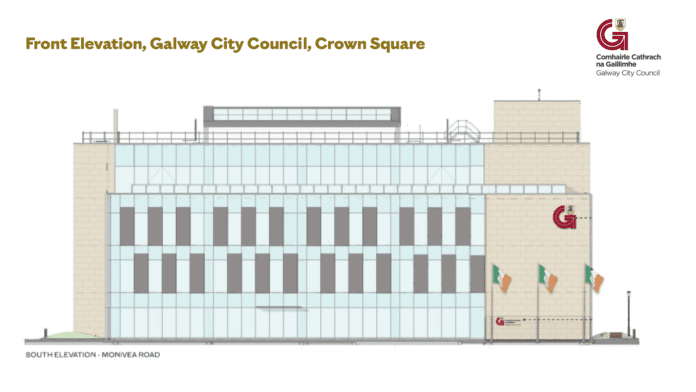
The new headquarters for Galway City Council has fallen in value by €8 million since it was purchased two and a half years ago.

Galway City Council is planning to begin moving into the new HQ in the Crown Square development on Monivea Road in 2026.

The move has been the subject of some controversy, with criticism levelled at a lack of consultation with staff and the public.

The building was bought by the city council in December 2022 for €36 million. Since then, its value has fallen to €28 – €29 million as of May 2025.

The valuation, which was carried out by Avison Young and Power Property, states that the decline reflects wider trends in the commercial property market, such as rising interest rates, post-COVID changes to office demand, increased construction costs, and global economic uncertainty.

The valuation was presented to elected members of Galway City Council on Tuesday. Council officials maintain that Crown Square remains the most cost-effective solution.

It is asserted that the value of the building will exceed the €36 million price over the course of its 40 year expected lifespan.

The council states that by consolidating four existing office sites into one, this new HQ will avoid €108 million in renovation and temporary relocation costs.

This would include an estimated €69 million cost to refurbish and expand the current City Hall premises on Prospect Hill, and a further €38 million to temporarily relocate office staff while this was underway.

The next stage of the project will be the fit-out. A tender for this is expected to be issued in June, and returned by August.

UHG warms of extreme pressure on bed availability today

0
Galway Daily news

Univeristy Hospital Galway is under extreme pressure today as high numbers at the emergency department, along with COVID and Norovirus cases, are putting pressure on beds.

Yesterday, Wednesday 4 June, 246 people attended at the Emergency Department and there were 57 admissions. There are currently 32 patients in the Emergency Department, with 50 patients waiting to be admitted.

The hospital has advised that it is also currently dealing with COVID-19 and Norovirus cases.

Where a ward is affected by COVID-19 and Norovirus visiting is limited and all visits must be pre-arranged by the family members / nominated visitor, who should contact the relevant ward or unit in advance

The hospital is advising that patients who attend ED for routine and non-urgent treatment will experience very long waiting times.

All available beds in the hospital are in use. Patients are facing long waiting times to be admitted from the Emergency Department to a bed on a ward.

“Every effort is being made to discharge patients who are ready to go home so that beds will become available for patients who need to be admitted, at the earliest opportunity,” a statement from UHG said.

“Due to the pressures on the site and the lack of bed capacity, the hospital is postponing some elective procedures. Urgent, time sensitive cases are being prioritised. Patients are being contacted directly if their procedure is being postponed.”

“As always, people who do require emergency care are encouraged to attend EDs where they will be prioritised.”

President Michael D. Higgins Celebrates 25 Years of Terryland Forest Park

0
05/06/2025 repro free: Uachtaráin na hÉireann, Michael D. Higgins along with his wife Sabina Higgins commemorated 25 years of Terryland Forest Park at a celebration in Galway City . The ‘Green Lungs’ of Galway City was planted in early 2000, over the course of a single day (12 March), with over 3,000 people arriving into an empty field - and leaving having planted a forest. The event recognised the dedication and commitment of Galway City Council Recreation and Amenity staff; volunteers from Tuatha of Terryland Forest Park; and President Higgins – who at the time, as a Minister for Arts, Culture and the Gaeltacht (1993-1997), secured funding for the nascent forest project. Terryland Forest Park was the largest urban neighbourhood forest project in the history of the Irish State, when it opened to the public for the first time in March 2000.  Photo:Andrew Downes, xposure

Uachtaráin na hÉireann, Michael D. Higgins commemorated 25 years of Terryland Forest Park at a celebration in Galway City today.

The ‘Green Lungs’ of Galway City were planted in early 2000, over the course of a single day in March. Over 3,000 people arrived in an empty field that morning and left having planted a forest.

The event recognised the dedication and commitment of Galway City Council Recreation and Amenity staff, volunteers from Tuatha of Terryland Forest Park, and President Higgins, who, as Minister for Arts, Culture and the Gaeltacht at the time, secured funding for the nascent forest project.

Terryland Forest Park was the largest urban neighbourhood forest project in the history of the Irish State when it opened to the public for the first time in March 2000.

President Higgins said at the commemoration, “We celebrate today the important milestone that is the 25th anniversary of the opening of Terryland Forest Park.”

“Owned and managed by Galway City Council and assisted by Tuatha volunteers, today Terryland Forest Park represents a wonderful urban mosaic of woods, meadows, wetlands and other natural habitats that also serves as an outdoor classroom and laboratory for schools and universities.”

“As well as educational and recreational amenity value, the park also helps the country to meet its international commitments in tackling the climate and biodiversity crises by acting as a carbon sink and wildlife sanctuary.”

“May the Poet’s Trail and Terryland Park continue to be a source of recreation, well-being, and perhaps even transcendence for years to come.”

As part of the commemoration, President Higgins planted an oak tree in the very spot he previously planted a King Oak 25 years ago, which was knocked down by Storm Eowyn.

The event was attended by President Higgins and his wife Sabina Higgins; Mayor of the City of Galway, Cllr Peter Keane, TDs, Elected Members of Galway City Council, staff from Recreation and Amenity in Galway City Council, volunteers from Tuatha of Terryland Forest Park and children from teachers and pupils from St. Nicolas’ Parochial School, Castlegar National School and Scoil San Phroinsias.

Artwork from children in the three schools, imagining the future of the forest from 25 years ago, was displayed alongside contemporary artwork from the same three schools depicting how the native woodland of today would evolve into the future.

The King Oak that came down during Storm Eowyn was transformed into five pieces of art by Galway-based artist Tommy Carew.

Mayor Keane commented, “Terryland Forest Park was the first public park in Ireland designed with public participation and represented a wonderful proactive partnership between stakeholders.”

“The park became an ‘ecological corridor’ for wildlife connecting the Corrib waterways through the city to the farmlands of east Galway. In a time of an interconnecting global climate and biodiversity crisis, the role of this park has never been more crucial.”

“The planting of the new oak tree honours the work of past generations in bringing the woodland to fruition, while symbolising hope for the next generation to take up the mantle and heralding the next 25 years of Terryland Forest Park.”

Galway Team Honoured for Virtual COPD Care Initiative at Irish Healthcare Centre Awards

0
CMG Healthcare Awards '25 23-05-25

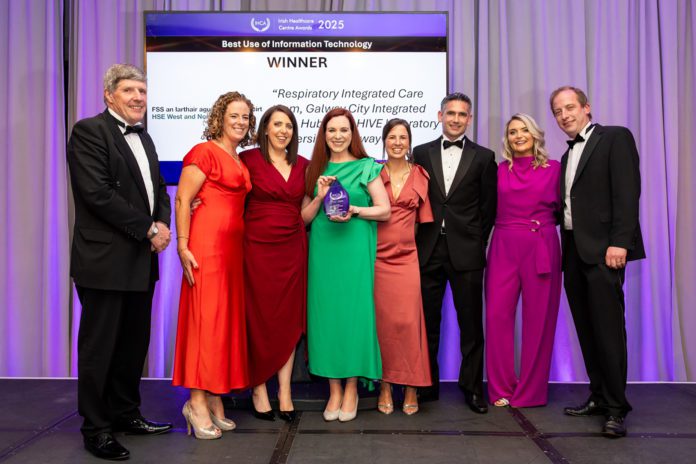
The Respiratory Integrated Care Team, Galway City Integrated Care Hub, and the HIVE Laboratory at the University of Galway were honoured at the Irish Healthcare Centre Awards recently, for their virtual care initiative for COPD patients.

The initiative, which leverages remote patient monitoring technology, was recognised with the award for ‘Best Use of Information Technology’.

The COPD virtual care pathway, which launched in April 2024, has redefined how care is delivered to patients experiencing a COPD exacerbation.

The model enables patients to recover at home, supported by a multidisciplinary clinical team, fostering greater patient empowerment and continuity of care.

To date, 95 episodes of care have been delivered through the virtual pathway, resulting in the saving of 545 hospital bed days.

The average length of stay under virtual care has been reduced to 6.01 days, compared to the national inpatient average of 7.5 days for COPD patients in Ireland.

Through a user-friendly application, MyPatientSpace, patients are empowered to report their daily symptoms and monitor key health metrics from the comfort of their homes.

Equipped with a pulse oximeter, they can track vital signs such as oxygen saturation and heart rate on a daily basis. The system is designed to detect any deviations from target ranges or emerging concerning patterns, triggering real-time alerts for the clinical team.

This enables rapid intervention and the development of personalised care plans, helping to address issues early and prevent escalation.

Professor Sinead Walsh, Consultant Respiratory Physician, University Hospital Galway and Respiratory Lead for the Galway City Integrated Care Hub said, “This pathway has been transformative in how we care for patients with COPD.”

“It allows us to detect deterioration earlier, provide timely interventions, and support patients to recover safely in their own homes.”

“The feedback from patients has been overwhelmingly positive—they feel more in control of their health and reassured by the daily connection with the care team.”

Professor Derek O’Keeffe, Consultant Physician, University Hospital Galway and Director of the HIVE Lab said, “This digital health initiative demonstrates how innovation happens through collaboration.”

“Professor Sinead Walsh, Consultant Respiratory Physician and her clinical team including Emma Burke, Respiratory Advanced Nurse Practitioner worked with Dr David Tiernan and the HIVE Lab research team at the University of Galway to develop and implement a novel digital health solution to improve COPD patient care.”

This award-winning initiative reflects a broader shift toward digitally enabled, patient-centred care, demonstrating how technology can enhance clinical outcomes, optimise resources, and improve patient experience in chronic disease management.

Streamlining Your Travel Essentials: The Art of Minimalist Packing

0

When it comes to international travel or living abroad, packing as light as possible isn’t just a practical choice, it’s a necessity in order to ensure a smooth travel experience. Gone are the days of lugging around bulky suitcases filled with every possible item you might need. Today’s savvy travelers know that less is more, especially when it comes to everyday essentials like our wallets. Let’s dive into how the right compact wallet can revolutionize your travel experience and simplify your life while abroad.

The Evolution of Travel Wallets

Remember those cluncky, overstuffed wallets that felt like carrying a brick in your pocket? Thankfully, they’re becoming a thing of the past. Modern travelers are more and more embracing sleek, minimalist designs that can offer them maximum functionality in a compact package. For example, the innovative Secrid wallets are changing the game, providing a perfect balance of style, security, and practicality.

Key Features to Look for in Travel-Friendly Wallets

Choosing the perfect travell wallet is about finding that sweet spot between form and function. Here are some features to look out for when researching the market: 

  • RFID protection: Safeguard your cards from electronic pickpocketing.
  • Slim profile: Opt for designs that fit comfortably in any pocket.
  • Durability: Choose materials that can withstand the rigors of travel.
  • Versatility: Look for wallets that can adapt to various currencies and card types.

Organizing Your Cards and Cash Abroad

When you are on the move, staying organised is crucial. A well-designed card holder can make all the difference by allowing you to easily access your most important cards while keeping them secure. Consider how you’ll balance the need for quick access with the importance of protecting your financial information in unfamiliar environments.

Adapting to Different Currency Needs

One of the quirks of international travel is dealing with the many different types of currency, especially when jumping between different countries. Make sure that you look for wallets that offer flexible storage options to accommodate different sizes of bills and coins. Some innovative designs feature expandable pockets or removable sections, allowing you to customize your wallet based on your destination.

Travel Light, Travel Smart

Choosing a well-designed and compact wallet isn’t just about packing ligt – you’re adopting a new mindset for travel. Whether you’re exploring busy city streets, soaking up the sun on a remote tropical beach, or setting up a new life abroad, a streamlined wallet can contribute significantly to your comfort and convenience. Remember that the less you carry on you, the more freedom you’ll have to fully immerse yourself in your international adventures. 

The Impact of Minimalist Travel on Your Experience

Adopting a minimalist approach to travel, starting with your wallet, can have a profound impact on your overall travel experience. With fewer things to manage, and hence less to worry about, you’ll find yourself more present in the moment, being able to fully engage with new cultures and places. A compact wallet will encourage you to be more mindful about what you truly need, which will in turn lead to smarter spending habits and a greater appreciation for experiences over material possessions.

Moreover, traveling light with a slim wallet will also enhance your security. You’ll be less of a target for pickpockets, and you’ll move through crowded areas with greater ease. This newfound agility can open up opportunities for spontaneous adventures and hidden gems that might be challenging to access when carrying bulkier accessories.

So, next time that you find yourself getting ready for an adventure, consider how a thoughtfully chosen wallet can be the first step towards a more effortless and enjoyable travel experience. It’s not just about carrying less; it’s about gaining more – more freedom, more flexibility, and more unforgettable moments in your global travels.

How Galway’s Secondary Schools Can Lead the Way with Virtual Trading Challenges

0

Why are we still treating financial literacy like an afterthought in schools? Teenagers are surrounded by content about investing, crypto, forex, and markets. They’re curious. They’re asking questions. But when it comes to the classroom, we’re still stuck in the basics, such as how to save your money, open a bank account, and maybe a little budgeting.

It’s time to level up. Galway’s secondary schools have a real opportunity to lead the way by bringing virtual trading challenges into the mix. These simulations let students explore the world of investing without the pressure of real money. It’s engaging, practical, and builds confidence in a space that will shape their adult lives.

What Are Virtual Trading Challenges?

Virtual trading lets students experience investing without using real money. It’s a risk-free way to explore how financial markets work. They can buy and sell based on live market data, watch how prices move, and respond to changes, all within a simulated environment.

The setup is usually designed like a challenge, where students compete over a set period. That competitive element keeps things engaging, but the real value is in what they pick up along the way. They start to see how news events impact markets, how decisions carry risk, and how strategies play out over time.

These challenges are also incredibly flexible. Teachers can adjust them to suit different age groups or experience levels. Whether a student is just starting to explore economics or already has an interest in the stock market, there’s room for everyone to get involved and learn by doing.

Why Galway? Why Now?

Galway is full of smart, capable young people who are more digitally fluent than ever. Schools here already emphasise innovation in science, arts, and technology. So why not finance?

Here’s what makes Galway a perfect testing ground:

Curious students ✔️

There’s already interest in entrepreneurship and digital careers.

Supportive educators ✔️

Many schools are open to creative approaches, especially when tied to real-world outcomes.

Strong academic culture ✔️

Galway’s schools often lead in educational experimentation, from coding initiatives to green energy projects.

Adding a virtual trading challenge is a natural next step. It bridges digital skills with economic thinking, all while building a healthy relationship with risk and decision-making.

What Skills Do Students Actually Learn?

This isn’t just about who can guess the best stock pick. Virtual trading builds layered skills that matter in school, careers, and life in general.

  • Financial literacy – Understanding how markets work and why they move.
  • Critical thinking – Evaluating information quickly, making calculated decisions.
  • Emotional control – Managing fear, greed, and uncertainty.
  • Strategic planning – Setting goals, adjusting approaches, and learning from outcomes.
  • Teamwork – In group challenges, collaboration becomes part of the strategy.

Compare that to a typical business studies exam, and the difference is obvious. One teaches concepts. The other teaches experience.

How to Get Started in the Classroom

Getting a virtual trading program up and running doesn’t mean rewriting the curriculum. It can start as an extracurricular activity, a project in business class, or even a short-term workshop.

Here’s a simple step-by-step idea for how schools could start:

  1. Set the timeframe – 4 to 6 weeks works well for a first round.
  2. Create teams – Small groups promote discussion and strategy.
  3. Choose a simulated platform – Use one that mirrors real-world market data.
  4. Track performance – Leaderboards and performance reports help keep students engaged.
  5. Wrap with reflection – Encourage students to talk about what worked and what didn’t.

To make this realistic, schools can incorporate tools like a demo trading account. This gives students access to real-time markets with zero financial risk and helps them understand how trades are placed, what margins mean, and how strategies unfold.

Common Questions Schools Might Ask

Is this too advanced for teenagers?

Not at all. The key is to start simple. You don’t need to get into derivatives or complex indicators. Focus on the basics, such as buying, selling, watching market movement, and understanding news impacts. As students build confidence, they can explore in more detail.

What about safety and regulation?

Because this is all virtual, there’s no money involved. That removes legal concerns around underage investing. It’s an educational experience, not financial advice or trading with real funds.

Do teachers need finance experience?

Helpful, but not essential. Most trading simulations come with user guides, and there’s plenty of free educational content out there. It’s less about knowing all the answers and more about guiding students to ask the right questions.

Benefits Beyond the Classroom

Virtual trading doesn’t just prepare students for business careers. It builds life skills that apply across the board.

  • Confidence with money – Early exposure reduces fear and confusion about finances later on.
  • Interest in global events – Students begin to understand how politics, economics, and even weather can impact financial systems.
  • Career clarity – Some may discover a passion for finance or economics that they hadn’t considered before.
  • Decision-making under pressure – They learn how to stay calm, assess options, and make informed choices when outcomes matter.
  • Digital literacy – Navigating trading platforms helps develop comfort with tools and interfaces used in modern finance and business.

Introducing tools like an indices trading platform gives students a look into broader market strategies, like understanding how sectors and global trends affect entire markets rather than just individual stocks.

Let’s Give Students More Than Just Theory

Imagine a future where students leave secondary school not only knowing how to budget but also how to understand financial headlines, question economic policies, and explore investment opportunities with confidence. Galway could make that vision part of everyday school life!

Galway County Council Unveils Landmark Heritage and Biodiversity Plan

0
Representatives of Galway County Council, The Heritage Council and the Galway County Heritage & Biodiversity Forum pictured at the launch of the Galway County Heritage and Biodiversity Plan 2024-2030 at the Marine Institute, Rinville, County Galway. Credit Jacinta Fahy Photography.

Galway County Council has launched its strategy for preserving and enhancing the county’s rich built, natural, and cultural heritage over the next six years.

Unveiled today at the Marine Institute in Rinville, the Galway County Heritage and Biodiversity Plan 2024–2030 sets out a detailed roadmap to address challenges such as climate change, biodiversity loss and the need for community-driven heritage preservation and the safeguarding and protection of the County’s intangible cultural heritage.

Developed in collaboration with Galway County Heritage & Biodiversity Forum and The Heritage Council, the plan is the only one of its kind in Ireland to fully integrate biodiversity and heritage in a combined action plan.

Among the key priorities are conducting a comprehensive biodiversity audit of Council-owned lands, updating Galway’s Invasive Alien Species Strategy and developing a countywide Tree and Hedgerow Management Plan.

The plan also commits to protecting sensitive habitats such as peatlands and marine ecosystems and delivering biodiversity education through training in collaboration with the Public Participation Network (PPN).

The built heritage aspects of the Galway County Heritage and Biodiversity Plan 2024-2030 aim to preserve, protect, and enhance the county’s built and archaeological heritage by promoting best practices, supporting community engagement, and ensuring compliance with relevant legislation.

The plan also seeks to raise awareness, provide education and training, and foster collaboration among stakeholders to ensure the sustainable management and conservation of these heritage assets.

On the cultural heritage front, the plan aims to empower communities to actively engage with and safeguard their local heritage.

This involves recording and digitising cultural heritage data, supporting community-led arts and oral history projects, and strengthening investment in both staffing and funding to grow the sector sustainably.

“I am honoured to launch the Galway County Heritage and Biodiversity Plan 2024–2030—a shared commitment to protecting the rich natural, built, and cultural heritage of our county,” stated Cllr. Martina Kinane, Cathaoirleach of the County of Galway.

“This plan reflects the passion and dedication of communities across Galway and outlines practical, adaptable actions to raise awareness and safeguard our heritage and biodiversity” added the Cathaoirleach.

“In the face of climate change and biodiversity loss, it serves as a roadmap for collective action. I invite everyone to get involved—together, we can create lasting, positive change.”

The Council’s last plan (2017–2022) delivered several notable achievements, including the award-winning Digitising Galway’s Graveyard Heritage project, which made more than 40,000 burial records accessible to the public online.

Other successes included an Audit of the County’s Holy Wells, a Barn Owl Conservation initiative that showed the first signs of species recovery in 50 years, and a countywide masterplan for oral heritage collections.

The Council also supported Féile na gCloch, or “Festival of Stone,” on Inis Oírr, which celebrates traditional stonework craftsmanship.

Liam Conneally, Chief Executive, Galway County Council, said, “The Plan sets out a clear, action-driven vision to protect and celebrate our county’s rich natural, built, and cultural heritage.”

“It will guide our efforts in addressing climate and environmental challenges, promoting sustainability, and enhancing awareness and stewardship.”

“I thank the Galway County Heritage and Biodiversity Forum, the Heritage Council, and all who contributed. Galway County Council is proud to lead this important work and looks forward to its successful implementation,” added Mr. Conneally.

Martina Moloney, Chair of The Heritage Council, commented, “By bringing together heritage and biodiversity efforts under one unified strategy, Galway is setting a national example of forward-thinking stewardship.”

“We are proud to have supported this ambitious plan and remain committed to working closely with Galway County Council and the community to ensure its successful implementation, safeguarding Galway’s unique identity for generations to come.”

The Galway County Heritage and Biodiversity Plan 2024–2030 was shaped by extensive public consultation over the past two years.

Engagement efforts included countywide consultation events, an online survey, and targeted workshops with the Traveller community, Brothers of Charity, primary and secondary schools, and active age groups.

The plan, which received over 450 public submissions, was formally approved by Elected Members in December 2024.


Galway children invited to throw tea party for kids in need

0
Team Hope CEO, Deborah Lowry, back, with Corduff NS pupils Sebastian Byrne Stokes, front left, Roxanna Ioanovici, Patrick O'Hanlon and Sadhbh Murphy, are urging children across Ireland to host a Team Hope Tea Party in June. For more information on how to host a Tea Party or simply get involved, visit teamhope.ie. Picture: Conor McCabe Photography.

Children across Galway are being asked to support vulnerable youngsters around the world by hosting a tea party in their final weeks of school.

The new initiative is organised by Team Hope, the charity working to transform children’s lives by tackling poverty and inequality in African and Eastern European countries.

Now in its 15th year, the organisation, best known for its Christmas Shoebox Appeal, has revealed that people in Ireland have donated €2million in life-changing aid since 2010.

The ‘Team Hope Tea Party’ has a €240,000 target to fund vital projects such as clean water, education and income-generation opportunities in countries including Kenya, Burundi, Malawi, and Rwanda, where many live on less than $2 a day.

And the event, running from June 14-22, is not confined to schools – sports clubs, businesses and individuals across the country are all asked to take part.

“Over the past 15 years, we’ve not only delivered millions of Christmas Shoebox gifts but have also helped provide access to clean water, healthcare and support for communities that need it most,” said Deborah Lowry, Team Hope CEO.

“In June, we’d love if people can think beyond the box and host a tea party to help raise vital funds to support that work.

“In the five years to the end of this year, we will have improved the lives of 10,000 children in our sustainable development projects.

“The locally-based water projects in Kenya not only provide clean water to communities but also mean that girls, who previously spent hours collecting water every day, can go to school. There are multiple layers to the improvements our work makes to people’s lives.”

Some of Team Hope’s other projects include the creation of pineapple farms in Rwanda, an income generator allowing parents to support their families and send their children to school.

It also supports the development of village savings and loans groups, using members’ savings to lend to each other, allowing people to buy goats and pigs or start a soap making production business.

“We know that we are impacting hundreds of people in their own communities and thousands of children as a result of this work,” said Ms Lowry.

“While the shoebox appeal opens the door so we can help the poorest communities create their own future, we want to tell a different story; that these children are well loved, that they are full of hope. We are only the little seeds that helps them build a better future.”

Team Hope asks everyone to host a tea party to ensure that the charity can continue its grassroots projects in the world’s poorest regions.

Participants will receive a digital pack of downloads, including recipes and party ideas, as well as a donation page for their individual event.

For more information on how to host a Tea Party or simply get involved, visit teamhope.ie.

Mickey, Piggies, The Girls – Ireland’s most popular (and bizarre) nicknames for body parts revealed

0
  • More than half the Irish use cheeky nicknames to describe their different body parts, with more one in 10 using them daily.
  • Nicknames vary across Ireland ranging from ‘Baps’ and ‘Hoops’ through to ‘Mickey’ and ‘Flute’.
  • The Irish worry about the odour from their body parts, as one in five admit to nicknaming their parts to make talking about it easier.
  • Whether it’s boobs, bums, balls or feet, new Sure Whole Body Deodorant uses odour adapt technology for all over body odour protection, no matter where you sweat.

If you’ve ever referred to your behind as your ‘Rear End’ or your genitals as ‘Mickey’, you’re not alone. More than half of Irish people (58%) use alternative names for their body parts, according to new research from Sure Whole Body Deodorant, with one in five (21%) choosing a nickname to make it easier to talk about and one in four (25%) claiming it makes the conversation less awkward.

Genitals are the most popular body part to be given a nickname (50%), followed by breasts (36%), backsides (26%), stomach (24%), feet (17%) and legs (17%).

Whatever you call your bits, one thing remains the same – people don’t want to feel embarrassed about their bodies or having conversations about them. While almost half (45%) are using nicknames for a laugh, 21% attribute nicknames to body parts to make it easier to talk about their body in everyday life and a quarter (25%) do so to make the conversation less awkward.

Alongside body part sensitivity, FOBO (Fear Of Body Odour) is also cause for concern, with over seven in ten of the Irish (71%) self-conscious about body odour in areas other than their underarms. Feet (40%), genitals (34%), and backsides (19%) are all common places people experience bad odour, and it is perhaps no coincidence that these are also some of the most common areas to be nicknamed.

Concerningly, FOBO may be turning the nation into introverts, with 26% getting really embarrassed, 20% avoiding social situations, 14% isolating from other people, and 15% leaving social occasions early.

With nearly two thirds of Irish consumers (66%) resorting to using anti-perspirant on other parts of their body, Sure Whole Body Deodorant uses odour adapt technology to cut through the different bacteria that live on our body to help the Irish move confidently through their days.

OUR FAVOURITE BODY PARTS TO NICKNAME

Male genitalia received some of the most creative descriptors, with the common ‘Willy’ (38%) and ‘Knob’ (32%) ranked up with Irish slang including ‘Mickey’ (23%), ‘Flute’ (15%) and ‘Lad’ (13%).

We are equally as playful when it comes to naming our feet, with ‘Trotters’ (30%), ‘Piggies’ (26%) and ‘Hooves’ (22%) our favourite names. It’s no surprise that this is because 40% of Irish are conscious of odour from their feet.

GENERATIONAL DIFFERENCES

There are generational quirks too.

  • Generation Z (born after 1996) Irish are most likely to give nicknames to genitals (52%), compared to just 44% of Baby Boomers (born 1946-1964).
  • While ‘Willy’ takes the top spot for Gen Z (39%), Millennials (38%), Gen X (37%) and Baby Boomers (42%), nicknames like ‘Lad’ were also popular with Gen X (13%).
  • Millennials also love calling their behinds ‘Arse’ (79%) compared to just 54% of Baby Boomers, with ‘Rear End’ proving popular with them at 38% compared to just 3% of Millennials.
  • Stomachs are also a linguistic free for all; despite the majority of Gen Z and Millennials favouring ‘Tummy’ (61% and 43%), Gen X and Baby Boomers prefer ‘Belly’ (62% and 56%).

REGIONAL QUIRKS

Whether you’re from Leinster, Munster, Ulster or Connacht, the names you use differ depending on where in Ireland you are:

  • The Irish in Connacht (53%) and Munster (49%) choose ‘Willy’ for their genitals – whilst Leinster (38%) prefers ‘Knob’, but Ulster (60%) prefers the Irish slang of ‘Mickey’.
  • Breasts also have a range of names from ‘Boobs’ (67% Munster) to ‘The Girls’ (29% Leinster).
  • Feet vary from ‘Trotters’ (33% Leinster) and ‘Dogs’ (19% Leinster) to ‘Hooves’ (33% Munster).

Jennifer King, Marketing Manager at Sure Ireland says, “Our Sure Whole Body Deodorant research shows the creative flair and cheekiness the Irish have when it comes to their own bodies.”

“But regardless of whether we’re calling our parts Mickey or Flutes, these nicknames add a layer of humour so that people feel comfortable talking about their bodies every day.”

“With our research finding that more than half of Irish people admit to fearing B.O., we’re thrilled we have developed a product to help everyone in Ireland feel more confident in their bodies.”

“Different bacteria cause different odours across our bodies, so Sure Whole Body Deodorant uses odour adapt technology to tackle the various odours in your feet, our privates and beyond to help people move confidently each day.”

So, whether it’s your boobs, bum, balls or feet, Sure’s Whole Body Deodorant is here for all over body odour protection.

Family raise €9,700 for UHG Oncology Patient Comfort Fund

0

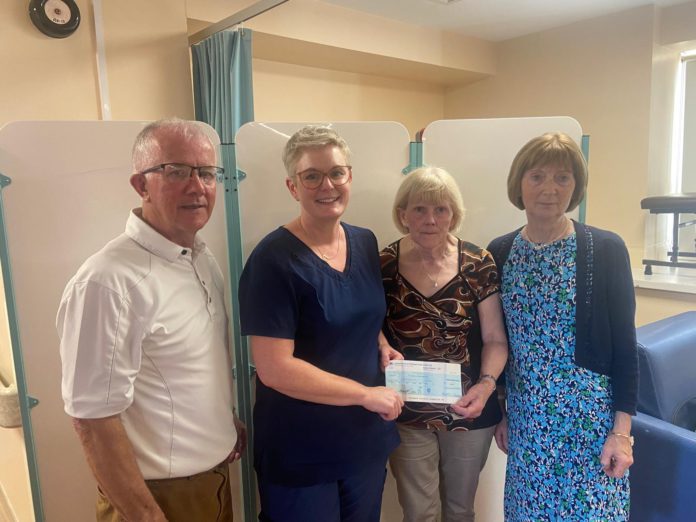
A family presented almost €10,000 raised for University Hospital Galway to help make the hospital more comfortable for patients receiving cancer care.

A very generous donation of €9,709 was recently presented to St Joseph’s Oncology Patient Comfort Fund at UHG in memory of the late Clement Gallagher

Clement, from Inver in County Donegal, had been a patient in St Joseph’s Ward, and helped to raise the funds before he passed.

The cheque was presented to the Oncology Patient Comfort Fund by Clement’s wife Kathleen Gallagher, Olive Mc Kelvey, sister and Peter Campbell, brother-in-law.

The funds were raised during a céile which had all been organised by Clement before his passing. The fundraising was undertaken by the family in appreciation of the care Clement received while he was a patient in UHG.

Kathleen Gallagher said, “We would like to sincerely thank all staff for all the help and support they gave to Clement while he was a patient here.”

“We raised the funds in his memory. He had organised the céile musical event before his passing, our family held the event in his honour.”

“We are so grateful to all those who supported the event and helped us raise this money for the Oncology Day Ward and Comfort Fund at UHG.”

Tina O Donnell, Clinical Nurse Manager 2, St Joseph’s Oncology Ward expressed her gratitude and said, “On behalf of the staff in St Joseph’s, we would like to sincerely thank Kathleen for this generous donation.”

“We are very grateful to everyone who supported the event, for their time and effort in raising funds for the Oncology Patient Comfort Fund. This donation will enable us to purchase comfort items for our patients.”

Two people die following Connemara house fire

0
Galway daily news Three people hospitalised after Galway City house fire

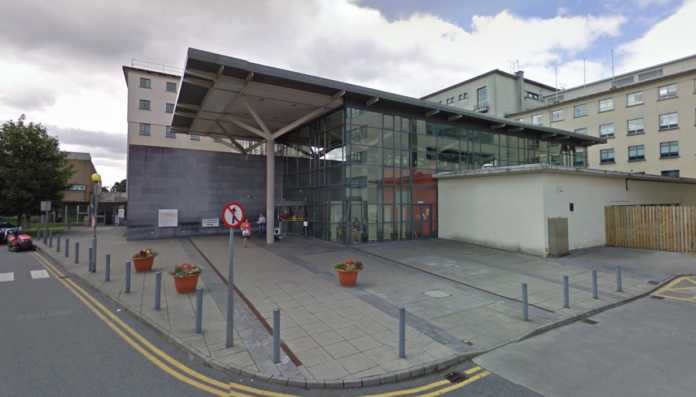
Two people have been confirmed dead following a house fire in Casla, Connemara early on Tuesday morning.

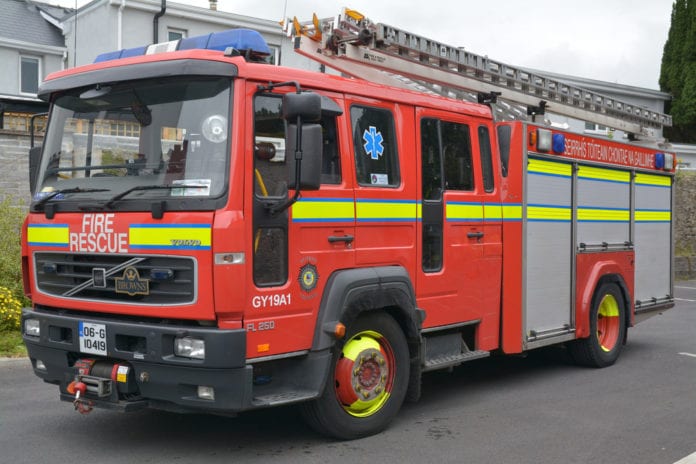
At approximately 6:20am, Gardaí and Fire Services were alerted to a house fire at Gleann Mhic Mhuireann.

The fire was brought under control by Fire Services and the bodies of a woman aged in her 70s and a man in his 30s were recovered from inside the house.

The scene has been preserved for a technical examination.

Both bodies have been transported to the Mortuary at University Hospital Galway for post-mortem examinations.

The results of the post mortems, along with the findings of the technical examination, will determine the course of the Garda investigation.

The local Coroner has been informed. Gardaí are appealing for witnesses to come forward.

Anyone with information is asked to contact Clifden Garda Station on 095 22500, the Garda Confidential Line 1800 666 111 or any Garda Station.

Galway Restaurant named Ireland’s best at 2025 Deliveroo Restaurant Awards

0
Galway Restaurant named Ireland's best at 2025 Deliveroo Restaurant Awards

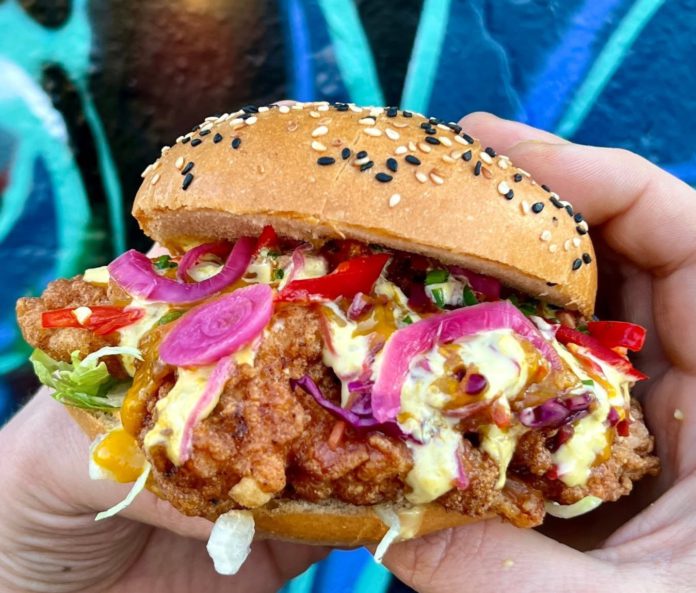
Smashbird in Galway has risen above fierce competition from across Ireland to claim a national award, as passionate food enthusiasts cast their votes to support their favourite neighbourhood eateries.

Following over 160,000 votes being cast, Deliveroo reveals winners of its 2025 Restaurant Awards, which celebrate the best and most loved local restaurants across Ireland and the UK.

The popular Galway restaurant was named the Irish national winner in the Best Burger & American category. Smashbird saw off competition from burger restaurants across Ireland to claim the top prize.

Smashbird triumphed against some of Ireland’s best known burger bars, including Bunsen in Dublin, Belfast and Cork, Sambros in Limerick and Dacent Munch in Cork.

Orla and Fraser Scott from Smashbird said, “We can’t believe it — we actually did it! The team here at Smashbird Galway are absolutely buzzing to have won Deliveroo’s award for Best Burgers & American in Ireland!”

“Huge love and thanks to every legend who voted for us — your support means the world. We’re proud to be reppin’ Galway with our award-winning burgers, and we can’t wait to keep smashing it for years to come!”

Created by the team behind Galway’s famous Birdhouse, Smashbird is one of the leading lights in Galway’s fast food scene. The restaurant offers hungry diners burgers, chicken and vegan food.

Over 160,000 votes were cast by loyal Deliveroo fans over three weeks to crown no less than 50 regional cuisine-led winners from Best Pizza to Best Chinese, Best Salad, Best Chicken and beyond.

Votes were cast across Ireland by food lovers keen to show their support for their favourite local restaurants.

Helen Maher, Regional Director, Deliveroo Ireland, added, “Congratulations to all the winning restaurants recognised as the best local favourites across Ireland. A heartfelt thank you to Deliveroo’s loyal customers, whose overwhelming support helped shine a spotlight on their top picks.”

Weather warning for heavy rain lasting into Monday night

0
galway daily weather weather warning for heavy rain in effect

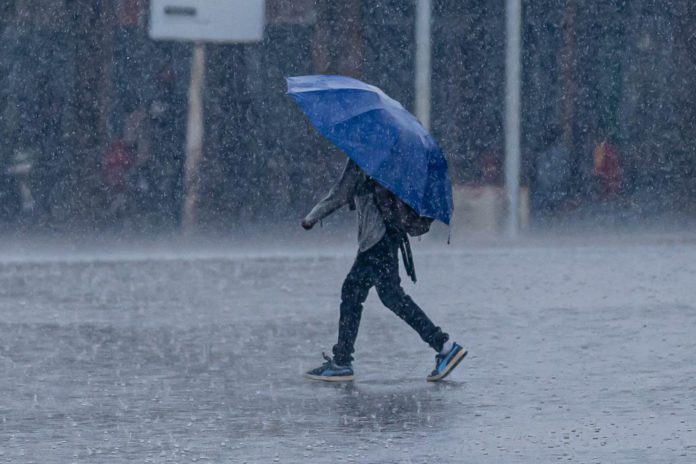
Heavy rain with high winds and a possibility of flooding is expected in Galway today, with a weather warning lasting into Monday night.

Met Eireann has issued a status yellow rain warning for Galway, Mayo and Kerry today.

On Monday afternoon and evening Galway will experience heavy rain, with very strong, gusty southerly winds near the coast.

This may cause some localised flooding along with poor visibility and difficult travelling conditions, Met Eireann cautions.

The weather warning will remain in place until 10pm on Monday night.

The weather is forecast to improve tomorrow, with Met Eireann predicting a breezy day with sunny spells and showers.

Highest temperatures of 12 to 15 degrees in moderate to fresh and gusty westerly winds.

New operator sought for Pálás arthouse cinema

0
Galway Daily news Palas cinema founders on latest tax defaulters list

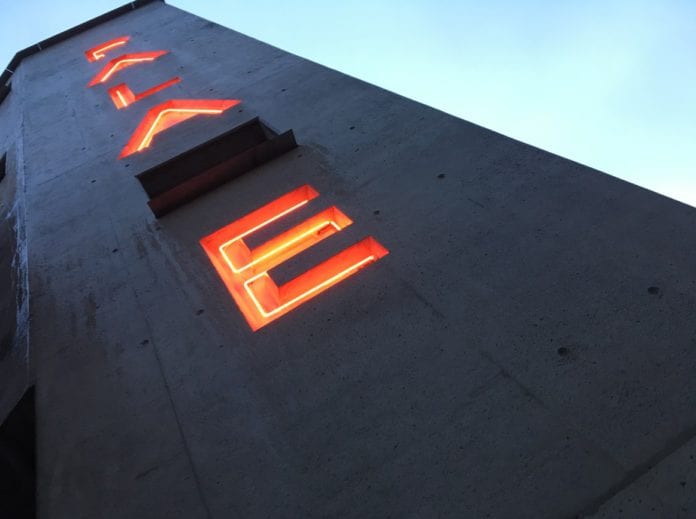
Galway City Council is seeking a new operator for the former Pálás Cinema, which closed down earlier this year.

The city council is seeking expressions of interest from parties interested in taking over the cinema, whether to continue its old use or convert it to another cultural purpose.

The city council is proposing to provide the property with a long term lease but without any charge to the operator.

No other financial support will be provided to the operator by Galway City Council.

The Pálás Arthouse Cinema on Merchant’s Road is a three-screen, 322-seater arthouse cinema located in Galway City centre.

The cinema opened in 2018 and was operated by Picture Palace Cinema Ltd until its closure in February 2025.

Additional facilities include box office, kiosk shop, kitchen, café / bar space and office space.

A recent independent commercial review of the ‘property’ commissioned by Galway City Council suggested three options to consider. These included

  • Re-opening of the property as a cultural space featuring one operational cinema with other areas repurposed for community and cultural use.
  • Re-purposing of the property to become more tourism-focused with a focus on cultural tourism.
  • Re-configuration of the property to operate as a mix of commercial space generating annual rents, combined with allocation of space for community use.

This expression of interest is not limited to these suggestions. Interested parties are invited to submit their own intended site usage concept and financially viable operational model.

The successful operator will operate the property in a manner compatible with the city’s international reputation for culture and the arts.


Most Popular

Two Galway Farmhouse Cheesemakers Scoop Honours At The CÁIS 2026 Irish...

0
Two Farmhouse Cheesemakers from Co. Galway were honoured last week at the 2026 Irish Cheese Awards. The ceremony hosted by CÁIS, the Association of...

Latest