Home Blog Page 55

UHG is extremely busy today with long wait times in the Emergency Department

0
Galway Daily news Cardiac care investment in Galway

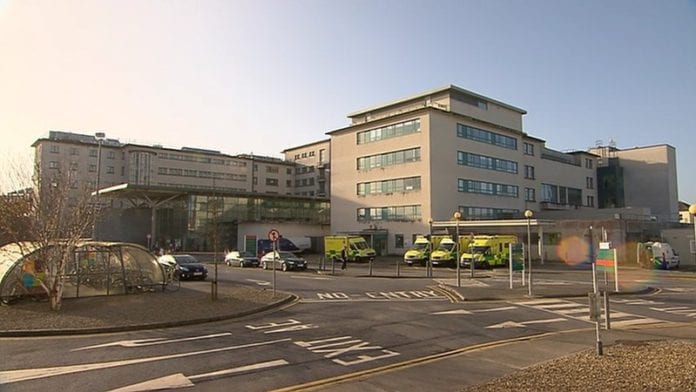
The emergency department at University Hospital Galway is extremely busy today and the hospital is advising that patients who attend ED for routine and non-urgent treatment will experience very long waiting times. Yesterday, there were 234 presentations to the emergency department. As of this morning, there are 51 patients on trolleys awaiting admission to in-patient beds, with additional surge beds in use.

The high number of people attending who need to be admitted for ongoing treatment means that there is pressure on bed availability. This is resulting in significant delays being experienced by patients in the emergency department who are waiting for a bed to become available on a ward.

Due to the pressures on the site and the lack of bed capacity, the hospital is postponing some elective procedures. Urgent, time sensitive cases are being prioritised. Patients are being contacted directly if their procedure is being postponed.

The hospital acknowledges that these delays are very difficult for patients and their families and apologises for the inconvenience and distress these delays cause.

The hospital is committed to treating everyone who presents at the emergency department.

People who are seriously injured or ill are assessed and treated as a priority, and those who do not require urgent care may wait longer.

“We continue to request that people only attend the emergency department at the hospital if it is an emergency situation. We ask that people attend their GP or out of hours service in the first instance if at all possible.”

“The Roscommon Injury Unit is also open from 8am to 8pm to treat a range of injuries in both adults and children over five years of age,” a hospital spokesperson said.

All visitors to the hospital will be required to practice good hand hygiene and use hand gel regularly, face masks are available for use throughout the hospital.

New digital tourism trails celebrate Connemara heritage

0
Sheep farmer, Martin O’Toole with Miriam Kennedy, Head of Wild Atlantic Way, Fáilte Ireland with a prize winning Connemara Mountain ewe. Photo: Andrew Downes, Xposure

Fáilte Ireland, in partnership with the Connemara and Aran Islands Tourism Network (CAITN), has launched two new self-guided digital trails that celebrate the unique landscape, heritage, and cultural richness of Connemara.

The Connemara Sheep and Wool Trail and the Connemara Film Trail aim to enhance the visitor experience, encourage visitors to stay longer and deliver meaningful benefits to local communities.

The Connemara Sheep and Wool Trail showcases the region’s deep-rooted heritage in wool production. Spanning 14 locations, the trail includes seven primary sites offering immersive, hands-on experiences and seven secondary stops that enrich the journey.

Visitors can explore the evolution of sheep farming and wool processing in Connemara—from age-old techniques to modern sustainable practices—through engaging activities such as sheepdog demonstrations, wool spinning, weaving, and natural dyeing.

Key locations include the Connemara Sheep & Wool Centre in Leenane, Killary Sheep Farm, Joyce Country Sheepdogs, and the Inis Meáin Knitting Company, where the legacy of the Aran jumper continues to inspire and connect the past with the future of the region’s wool industry.

The Connemara Film Trail celebrates the region’s cinematic legacy, guiding visitors through 17 film locations featured in 11 productions.

Terence O’Toole, Co Chair of CAITN (Connemara & Aran Islands Tourism Network) Carol Hinch Ballinahinch Castle Miriam Kennedy, Head of Wild Atlantic Way, Fáilte Ireland and Dominic O’Morain Co Chair of CAITN at Ballinahinch. Photo: Andrew Downes, Xposure

From the windswept beaches of The Quiet Man to the dramatic cliffs of The Banshees of Inisherin, the trail showcases Connemara’s natural beauty and cultural depth.

It also highlights Galway’s designation as a UNESCO City of Film and the Gaeltacht’s contribution to Irish-language media, including Ros na Rún.

The trail is ideal for off-season and rainy-day exploration, enriched with film trivia, celebrity quotes, and behind-the-scenes insights.

These trails are designed not only to enhance the visitor experience but also to support local businesses and communities.

By encouraging year-round tourism and promoting lesser-known locations, the trails help distribute economic benefits more evenly across the region. Local artisan food producers, craftspeople, farmers, and tourism businesses are showcased throughout the trails.

Miriam Kennedy, Head of Wild Atlantic Way at Fáilte Ireland, said, “These new digital trails are a testament to the power of storytelling through place.”

“By blending immersive content with self-guided exploration, we’re inviting visitors to connect more deeply with Connemara’s landscape, heritage, and people.”

“Whether tracing the threads of wool through generations or stepping into the scenes of iconic films, these trails offer unforgettable experiences that encourage visitors to explore further and stay longer in the region.”

Terence O’Toole & Dominic O’Morain, Co-Chairs of CAITN said, “The Connemara Film Trail is a celebration of the region’s role in global storytelling. It’s a way for visitors to experience the magic of cinema while discovering the warmth and creativity of our communities.”

“The Sheep and Wool Trail is a tribute to generations of craftsmanship and care. It connects visitors with the land, the animals, and the people who have shaped this tradition.”

“It will also be a vital tool for extending the season and supporting rural livelihoods. We’re proud to be part of a project that brings new energy to local tourism and showcases the talent and hospitality of Connemara.”

The trails are the first of a suite of new themed digital trails coming soon for the Connemara & Islands region, and are now available to view on www.connemara.ie

INKAS® Safes Are Helping Canadian Families Feel Safer at Home

0

Safety at home matters. Canadian families want to feel secure. That means locking away valuables, documents, and firearms. A home safe or gun safe can help. INKAS® makes strong safes for homes across Canada. They protect against fire, theft, and accidents. This article shows why more families trust INKAS® for peace of mind.

Why Canadian families need reliable safes

Break-ins, fires, and accidents can happen anytime. Families lose more than money—they lose peace of mind. Kids can get into places they shouldn’t. Burglars don’t take long. Fire doesn’t wait. Safes give you time and control.

Top reasons families need a safe:

Reason Why it matters
Burglary risk Keep cash, jewelry, and passports secure
Fire safety Protect papers and backup drives
Child safety Lock away firearms or medications
Privacy Hide sensitive items from visitors
Insurance benefits Some insurers offer lower premiums

Meet INKAS®: Canada’s trusted safe manufacturer

INKAS® is based in Canada. The company builds high-security safes for homes, businesses, and law enforcement. They focus on strength, quality, and long life. All safes are made to strict standards and tested for fire and theft protection.

What makes INKAS® different:

  • Made in Canada
  • Thick steel walls and doors
  • Certified fire resistance
  • Multiple lock types
  • Options for custom sizes

INKAS® doesn’t just sell safes. They help you choose the right one. You get advice, delivery, and support.

Keeping loved ones safe with INKAS® home safes

A home safe is great for everyday valuables. Store cash, papers, rings, watches, keys, or backup drives. Fire and theft can happen fast. INKAS® home safes slow that down.

Key features of INKAS® home safes:

Feature Benefit
Fire resistance Keeps items safe during house fires
Strong bolts Prevent forced entry
Compact design Easy to hide or fit in closets
Adjustable shelves Fits large or small items
Digital or manual lock Choose what works best for you

Best items to store in a home safe:

  • Birth and marriage certificates
  • Passports and IDs
  • Legal papers
  • Family jewelry
  • Emergency cash
  • Spare keys
  • USB drives with photos or files

INKAS® has many home safe models. Some are small enough to fit in drawers. Others are large enough to hold laptops. You can choose fire ratings, locks, and layout.

Responsible firearm storage with INKAS® gun safes

A gun safe isn’t just smart—it’s often required. In Canada, guns must be locked up safely. INKAS® gun safes help you follow the law and keep your home safe.

What a good gun safe should have:

  • Thick steel body
  • Locking bolts
  • Fire resistance
  • Space for long guns and handguns
  • Interior padding to prevent damage

INKAS® gun safes provide:

Feature Purpose
Solid steel build Stops forced entry
Internal hinges Harder to break open
Fire protection Keeps guns safe in case of fire
Adjustable racks Organize rifles, pistols, and ammo
Secure locks Digital, biometric, or manual options

Why INKAS® gun safes work for families:

  • Keeps firearms away from kids
  • Reduces theft risk
  • Meets Canadian safety laws
  • Can hold both guns and other valuables
  • Many sizes available

Some models come with hidden compartments. Others fit inside closets or walls. Whether you own one rifle or several, there’s a safe for you.

Built for Canadian homes: security meets convenience

INKAS® makes safes that fit real homes. You don’t need a mansion. These safes come in many sizes and styles. Some are tall. Others are small and easy to hide.

Ways INKAS® safes fit into homes:

  • In the bedroom closet
  • Under stairs
  • In the basement
  • Built into furniture
  • Hidden behind a mirror or picture

You can also choose custom safes. Add colors, shelves, locks, or fireproofing. INKAS® helps you build the right safe for your home and lifestyle.

Real security, real peace of mind

It’s not just about what’s inside the safe. It’s about how you feel after locking it. Knowing your gun is locked up keeps your kids safer. Knowing your birth certificates and cash are safe helps you sleep better.

INKAS® customers often say:

  • “I don’t worry about break-ins anymore.”
  • “My kids can’t access my firearms, and that matters.”
  • “Our safe made insurance easier.”
  • “It’s solid. It feels like it’ll last forever.”

Security should feel simple. That’s what INKAS® offers. You lock it. You leave it. You stop worrying.

Where to buy INKAS® home and gun safes

You can order online at inkassafes.com. The site lists all home safe and gun safe models with specs, fire ratings, and lock types. You can also call for advice or visit their showroom if you’re nearby.

Buying steps:

  1. Go to the INKAS® website
  2. Choose “Home Safes” or “Gun Safes”
  3. Pick the size and features you need
  4. Check delivery options
  5. Place your order
  6. Set up with or without installation service

INKAS® also offers customer support if you have questions about use or installation.

Conclusion

Families across Canada want to feel safer. That starts with keeping valuables and firearms secure. INKAS® offers strong, smart safes made right here in Canada. Whether you need a home safe for personal items or a gun safe for firearms, they have a solution.

Don’t wait for something bad to happen. Take control of your safety now. Visit inkassafes.com and choose the safe that gives your family peace of mind.

Will UK bookmakers pull out of Ireland with new regulations?

0
Galway Daily gaming

The message to UK bookmakers seems to be adapt or die as new regulations in Ireland around betting begin to have an impact on punters and bookies alike.

As of October 2024, the Irish government passed the Gambling Regulation Act, which is already changing how betting works across the country.

And to keep things in check, they’ve launched the Gambling Regulatory Authority of Ireland — aka GRAI — which officially went live in March 2025.

Highlights include:

All operators (Irish or foreign) now need a licence from GRAI to legally offer betting services in Ireland. A quick look at the biggest bookmakers in the UK on Betselect shows that at the moment, most are licensed by the UK Gambling Commission, but not the Irish regulator.

Credit cards can no longer be used to gamble, and betting venues can’t have ATMs.
No more targeted free bets, VIP perks, or “inducements”. General promotions? Maybe — but only if they’re approved by the regulator.

Adverts for gambling are banned between 5:30 am and 9pm, especially to protect kids and vulnerable audiences.

A new National Self-Exclusion Register is being rolled out, so people can block themselves from all gambling platforms at once.

Bookmakers also have to contribute to a Social Impact Fund that supports addiction services and public awareness.

These are all tools that have either already been implemented — or are in the process of being implemented — under the new changes, as the message is clear when it comes to cracking down on certain practices used by bookmakers both in Ireland and across the water.

The changes are set to have an immediate and continuing impact on Irish punters, but they will also have a huge impact on UK-based bookmakers as well.

Flutter (owner of Paddy Power/Sky Bet) have already voiced significant concern about emerging advertising limits, stake/win caps, and inducement bans, although those concerns have not seen them follow a small number of overseas bookies who have now left the Irish market completely.

To keep their space at the table, UK bookmakers will have to change, though.
For starters, they will now need a new licence as UK bookies must apply for a brand-new Irish gambling licence through GRAI. Without it, they’re out.

Flutter Entertainment (which owns Paddy Power, Sky Bet, and Betfair) was among the first to receive a full GRAI licence.

They have adapted their Irish platforms to fully comply with advertising bans, player protection rules, and payment restrictions. Their Irish websites now feature the new self-exclusion options and responsible gambling messaging.

Meanwhile, Entain plc (parent company of Bet365, Coral, and Ladbrokes) has also secured provisional licences and is fully engaged with GRAI to finalize compliance measures.

Bet365 Ireland’s website and apps include mandatory opt-ins for marketing communications and display real-time affordability check prompts.

William Hill has also confirmed its ongoing licensing application and is rolling out upgrades to meet Ireland’s standards, including integrating the National Self-Exclusion Register and updating promotional offers to comply with inducement restrictions.

It is not just the new licences, though, that UK bookmakers will need. When they have them, they will have to adhere to the ban on all adverts before 9pm, which was highlighted heavily during Cheltenham — the last major event where betting ads were shown during that time slot in Ireland.

And that could be just the start. Although some changes have already been implemented, GRAI is gradually rolling out full licensing and enforcement through 2025 and 2026, so we’re still in the early days.

That is because this isn’t just a light regulatory tweak — it’s a complete overhaul. While it’s designed to curb gambling harm, it also puts a big burden on UK operators trying to stay in the Irish market.

For punters in Ireland, though, the moves are all about more options to keep you safe when it comes to addiction and managing money when betting online.

One of the most notable new tools is the National Self-Exclusion Register (NSER), which allows players to exclude themselves from all licensed gambling platforms in Ireland with one registration.

UK bookmakers have had to integrate their systems with this central database, meaning if you opt out, you are blocked across all licensed operators — whether betting online or in physical shops.

In addition, the ban on credit card gambling and the removal of ATMs from betting venues aims to reduce impulsive spending.

Bookmakers are now promoting alternative payment methods such as debit cards and e-wallets, while also implementing affordability checks designed to identify customers who might be at risk of gambling harm.

All methods that are good for the punter, but not so good for the bookmaker – which although has not scared any of the bigger fish out of Ireland yet, could heavily impact the Irish market for them going forward…

Galway School Cultivates National Win in 2025 SuperValu Let’s GROW Schools Initiative

0
18/06/ 2025 Repro Free: Green fingers are thriving at Creagh National School, Ballinasloe — the newly announced 2025 national winner of the SuperValu Let’s GROW initiative. This classroom-based programme from GIY and SuperValu helps children explore the magic of growing, cooking, and eating their own food, while learning about sustainability. Creagh NS stood out for its creative, hands-on approach, transforming their classroom into a greenhouse of learning and fully embracing the idea that “there’s always space to grow.” Mary Bishop, Head of Education at GIY and Eddie Kelly, store Manager, SuperValu Ballinsloe with the winning class. Photo:Andrew Downes, xposure

Green fingers are alive and well at Creagh National School in Ballinasloe, which has just been announced as the 2025 winner of the SuperValu Let’s GROW initiative.

This is a classroom-based food growing programme from GIY, in partnership with SuperValu.

Now in its third year, SuperValu Let’s GROW is rooted in one big idea: helping young people understand the importance of growing food sustainably.

Through the programme, primary school pupils across Ireland are discovering the magic of homegrown food, the positive impact on their health and community, and the power they have to protect the planet.

Creagh NS stood out for its creativity, bringing the challenges to life in a fun and engaging way. Embracing the SuperValu Let’s Grow programme – which champions the idea that there’s always space to grow – their classroom was transformed into a greenhouse of learning.

From growing to cooking and eating, each challenge was thoughtfully designed and tended to by the students themselves, making the experience truly come alive.

Mrs Gallaher, involved in the project explained, “We saw children light up with curiosity — not just about how food grows, but about ecosystems, biodiversity, and the environment.”

“The SuperValu Let’s GROW initiative helped spark big conversations about small changes, and our students embraced every part of it.”

Each school that participated in SuperValu Let’s GROW received a classroom-ready kit packed with seeds, compost, pots, and learning resources linked to the curriculum.

The goal? To inspire real-world, sustainable learning experiences — and nurture a generation that values resilience, resourcefulness, and respect for the Earth.

Mick Kelly, Founder of GIY, praised the school’s efforts, “Creagh NS brought the spirit of sustainability to life in their classrooms and beyond.”

“Their project is a brilliant example of how growing food can empower young people to engage with climate action and sustainable living in a fun, practical way.”

As this year’s national winners, Creagh National School will receive a €1,000 garden development grant to continue expanding their growing efforts and deepening their commitment to sustainable education.

Michelle Griffin, SuperValu Strategy Marketing Manager, said, “At SuperValu, we believe in the power of community and the importance of sustainability.”

“Through SuperValu Let’s GROW, we’re helping schools foster those values from the ground up — and Creagh NS has shown just how impactful that can be.”

Fergal Dunne, SuperValu Ballinasloe added, “Through the SuperValu Let’s GROW programme, we empower students to embrace sustainable living.”

“Creagh NS has shown how growing food can positively impact students, inspiring them to connect with nature and adopt sustainable practices.”

Since its launch, SuperValu Let’s GROW has reached more than 150,000 pupils across Ireland — equipping young minds with the tools, skills, and inspiration to grow food in a way that respects people and planet.

New Galway City football pitch named in honour of local hero

0

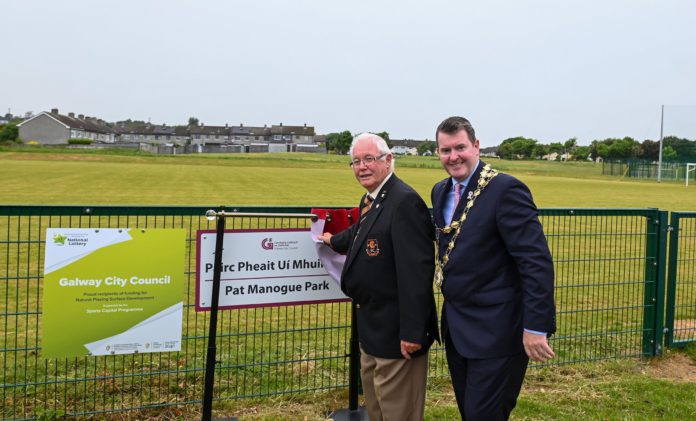
The new football pitch in Corrib Park has been given a name, in honour of ocal soccer volunteer and Corrib Rangers Football Club President, Pat Manogue.

The naming of Pat Manogue Park was celebrated by the former Mayor of the City of Galway, Cllr. Peter Keane at a ceremony on Friday, May 23

The proposal was put forward by the current Mayor, Cllr Mike Cubbard, at a Council Meeting in June 2021.

This was in recognition of the tireless work carried out within the local community by Pat Manogue over his many decades with the Corrib Rangers Football Club.

The council agreed at the same time to establish a Civic Naming and Commemorative Committee to review procedures and decisions regarding the naming of publicly owned lands and buildings in the city after persons.

Former Mayor of Galway City, Cllr Peter Keane, unveiled a sign naming the new park, and spoke in recognition of the work of Pat Manogue as a local soccer volunteer.

Missing teenager found safe after two weeks

0
Galway Daily news missing teen found safe

A teenager reported missing just over two weeks ago has been found safe and well, it has been confirmed today.

14-year-old Tyler Berry was reported missing from the Galway area since Tuesday, June 10.

Gardaí made a public appeal for information that could help to locate Tyler.

It has been confirmed by Gardaí on Wednesday that Tyler has been located safe and well.

An Garda Síochána thanked the public for their assistance in this matter.

Hundreds of cyclists turn out for annual Croí Corrib Charity Cycle

0
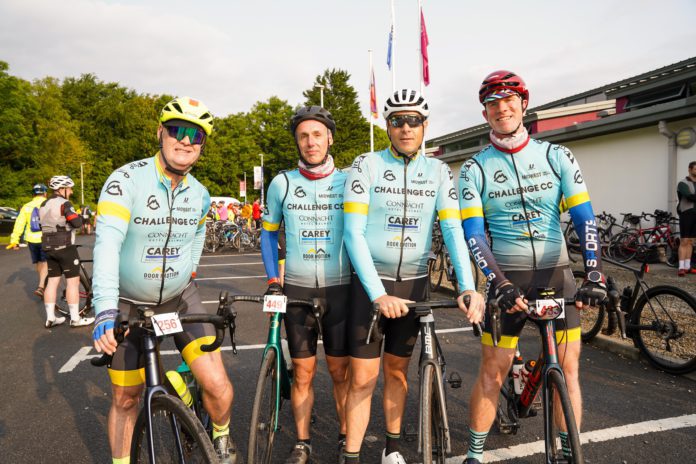
Kevin Malone, Mark Donnelly, Oliver Forde and Shane McInerney

Croí, the heart and stroke charity, is thanking the many people who made the 31st Croí Corrib Charity Cycle a tremendous success.

Hundreds of cyclists took to the roads of Galway on Sunday, June 8, choosing from two scenic routes, all united by one goal – to help prevent heart disease and stroke.

Their commitment and generosity will have a lasting impact, with all funds raised supporting Croí’s community-based health initiatives, education programmes and patient support services.

Christine Flanagan, Director of Fundraising at Croí, said, “We are extremely grateful to everyone who took part in this year’s cycle. Whether you were cycling, volunteering or sponsoring, you played an essential role in helping us continue our lifesaving work.”

“Community support like this allows Croí to invest in programmes that directly improve heart health and wellbeing across the region and beyond.”

Croí is also extending sincere thanks to the many volunteers who gave their time and energy to help deliver a safe, supported and enjoyable experience for all participants.

From registration to route marshals, mechanical support, food stops and the post-cycle celebration, they made this event possible.

Croí is also very grateful to An Garda Síochána and Galway County Council for their support and assistance.

Special appreciation goes to main sponsor, Corrib Oil, who has backed the Croí Corrib Charity Cycle since its inception in 1995, as well as sponsors Caragh Precision, Al Hayes Motors and Westside Cycles.

Their unwavering support over many years has helped this event grow into one of Croí’s most important annual fundraisers.

Croí said that it hopes to see all those who took part this summer back again in 2026 to continue supporting their lifesaving services.

For more information about Croí’s work or to get involved in future events, visit www.croi.ie

WTAF!? Brings ten days of creative mayhem to Galway

0

WTAF!? is coming. And no, it is not what you think. Or maybe it is. Either way, Galway’s westend is about to be taken over by a bold new festival that refuses to behave.

WTAF!? Westend Theatre & Arts Festival, is the first of its kind, brought to life by Hysteria Theatre Company in partnership with Galway’s westend. Running from 21 to 30 July, it promises a ten-day programme of chaos, creativity and celebration across theatre, music, art, drag, circus, comedy and more.

The catch? There is no catch. Just a boundary-pushing programme of emerging artists, new work and alternative voices in unexpected places. Rooftops, back rooms, basements and bars become stages. Front-of-house is run by the artists themselves. Ticket prices are mostly under €20, with many shows offering a pay-what-you-can option.

WTAF!? is made for the people who never quite fit the mould and never wanted to. For the punk poets, the DIY dramatists, the rogue musicians and the chaotic creators. It is for anyone who has ever been told their work is too strange, too niche or just too much. 

From aerial circus in Roisin Dubh to a kayaking choir performance on the canal, from drag storyslam in Taylor’s Bar to micro-theatre in the back of a campervan at Silkes Yard, WTAF!? offers audiences a chance to experience Galway’s underground creative scene up close and unfiltered.

WTAF!? was created for artists who are tired of asking. Who are ready to take up space, say the thing, tell the story, or start the band. As co-directors Emily Aherne and Jess Harkin put it, “WTAF!? was born with the artists in mind who haven’t always gotten a look in, the emerging, the genre-defiant, the ones who are tired of waiting for permission. It’s a space where bold ideas take root and where artists show up on their own terms.”

The festival’s full programme, featuring over 40 events across 10 days, is now live at www.wtafgalway.com.

3 Insider Tips To Ensure Your PPC Ads Drive Results

0
Galway Daily news

You’ve probably been there. You set up a campaign, pick some keywords that seem relevant, slap together an ad, and wait for magic. And then… nothing. Or worse, you burn through your budget and can’t really tell if it did anything at all.

The thing is, pay-per-click advertising can absolutely drive serious results—but only if you do it right. It’s a game of strategy, not luck. And when you’re managing a business, wearing too many hats, and trying to make sense of ad metrics that look like a spreadsheet from another planet, it’s easy to feel lost. That’s where a few insider tips from UK-based PPC ad specialistscan change everything. If you’re ready to stop wasting money and start seeing actual returns from your PPC efforts, here are three insider tips you’ll wish you knew sooner.

  1. Focus on Intent

Here’s the trap: You find a few high-volume keywords and plug them into your campaign thinking, “More searches = more clicks = more sales.” But that’s not how it works. The truth is, not all keywords are created equal. Some might bring in a ton of traffic, sure—but if the intent behind those searches doesn’t align with your offer, you’re paying for window shoppers.

To drive real results, you need to dig into the why behind the search. Use tools like Google’s keyword planner or search term reports to find those long-tail, high-intent queries. Then build your ad copy and landing pages around that exact mindset. Get specific. Speak their language. Meet them right where they are in the buying journey.

  1. Stop Sending Traffic to Your Homepage

This one might sting a little. But if you’re sending your PPC traffic to your homepage, you’re probably losing conversions. Your homepage is like a general welcome mat—it’s meant for browsing, not buying. And when someone clicks on an ad with a specific promise (“Get 20% off leather laptop bags”), they expect to land on a page that delivers that exact thing.

Here’s the thing: your landing page should be laser-focused. One offer. One message. One goal. The tighter the experience matches the intent behind the click, the higher your chances of converting that visitor into a lead or customer.

Think of it like this—PPC is not just about getting the click. That’s just the beginning. What happens after the click is what determines if your money was well spent or completely wasted. So build dedicated landing pages for each ad group or campaign. Keep the design simple, the copy clear, and the call to action unmistakable.

  1. Track Beyond the Click

Clicks are great. Conversions are better. But do you know what’s even better? Knowing exactly what each click is worth to your business.

If you’re not tracking conversions—whether that’s form submissions, phone calls, purchases, or signups—you’re flying blind. And honestly, it’s not enough to just track who clicked. You need to understand what they did after the click. Did they bounce? Did they scroll? Did they make it to your thank-you page?

Set up conversion tracking through Google Ads and Google Analytics. Better yet, go deeper with tools like heatmaps or session recordings. These give you a peek into real user behavior so you can improve not just your ads, but the entire funnel.

Wrapping Up

If you’ve been struggling with poor performance, confusing results, or campaigns that just don’t seem to bring the ROI you were promised, these insider tips can help you make a u-turn. Chances are, just one small tweak could make a big impact.Let the data be your guide—and let your goals lead the way.

Galway households recycle above national average in e-waste

0
WEEE Ireland CEO, Leo Donovan is calling for a national leap forward in "e-waste intelligence" as Ireland’s consumption of electronics balloons. Picture: Conor McCabe Photography.

Last year an average 10.3kg of household e-waste was recycled per person in Galway, more than the 9.5kg national average.

That’s according to the latest Waste Electrical and Electronic Equipment (WEEE) Ireland annual report.

The country’s biggest e-waste recycling scheme is now calling for a national leap forward in “e-waste intelligence” as electrical device consumption reaches record levels, with vapes and solar panels driving a 75pc surge in sales over the last five years.

A total of 93 million household electronic items were purchased in 2024, putting pressure on Ireland’s ability to meet EU recycling targets, which are based on sales volumes, regardless of product life cycle or whether they can be reused.

This is almost three times the volume sold in 2006, according to WEEE Ireland, with a reported 31 million vape and e-cigarette devices sold last year alone, and 2.5 million solar PV panels installed in the last five years.

“Each one of those 93 million devices contains valuable materials like aluminium, copper, lithium, cobalt,” said Leo Donovan, CEO of WEEE Ireland.

“We’re using these materials far faster than they can regenerate. Global demand is set to triple by 2050 – a trajectory that cannot be sustained.

“With over 80pc of the EU’s rare earths coming from China, Ireland’s dependence on imports leaves us dangerously exposed. People must reduce that risk by rethinking consumption, embracing circularity, and recovering more materials here at home.”

The number of consumer electronics placed on the Irish market has tripled from 31 million in 2006 to 93 million in 2024.

The most rapid growth has come since 2019, when 53 million units were sold. Vaping devices alone accounted for a third of all units sold last year.

Even excluding vapes and solar panels, consumption is still climbing – a challenge given that EU recycling targets are based on a percentage of sales and don’t take account of long product lifecycles or reusability.

WEEE Ireland says this approach is fundamentally flawed. “We are penalised for selling long-life items like solar PV panels,” said Donovan.

“Over 2.5 million panels have entered the market in the last five years, but with warranties of 15 to 20 years, they won’t reach recycling centres for at least another decade. Yet they still count toward our annual recycling target. That’s not circular thinking.”

Further distorting the picture is the untracked volume of online purchases from many overseas sellers, a gap recently acknowledged by the European Commission.

New WEEE Ireland research also shows the proportion of households hoarding unused devices rose from 22pc in 2023 to 29pc in 2025, highlighting a massive untapped opportunity for reuse and repair.

“We need to move beyond recycling alone. Extending the life of products through repair and reuse must become the norm,” Donovan urged.

Despite these challenges, WEEE Ireland is taking the lead, working with manufacturers and retailers to scale up sustainable solutions.

In 2024 alone, it collected 38,215 tonnes of e-waste, equating to 9.5kg per capita.

This included large household appliances, which account for a significant share of Ireland’s material recovery due to their size and resource content – almost 330,000 large household appliances, over 119,000 fridge freezers and 258,000 TVs and monitors.

More than 1.1 million vape devices were also recovered, despite being notoriously difficult to capture due to disposal habits, with many ending up in waste bins. WEEE Ireland says it continues to work with retailers and regulators to design more effective solutions for this new category of waste.

16.2 million small appliances – such as kettles, vacuums , tools, and toys – along with 1.9 million lighting items and 72 million AA batteries worth of portable batteries were also collected.

With a 96pc recovery rate, WEEE Ireland continues to exceed EU material recovery targets and reinforce Ireland’s standing as a circular economy leaders.

This month, the Government allocated €27 million from the Circular Economy Fund to support further progress, and WEEE Ireland is pushing for an ambitious roadmap forward.

“Galway has an engaged public and a high-performing recycling network,” said Donovan. “With increased investment in recycling centres, including longer opening hours, and strong leadership, we can set the benchmark for e-waste and circular economy solutions in Europe.”

Laughing stock rises – The Laughter Loft turns 21 with a special ‘Early Edition’ at The King’s Head

0
Gerry Mallon Presents Comedy in the King’s Head during the Galway International Arts Festival Photo Andrew Downes Xposure.

The Laughter Loft is turning 21 and it’s bringing the party to Galway International Arts Festival 2025 in style.

Introducing The Early Edition, an all-ages, fully accessible comedy show at The King’s Head, landing Saturday, July 19 at 11am.

This very special morning edition is a celebration of comedy, community, and inclusion made even more special by the ongoing creative partnership between The King’s Head and the brilliant Blue Teapot Theatre Company.

Several members of Blue Teapot will be on hand to welcome audiences on the day and help run the show.

“Big smiles, definite yes and excited anticipation was the response from Blue Teapot members when asked if they would like to greet audiences into The Early Edition,” said Petal Pilley, Artistic Director of Blue Teapot.

“Having recently carried out a number of access audits with arts organisations, this is timely for them and no one will pass up the opportunity to also have a good laugh.”

This event is part of The Laughter Loft series, which for over two decades has packed the tiny Ruby Room upstairs at The King’s Head with some of Ireland’s biggest and best comedians.

With this brand-new show, they’re opening the doors wider and earlier than ever before.

The Early Edition is curated and hosted by Gerry Mallon, the original lunchtime chaos conductor, and features a festival-friendly set-up that will give more than one giggle before noon.

John Colleary and Alex J Byrne (who will be doing some magic also) will join the line-up for this special edition.

Catch The Early Edition on Saturday, 19th July 2025. Doors at 10:30am with the show at 11am.

Tickets, €10 will be available for purchase over the phone at 091 566577, the Festival Box Office or the Venue door. Unallocated seating and fully accessible.

€200,000 scheme to enhance Galway City shopfronts

0
Photo: Galway City Council

Galway City Council has launched the 2025 Shopfront Enhancement Scheme, with €200,000 to give the city a facelift.

The scheme provides grant funding for independent retail and hospitality businesses to enhance the appearance, accessibility, and heritage value of their shopfronts.

It aims to revitalise commercial streetscapes by supporting high-quality, culturally sensitive, and visually cohesive improvements to shopfronts.

Eligible applicants include:

  • Independent retail and hospitality businesses with street-facing premises located within the boundaries of the three Architectural Conservation Areas (ACA) – City Core ACA, Lower Dominick Street ACA and Eyre Square ACA
  • Owners or leaseholders (with landlord consent)
  • Businesses compliant with commercial rates and planning regulations

Grants of up to €20,000 are available, covering up to 50% to 75% of eligible costs depending on the works. Supported works include:

  • Shopfront repairs, painting, and bilingual signage
  • Accessibility improvements and decluttering
  • Enhancements or repairs to Protected Structures and buildings within the three ACAs (City Core ACA, Lower Dominick Street ACA and Eyre Square ACA)
  • Collaborations with local artists and the use of traditional building skills

Mayor of the City of Galway, Cllr Peter Keane commented, “This scheme makes it more affordable for businesses in historic parts of the city centre to improve their shop fronts in a sensitive and appropriate manner – contributing to the appeal and atmosphere of the area, and supporting increased footfall and economic vitality.”

“The scheme will also support local artists and craftspeople creating and maintaining the facades, as well as creating a more accessible public realm and high-profile spaces for Gaeilge in our bilingual city.”

Joint applications from neighbouring businesses are encouraged and may receive enhanced support.

Applications must be submitted online via the Galway City Council Portal. The deadline for applications is Friday, July 11.

Galway Lifeboat rescues fisherman drifting onto the rocks

0
Galway Daily news Galway RNLI come to aid of boat in trouble in poor weather

The Galway RNLI rescued a fisherman whose boat was about to run aground on the rocks at Mutton Island on Thursday evening.

Shortly before 5pm on Thursday, the Galway RNLI volunteer lifeboat crew were requested to launch to rescue a lone fisherman on board a 19ft fishing boat with engine trouble.

The lifeboat crew with helm Martin Oliver, Brian Niland, Mark Purcell and Erin Killeen on board were quickly underway to the reported location of the stricken boat near Mutton Island, on inner Galway Bay.

Martin Oliver, helm for the shout this afternoon said: ‘We were on the scene quickly and reached the fishing boat which was in trouble just before it went aground on Mutton Island.”

“We set up a towline and were able to tow the fishing boat out of danger and bring the boat and the fisherman to a nearby slipway in order to get ashore safely.”

Conditions on the sea were good yesterday evening, Martin said, with calm water and just a slight breeze.

“It looks like we are heading into a spell of fine weather which is likely to bring many people to the coast, lakes and rivers.”

He added that anyone planning to be on the water during this spell of good weather should take the following precautions.

  • Always wear a lifejacket or suitable flotation device for your activity
  • Know how to float in an emergency
  • Always carry a means of calling for help such as a VHF radio or mobile phone in a waterproof pouch and keep it on you
  • Always check the weather forecast and tide times before venturing out
  • Always tell someone where you are going and when you are due back
  • If you see someone in trouble or get into difficulty yourself, call 999 or 112 and ask for the Coast Guard

Europe’s Oldest Inland Sailing Race Returns this summer

0

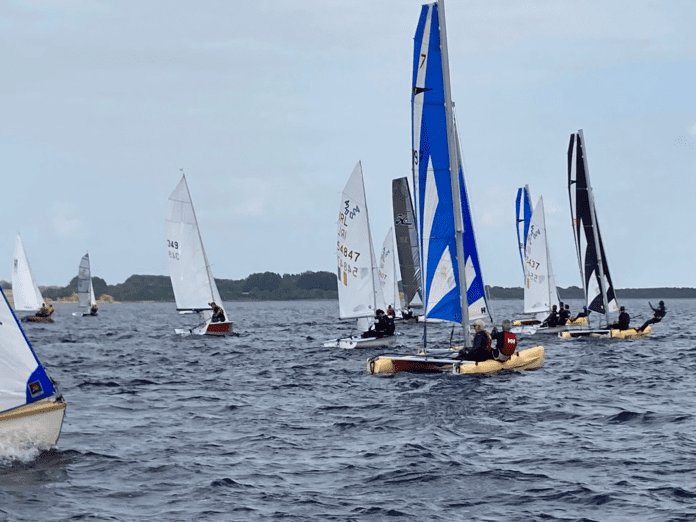
Sails will be hoisted once again this month for one of the most iconic and historic events in Irish sailing—the Cong to Galway Sailing Race.

Tracing a 30-nautical-mile inland waterway from the shadow of Ashford Castle to the River Corrib in Galway City, this annual race will return to the water on Saturday, June 28.

First held in 1882, this race is recognised as Europe’s oldest inland sailing competition. The course follows the old steamer route from Lisloughrey Pier near Cong through the length of Lough Corrib, Ireland’s second-largest lake, and down the Corrib River, finishing at Corrib Village in Galway.

The event is raced in two legs. The first leg concludes at Kilbeg, where sailors break for lunch and refreshments. The second leg navigates the lake’s narrower channels and winding riverways to reach the finish line at Corrib Village.

The race brings together skill, strategy and scenery in equal measure.

A Race Steeped in History

Originally run as a round trip from Galway to Cong and back—a distance of over 60 nautical miles—the race was once a key social and sporting highlight until it paused after 1931.

Revived in 1972, the Cong to Galway Sailing Race has been a beloved annual tradition ever since, celebrating the maritime heritage of the region and its resilient sailing community.

In recent years, the race has welcomed a growing fleet of cruisers, and the Galway Hookers—traditional wooden working boats unique to the west of Ireland—have added a stirring visual and cultural spectacle.

Community Collaboration

This unique inland sailing race is proudly organised by a coalition of local clubs:

  • Galway Bay Sailing Club
  • Corrib Rowing and Yachting Club
  • Galway City Sailing Club
  • Spiddal Sailing Club
  • Galway Hooker Sailing Club

Together, they ensure the event remains a celebration of community, seamanship and history.

Spectators are welcome along the race route and at Corrib Village to witness the dramatic finish of this historic race.

For those interested in sailing, heritage, or simply a great day out by the water, the Cong to Galway Sailing Race promises a memorable experience.

The day will finish with celebrations and prize giving at the Corrib Rowing and Yachting Club.

Even organisers thanked the event’s main sponsors, The Lodge at Ashford Castle and McHugh Property Holdings.

Turning a New Page: Clifden Expands Library Access

0
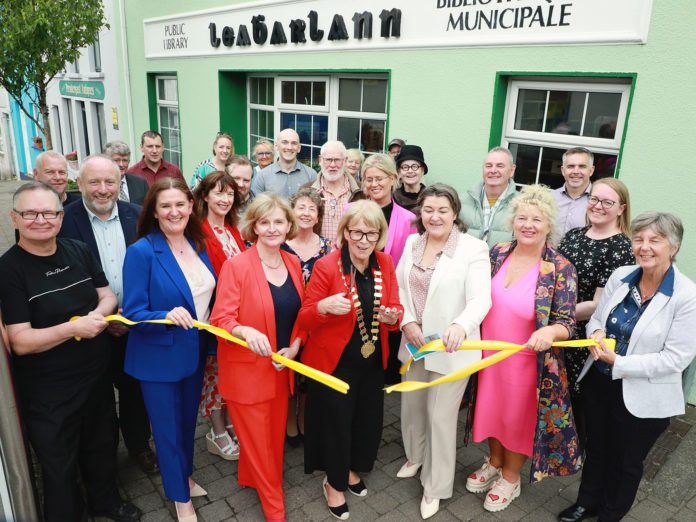
Officials and Elected Members of Galway County Council pictured with Clifden Library staff and members of the local community at the launch of the My Open Library (MOL) initiative at Clifden Library. Credit Sean Lydon.

Clifden Library has become the second branch library in County Galway to roll out the My Open Library (MOL) initiative, dramatically increasing public access to services with extended self-service hours.

The new service, which has also been in operation at Ballinasloe Library since 2020, allows registered users to access the library from 8:00 AM to 10:00 PM, seven days a week, 365 days a year—even outside of regular staffed times.

As a result, weekly access hours have almost tripled, rising from 34.5 to 98.

Located in the centre of Clifden, the library now offers a wide range of self-service functions during unstaffed hours, including borrowing and returning books, using computers and Wi-Fi, printing and scanning documents, and accessing study space.

Cllr. Martina Kinane, Cathaoirleach of the County of Galway, remarked, “The opening of My Open Library in Clifden marks a major milestone in our commitment to providing inclusive, accessible, and modern library services.”

“It empowers our community with greater flexibility and fosters a culture of learning and connection,” she added.

The MOL programme is part of a national strategy to modernise public libraries, promote digital inclusion, and foster community engagement.

It is funded by the Department of Rural and Community Development and the Department of the Gaeltacht, in partnership with local authorities.

County and City Librarian Elizabeth Keane also welcomed the development, thanking national and local funders.

“This investment is not just in bricks and mortar—it’s in people, potential, and the future of rural communities like Clifden,” she said.

Eileen Ruane, Director of Services at Galway County Council, added, “This project reflects our dedication to innovation and community development. We are proud to bring this service to Clifden and look forward to seeing it thrive.”

Red squirrels show survival tactics in the face of native predator

0
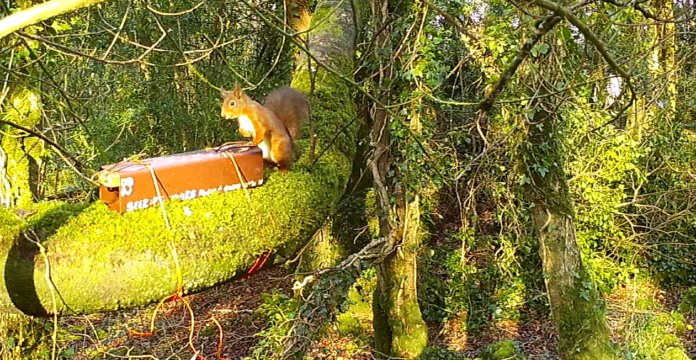
A red squirrel feeding at Derryclare Woods in Connemara, Co Galway.

Ireland’s native red squirrels are able to detect and respond to a returning natural predator, the pine marten, according to a new study from the University of Galway.

Rising pine marten populations have led to a sharp decline in grey squirrel numbers in recent years. Around the same time, the red squirrel population has not only persisted, but increased.

The research into red squirrel behaviour was conducted over 16 months in two woodland sites – Derryclare Woods in Connemara, Co Galway, and Belleek Woods in Ballina, Co Mayo.

Using trail cameras at feeding stations, researchers monitored and analysed visits by red squirrels and pine martens.

The team discovered that red squirrels showed an anti-predator response by feeding less and showing increased vigilance, indicating that they can detect recent pine marten presence and judge the level of threat based on how recently the presence occurred.

The researchers showed that this heightened caution faded over time, suggesting that red squirrels are capable of assessing the risk and adapting their responses accordingly.

A pine marten visiting a feeding box in Derryclare Woods in Connemara, Co Galway.

Co-authored by Dr Emily Reilly and Dr Colin Lawton of the School of Natural Sciences, University of Galway, the full study was published today in Royal Society Open Science.

Dr Emily Reilly said, “It is amazing to see the red squirrels respond to the presence of a pine marten that may have visited the feeding station hours or even days earlier.”

“Their level of sensitivity is impressive and has clearly given them a significant survival advantage.”

“The research from our woodlands in the west of Ireland is a fascinating example of how the protection of native species, in this case, the pine marten, can help restore balance in the ecosystem.”

The research reveals that these behavioural changes enhance their chance of survival and help to explain their resilience of red squirrels, particularly in contrast to the sharp decline of the invasive grey squirrel, following the resurgence of the pine marten.

The study suggests that this divergence in squirrel population is due to the red squirrel’s long evolutionary history with the pine marten.

This has equipped the arboreal creature with instinctive behaviours such as alertness and reduced feeding that allow it to coexist with its natural predator.

Unfortunately for the grey squirrel, it does not share either the evolutionary history or the instinctive behaviours.

Work to Begin on New Phase of Athenry Northern Ring Road

0
Cathaoirleach of Galway County Council, Councillor Martina Kinane with ( left) Liam Conneally, CEO of Galway County Council, Donal Garry and Connor Daly of Tower Civil Engineering (Standing l-r) Liam Goggins, Executive Engineer Galway County Council, Minister Sean Canney TD and Richard Dowling, Dept of Transport at the signing of contracts for the Athenry Ring Road at The Council Chamber, Galway County Council. Photo:Xposure.

Galway County Council has confirmed that construction of the western section of the Athenry Northern Ring Road will commence in the coming weeks, with a completion date of late 2025.

Contracts have been signed this week with Tower Plant and Civil Engineering to deliver the scheme, located in the townlands of Ballygarraun North and Ballygarraun South.

Funded by the Department of Transport, the Athenry Northern Ring Road is identified in the Athenry Local Area plan as a key infrastructure project to support the economic development of the town and support housing growth.

The first section of the road, from Raheen Road (L3103) north to a roundabout junction with Ballydavid Cottages and the R347 was constructed and opened to traffic in mid-2013.

This next phase includes the connection between the Presentation College and the Raheen Road (Ballygarraun North).

Seán Canney, Minister of State at the Department of Transport and Galway TD, stated, “This project will ease traffic congestion in the heart of Athenry and support the town’s continued development in the years ahead.”

“I am particularly pleased to see active travel features, helping to make Athenry safer and more accessible for everyone.”

“I want to thank Galway County Council for their hard work in bringing the project to this stage, and I look forward to construction getting underway.”

Cllr Martina Kinane, Cathaoirleach of Galway County Council, said, “This important project will significantly improve local transport links and safety for all road users.”

“This investment will not only ease congestion but also enhance connectivity for pedestrians and cyclists, supporting the sustainable growth of Athenry in line with Galway County Council’s long-term vision for the town.”

Liam Conneally, Chief Executive of Galway County Council, said that completing this road is an important step for the continued growth of Athenry, whilst also protecting its medieval character.

“This project is part of the bigger vision set out in the Athenry Local Area Plan 2024–2030 adopted by the Municipal District councillors, helping the town grow into a vibrant, inclusive, and age-friendly community.”

“It also strengthens Athenry’s role as a key location in the Oranmore – Athenry Strategic Economic Corridor, creating further opportunities for innovation, jobs, and investment.”

Meet Ollie the Therapy Dog that brings joy to children at UHG

0

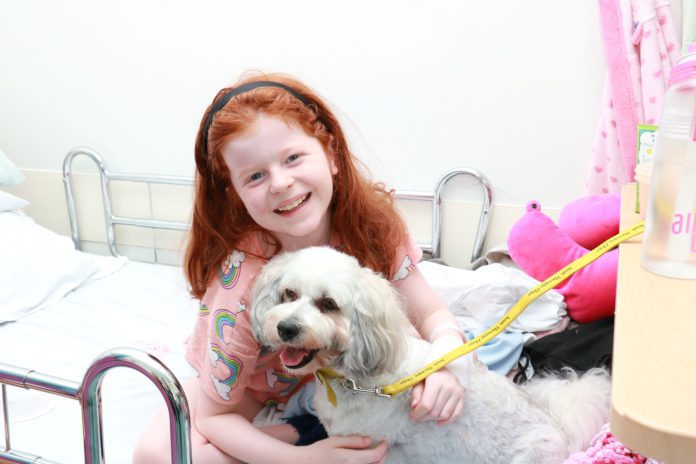
Ollie the therapy dog brightens the halls, and brings joy to the days of children in the hospital in Galway

Ollie is an 8-year-old Malshi, he is the first four legged team member in the Paediatric Unit at University Hospital Galway (UHG).

Every Thursday, after a thorough brushing and grooming, Ollie puts on his Irish Therapy Dog uniform and trots through the doors of the Paediatric Unit at UHG.

Excitement and smiles fill the corridors as his calming and comforting influence is instantly felt by patients, staff and visitors.

Tracey Torpey, Clinical Skills Facilitator, Paediatric Unit at UHG, said, “Ollie is our first therapy dog, he always receives a warm welcome and of course laps up all the attention, bringing with him so much warmth and joy.”

“This interaction is a powerful thing to witness. You can stand back and simply watch the positive energy filling the room.”

“His little presence has made such a huge difference to the children, cheering them up and assisting in calming children who are anxious about being in hospital, he’s an amazing dog.”

Sarah Murphy, Clinical Nurse Manager 3, Paediatric Unit at UHG added, “Dog therapy offers a positive distraction in the unit and helps normalise the setting for children who are away from home under scary and unpleasant circumstances.”

“Sometimes the best medicine has four legs and a wagging tail. Ollie can be a furry friend and a piece of normalcy in an unfamiliar world for children in hospital.”

Irish Therapy Dogs is a registered voluntary charity whose always looking for suitable volunteers. Approved volunteers and their dogs visit residents of an assigned Care Centre once per week to bring them an abundance of positive therapeutic benefits.

The dogs’ owner and handler Siobhan Falvey, who is a lifelong animal lover, said that she knew Ollie would be a great fit for bringing joy to people in difficult circumstances.

“I became interested in the work of Irish Therapy Dogs after hearing about their work and seeing Ollie interacting with other people and witnessing the daily joy and transformative power of the human-animal bond, and the potential for deep emotional connections with both the dogs and the individuals I knew he would be good at that type of work.”

“Ollie started his journey in a nursing home providing love and support to the elderly, now he is happy to be on duty at the Paediatric unit in UHG.”

“Irish Therapy Dogs is an amazing organisation, and it was the perfect fit for me, because I’ve always been fascinated by what dogs can achieve through the connections that they are able to make with humans.”

“Families and staff will often stop to show me photos of their pets at home that they are missing. We compare funny stories about our dogs while they have a cuddle with Ollie.”

After a busy and pawsome day, Ollie heads home for a well-earned rest and a little treat or two.

University of Galway #1 in Ireland and Top 5 in EU for sustainability

0
Galway Daily news University of Galway Open Days
University of Galway Quadrangle. Photo Credit: Professor Chaosheng Zhang

University of Galway is the number one university in Ireland for sustainable development for the fourth year in a row.

The ranking has been announced in the Times Higher Education Impact report in recognition of the University’s progress in responding to the United Nations’ Sustainable Development Goals (SDGs).

As well as being top of the class in Ireland, the ranking places the University of Galway at No. 3 in the EU.

Times Higher Education Impact Rankings 2025 ranked 2,526 universities from 130 countries on their progress towards the United Nations’ Sustainable Development Goals (SDGs).

The number of universities taking part in the rankings is up 65% on the previous year, making the University of Galway’s achievement all the more significant.

Interim President of University of Galway, Professor Peter McHugh, said, “Ranking University of Galway number 1 in Ireland and top 3 in the EU is a magnificent reward for our staff and our leadership on sustainability measures.”

“Our recently launched new ‘Strategic Plan 2025–2030, Of Galway, For the World’ is not only a symbol of that focus but also a signal as to how we will further embed sustainability into our teaching, research, operations, and partnerships, fostering the next generation of leaders and innovators to tackle global challenges.”

Among the highlights from the ranking for University of Galway are – top 50 in the world for actions on SDG12 Responsible Consumption and Production; SDG3 Good Health and Wellbeing; and SDG17 Partnerships for the Goals.

University of Galway is also ranked top 75 in the world for SDG6 Clean Water and Sanitation – following a submission under this category for the first time – and SDG14 Life Below Water.

Some of the key measures which have been taken by University of Galway in the realm of sustainability include having the most biodiverse university campus in Ireland.

Among the measures promoting this include new wildflower enhancement schemes, bird boxes, bat boxes, insect hotels, beehives, a pollinator friendly pesticide code and a log tree hive.

In addition, since 2016, the University has halved its greenhouse gas emissions and is on course to surpass public sector 2030 targets. Fossil fuel boilers have been replaced with heat pumps, solar PV rolled out across campus and innovative energy projects have been developed.

On-campus park and ride buses are electric, and a network of internal and external drinking water fountains have been installed campus wide.

Richard Manton, Director of Sustainability at University of Galway, said, “Confirmation of University of Galway’s leading position on sustainability is a great credit to our Community University Sustainability Partnership (CUSP), which this year celebrates its 10th birthday, and to the entire University community.”

“Students, staff and community partners have enthusiastically embraced our model to learn, live and lead on sustainability.”

“As a National SDG Ambassador, we will continue to advocate the Sustainable Development Goals and act as a good practice example on our green, biodiverse and sustainable campus.”

Most Popular

Two Galway Farmhouse Cheesemakers Scoop Honours At The CÁIS 2026 Irish...

0
Two Farmhouse Cheesemakers from Co. Galway were honoured last week at the 2026 Irish Cheese Awards. The ceremony hosted by CÁIS, the Association of...

Latest