Home Blog Page 14

Two Galway bookstores to receive funding from independent bookstore initiative

0

Books at One have today announced 23 funding recipients of independently run bookstores for the second year of its Community Prize Fund initiative. Two Galway based independent bookstores have been included in the funding.

The Galway stores included in the funding are Charlie Byrne’s Bookstore and Turning Pages (Tuam).

Each selected store will receive a grant of up to €5,000 in support of developing new and engaging activities for the benefit of their local community.

This year’s recipients will see 23 stores from 14 counties, spread across the island of Ireland.

Among the entries and successful applicants are recently opened stores as well as those who also received funding in 2025, allowing them to expand and grow on last year’s activity, or embark on a new creative venture.

The fund was created in 2025 for Books at One via The One Foundation as a new avenue of support for both independent stores and their surrounding communities.

The aim was to further strengthen the importance of independent bookstores as creative venues for community engagement and connection across the country.

Now in its second year, the fund builds on a strong first outing. Last summer, 21 independent bookshops received grants to deliver projects that reimagined their stores as unique cultural and social places in their towns and cities.

From storytelling events, creative workshops and youth programmes, The Community Prize Fund helped support a wide variety of different projects, responding to the unique needs of each bookstore’s local community.

Eoghan Stack, Chairperson of The One Foundation commented, “When the Books at One Community Prize Fund launched in 2025, we hoped it would give booksellers an opportunity to try new avenues to creatively engage with their local community and it’s proven to be a huge success.”

“This year, the fund will support 23 independent shops across 14 counties, helping independent bookshops integrate a love of reading into a real community way of life.”

“The power of a good indie bookshop is not just about what’s on the shelves alone but about those who work there and those who visit on the regular, making it an important fixture of communities.”

“We’re delighted to see both the initiative and the ideas within the applications grow and look forward to seeing how these are brought to life by the communities that shape them.”

The full list of recipients of the Books At One Community Prize Fund 2026 are:

  • Antiquity Bookshop, Cork
  • Antonia’s Bookstore, Meath
  • Bantry Bookshop, Cork
  • Books Upstairs, Dublin
  • Bookworm Bookshop, Tipperary
  • Castle Books, Mayo
  • Charlie Byrne’s Bookshop, Galway
  • Halfway up the Stairs, Wicklow
  • Leaf and Bower, Cork
  • Little Acorns, Derry
  • Pangur Bán Bookshop, Mayo
  • Prim’s Bookshop, Cork
  • Quay Books, Limerick
  • Red Books, Wexford
  • Roe River Books, Louth
  • Tales for Tadpoles, Wicklow
  • The Bookshelf, Down
  • The Ennis Bookshop, Clare
  • The Maynooth Bookshop, Kildare
  • The Nenagh Bookshop, Tipperary
  • Turning Pages Bookshop, Galway
  • Woodbine Books, Kildare
  • Worm Books, Cork

Motorway closures planned for M18 roadworks

0
Galway Daily news

There will be nightly road closures in place on the M18 for several weeks while roadworks are being carried out on the motorway.

Direct Route (Tuam) on behalf of TII are carrying out works on the M18 between Junction 18 Rathmorissey and Junction 16 Gort.

The works are taking place on both the northbound and southbound carriageways over the coming weeks.

To facilitate these works, the motorway will be closed nightly from 20:00 to 06:00 starting from Monday, July 13.

Please note that the closure will be staffed by an operative to allow access for emergency services if required.

Week Commencing 13/07/2026

Monday – Friday: M18 Northbound, Junction 16 Gort – Junction 17 Kiltiernan. The diversion route for northbound traffic will be via the old N18.

Businesswoman of the Year Awards taking place in Galway

0

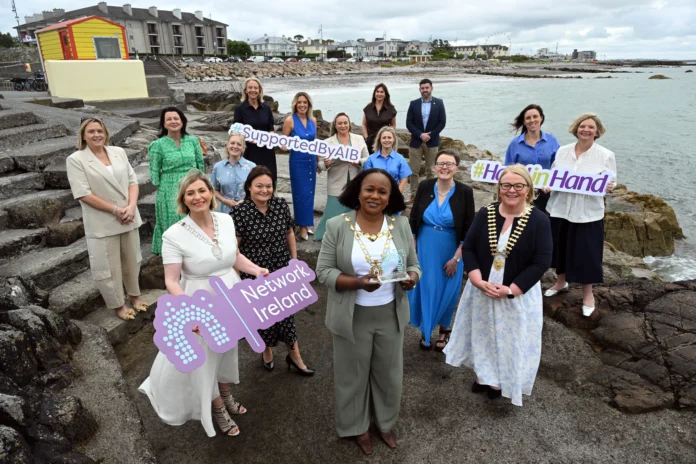
The Network Ireland National Conference and Businesswoman of the Year Awards will take place in Galway City later this year to celebrate female entrepreneurs.

Network Ireland is a national business organisation which advocates for female entrepreneurs and women in business across Ireland, with 17 branches with 1,500 active members. The organisation’s annual conference will be held in Dexcomm Stadium on Friday, September 18, followed by the Businesswoman of the Year awards in the Galmont Hotel.

Network Ireland National President Karen Ronan, CEO of Galway Chamber announced details of the powerful Business Women’s Conference and Awards at a reception in the Blackrock Cottage in Salthill and tickets go on sale on Friday 10th of July 2026.

The 2026 Network Ireland Conference will feature a host of high-profile speakers including a Key Note fire side discussion with Laura Dowling, the Fabulous Pharmacist.

An award winning business woman who’s renowned for the recognition she’s brings to women’s health and wellbeing while building an award-winning brand and business is certain to inspire Network Ireland members.

She will be joined by experts from AIB, Enterprise Ireland and a host of speakers including Mary Rodgers, of PorterShed Galway, Geraldine Jones of Skin Formulas, Author Michele Roys and Denise O’Brien with more to be announced in the coming weeks.

Julie Burke will MC the Network Ireland Conference. General Manager of DampMaster, a nationwide company with offices across Ireland and the UK, Julie is an award-winning speaker and mentor who empowers women in business, and proves that you don’t have to be just one thing, as in her spare time, she is a comedian, better known online as Julesrulesirl, she has taken the digital world by storm with her relatable Irish Mammy comedy.

Network Ireland is a voice and support for Female Start Ups, Entrepreneurs and Women in Business across Ireland. Elevating women in business and their careers.

Network Ireland drives both professional and personal development in women and the annual conference brings together a wide range of subjects and topics delivered by high profile and experienced female entrepreneurs who share their values and knowledge and further elevate the growth of women led businesses and brands across rural and urban communities.

AIB is Network Ireland’s Official Partner for close to 15 years, and has seen the growth in the organisation during that time. “AIB is proud to support Network Ireland’s National Conference and Awards,” said Geraldine Casey, Managing Director, Retail Banking, AIB.

“The conference will bring together hundreds of women business leaders who are ambitious, talented and a driving force in the Irish economy. Every day we in AIB see the extraordinary achievements of our female fronted business customers and we look forward to continuing the development of women in business in Ireland through our ongoing collaboration with Network Ireland.”

Also supporting the Network Ireland Conference and Businesswoman of the Year Awards is Enterprise Ireland, Sarah Walker, Senior Executive said that they provide, “An important platform for celebrating the achievements of women entrepreneurs, business leaders and innovators across Ireland.”

Sarah Walker went onto say, “Through its strong national network, Network Ireland plays a vital role in fostering ambition, leadership and collaboration among women in business. We look forward to joining members from across the country in Galway this September to celebrate excellence, champion entrepreneurship and support the continued growth of women-led businesses.”

Galway City Council and Galway Local Enterprise Office are also supporters of Network Ireland and very much welcome this prestigious conference coming to Galway City this Autumn.

“Network Ireland is a wonderful collective of passionate, powerful and creative business women,” says Karen Ronan, Network Ireland President and CEO of Galway Chamber. “Collectively, Network Ireland across all 17 branches is a voice for women in business and their careers and we use our conference to support all women in our society.”

“I look forward to welcoming over 500 Network Ireland members to Galway City for our annual conference when we will network, share business and life experiences while learning and further strategizing the future of female led entrepreneurship and the continued growth of women in business across Ireland”.

Ireland’s Growing Appetite for Online Casino Entertainment

0

In Ireland, gambling has been a favoured pastime for centuries. Horse racing, rugby, and the Gaelic Games class as the top sports that are backed by Irish punters week in week out. However, more recently, a new gambling trend has emerged in the country that is beginning to take off.

Irish folks are accustomed to casino games such as blackjack, roulette, and slots. The various stops on the Irish Poker Open tour are events that poker enthusiasts look forward to each year. But the rise of online casinos has caught the attention of those in Ireland looking for an alternative entertainment avenue that is highly accessible and convenient.

Constantly Evolving Entertainment

One of the main reasons why online casino play has taken off not just in Ireland but across the world is the regular innovations introduced to the industry. Whether that involves responsible gambling aspects or new game types, the industry never stands still. Online casinos have existed in Ireland for decades. 

However, the standards have vastly improved and the versions from the early 1990s are incomparable to the modern-day platforms of the present day. The game catalogue has been regularly updated and now includes hybrid game types such as live dealer games and live game shows that bring back an element of realism to the gameplay. Online casinos now have more variety than ever and that is not lost on Irish players.

Highly Accessible Gameplay

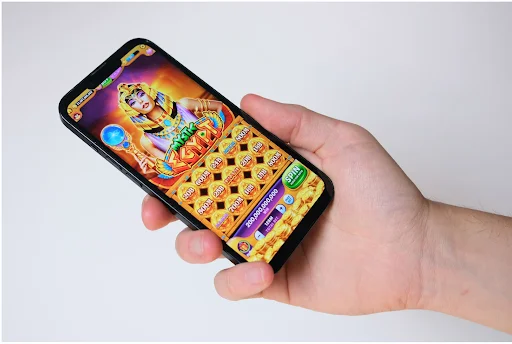
Over the years, even before the digital era got into full swing, mobile phones and other portable devices have played an increasingly larger role in everyday operation. Many daily tasks and chores can be completed at the click of a few buttons. For the online casino industry, recent advances in network connectivity and processing power have created a new space for providers to launch their products into.

With mobile phones and tablets now able to support intricate online casino games, even live dealer table games that have an additional live broadcast feed built into the gameplay, Irish players have much greater access to online casino catalogues to go with the added portability that comes with playing on the move. 

Operators in the industry like the Spinoli casino platform are now focusing more efforts on the user experiences for mobile players with most players accessing gameplay from these devices. Staying closer to player is an essential business practise no matter the niche. 

Stricter and More Secure Regulation

Due to the rise in online gambling activity in Ireland, discussions took place to install an independent regulator to monitor gambling activity in the country. From 5th March 2025, the Gambling Regulatory Authority of Ireland (GRAI) came into force to implement a regulatory framework to create a more secure and safer gambling environment.

Topics such as illegal operators, licensing, underage gambling, and responsible gambling tools were high on the agenda and Ireland is beginning to see the first shoots of the new regulatory direction this year. 

Many of the leading markets, including the U.K and Ontario in Canada have regulatory bodies that attempt to control an online entertainment avenue that is set to grow even larger in the future and protect its players from gambling and financial harm.

Luck of the Irish

The Irish have always been considered lucky folk which could explain the quickly established relationship with online casino play. But luck aside, the activity has established itself in markets worldwide and with new game types and enhanced animations, graphics and soundtracks constantly being revamped, there is more to come. And that is even before we begin to discuss the potential of Virtual Reality (VR) tech being integrated into gameplay.

Galway International Arts Festival 2026 Why More Galway Families Are Choosing Gift Cards Over Souvenirs

0

The 49th Galway International Arts Festival takes place 13-26 July 2026, with programming across the Heineken Big Top, Town Hall Theatre, An Taibhdhearc, Nun’s Island Theatre, and the Festival Gallery on William Street.

Visual Arts centrepiece for 2026: Presence, a series of life-size sculptures by sculptor Sean Henry, is located at the Festival Gallery, Eyre Square, the Claddagh. Devised performances boast 50 performers for a Stephanie Lake Colossus, a Druid revival for Dion Boucicault’s The Shaughraun directed by Garry Hynes, and NoFit State’s Carnation at Nimmo’s Pier.

Typically, the planning visits and accommodation enquiries peak in May and June, two to three months ahead of the door-to-door tourism window. It comes as Galway hotels and guesthouses say initial bookings for July dates have begun to flow, thanks to the programme’s announcement in late March. The festival fortnight also coincides with the height of summer tourism along the Wild Atlantic Way, with both domestic and international visitors flocking to the city.

How does the Fáilte Ireland plan reshape Galway tourism?

A Destination and Experience Development Plan for Galway City was unveiled in late 2024 by Fáilte Ireland, aimed at growing tourism sustainably in economic value over the next five years. The strategy envisions Galway as a 12-month cultural and coastal destination along the Wild Atlantic Way and includes proposals for a year-round indoor food market, a revamped Galway City Museum and a new cultural venue. 

This is not only a clear break from the original “come in summer and forget us” model, but progress towards a more experience-driven pitch, running year-round.

That overall strategy encompasses the festival. Instead of considering July as an isolated occurrence, the plan suggests seeing the Arts Festival in Summer as one component of a twelve-month cultural offer, including Baboró in October, Christmas markets during December and smaller festivals in Spring.

What has changed in how locals handle visiting family?

Locals realise the visiting-family spin cycle as the relatives descend from Dublin, the cousins arrive from Boston or Sydney, the brother comes up from London with his wife and a sulky teenager who would rather be in bed. It used to be a material Galway keepsake for decades: some bit of Claddagh bling, a wool throw, something in a box on the way home from the airport.

More recently, an increasing number of visiting families to Galway send gift cards in advance so that the visitor arrives with a card for a Galway restaurant, a city shop, as well as an experience or Ticketmaster booking for a festival show. 

A card selected by the visitor trumps a particularised souvenir the giver had guessed at. The digital delivery (via email) bypasses the postal lag to the US or Australia, and the visitor receives something of value.

What are the practical use cases for the festival season?

Pre-visit send out a hospitality voucher. The host is not expected to pay for every meal, as the relative comes with a rechargeable card. A Ticketmaster gift card, now available via Ticketmaster for Father’s Day on 21 June (three weeks prior to the festival), also covers most ticketed festival events of their choice.

Digital delivery takes away all the timing dilemma for gift giving from the diaspora. An Auntie in New York can purchase a card on Monday, and the recipient in Galway has it by Tuesday morning. 

The range on platforms like giftcards.ie features a wide range of well-known brands from retail (M&S, Penneys, H&M, TK Maxx), beauty (Rituals), dining and food delivery, entertainment (Ticketmaster) and gaming (PlayStation, Roblox). So most tastes and age groups are covered.

Under the 2019 Act, terms that require the full voucher value to be spent in a single transaction are not lawful. Terms that prevent the use of more than one voucher in a single transaction are also banned. The legislation protects the recipient’s ability to use the card flexibly, which matters when the gift is replacing cash or a physical present.

How does this fit the wider summer calendar?

The much bigger gifting season takes place during the Arts Festival fortnight. May is the month when most children receive their First Holy Communion and gifts received have typically ranged between €500 and €588 from each child for years. After that, confirmations follow from May to early June for older children and range from €200 to €600. The sacraments also see greater use of candles and rosaries, with vouchers/gift cards growing over cash envelopes, especially for children who have their own accounts or want to make their own purchases.

The May Bank Holiday, which falls on 4 May this year, has long been regarded as the start of summer, a golden ticket for dining and travel spending over extended weekends. The new Fáilte Ireland Galway City Destination and Experience Development Plan has positioned the city as a cultural hub year-round, while digital gift cards purchased via platforms such as giftcards.ie sit side by side, comfortably with the experience-led economy described in the strategy.

The Small Benefit exemption means Irish Employers can award up to 5 non-cash benefits per employee each year, with a total maximum value of €1,500 in tax-free amounts. The most frequent tool used is tax-free gift cards, which usually peak in Q2 when corporate demand surges as companies try to share employee rewards over the full year.

What does this mean for the local economy?

The Festival programme is set. We have the Fáilte Ireland plan on the table. Visitors will come in July, and the diaspora will send gifts in June. The gift bag, and more recently, the inbox of gift-giving sent ahead by a Galway household that has figured out where the relative will spend it more wisely than from a wool sweater in Shannon duty-free.

Garda appeal for woman (35) missing from Galway City since April

0

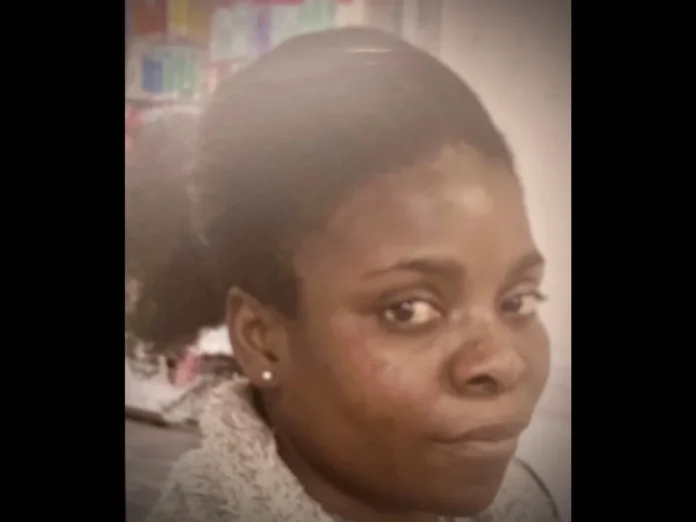
Gardaí are appealing for the public’s help in locating a 35-year old woman missing from Galway City for over three months.

Asana Kassim has been reported missing from the Salthill area since April 4 this year.

Asana is described as being approximately 5 foot 5 inches in height, of average build, with black hair and brown eyes.

Gardaí are concerned for her well-being.

Anyone with information on Asana’s whereabouts is asked to contact Salthill Garda Station on 091 514720, the Garda Confidential Line on 1800 666 111, or any Garda Station.

Man (50s) dies following late night collision on Wednesday

0
Galway daily news

A cyclist has passed away at University Hospital Galway after being in a collision with a vehicle in Mayo on Wednesday night.

Emergency services responded to collision involving a bike and another vehicle outside Ballinrobe on the N84 at Carrowkeel, Co Mayo shortly after 9pm yesterday.

A man in his 50s sustained serious injuries in the crash and was transported to University Hospital Galway, where he was later pronounced deceased.

The scene remains preserved for forensic examination by Garda Forensic Collision Investigators and the road is currently closed with local diversions in place.

Gardaí are appealing to anyone who witnessed the incident to contact them. Road users with camera footage (including dash-cam) from the N84 at Carrowkeel, Co Mayo around the time of the collision are also asked to make this available to investigating Gardaí.

Anyone with information is asked to contact Claremorris Garda Station on 094 9372080, the Garda Confidential Line on 1800 666 111, or any Garda Station.

Phil Collins drum head raises €3k for children’s hospice at Galway Drum Show auction

0

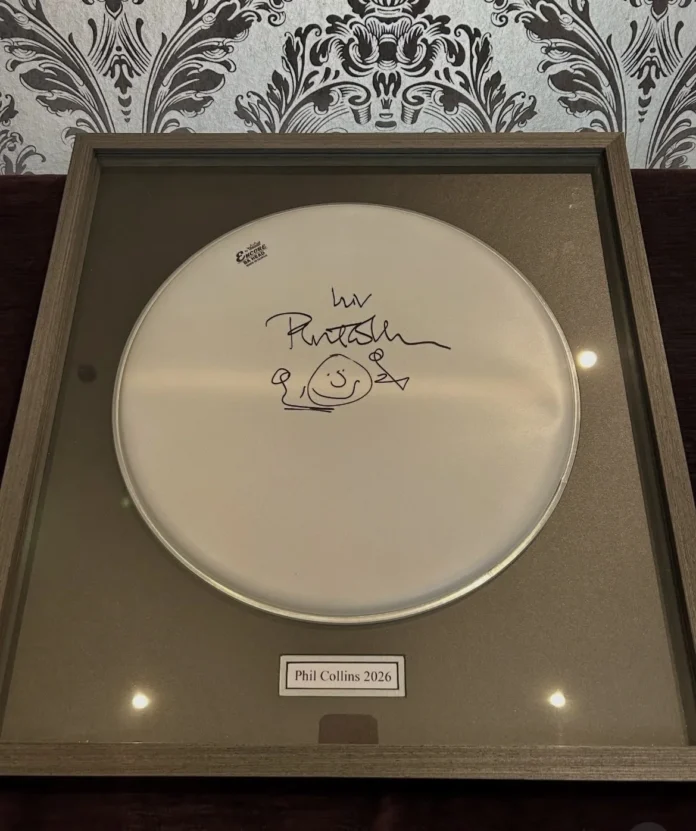
A framed drum head signed by Phil Collins has raised €3,032.35 for the Sunflower Children’s Hospice, Ireland’s first children’s hospice on the Western Seaboard.

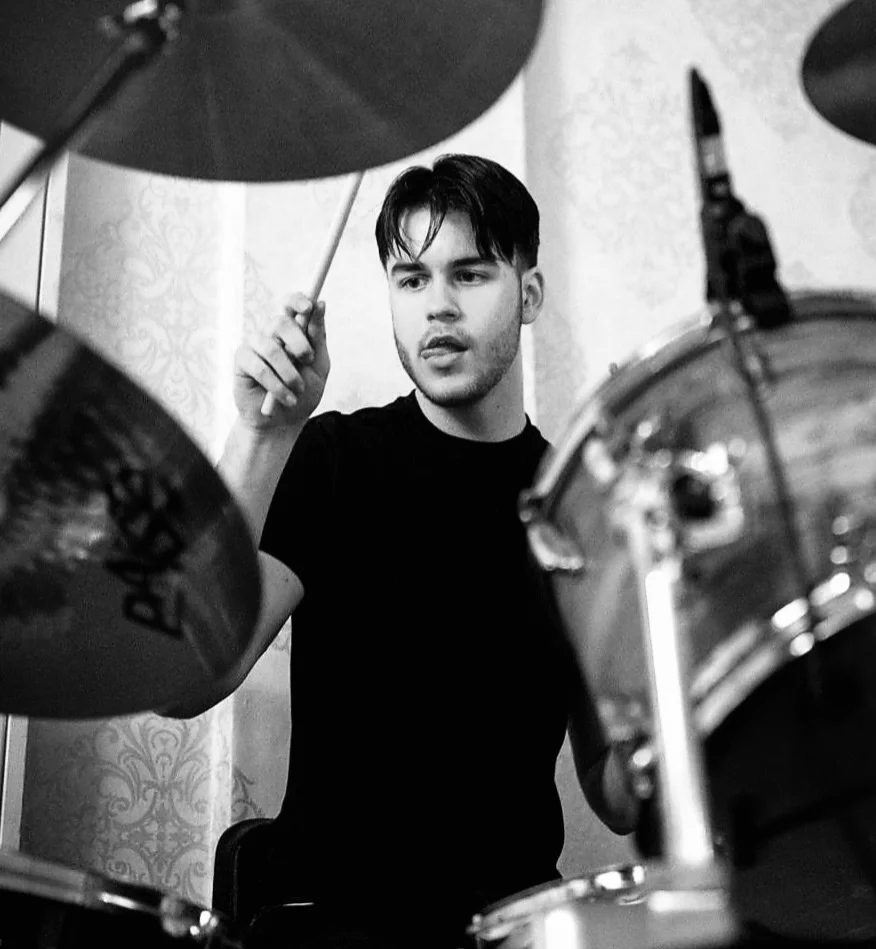
The Galway Drum Show auction was held in memory of talented young drummer Adam Nagajek, who died last year at the age of 17 after being diagnosed with Osteosarcoma at just nine years old.

Adam joined the Galway Drum Show when he was 16, and despite never having taken drum lessons, achieved a top-three national placing. Music remained a huge part of Adam’s life, and he continued creating and performing even during his final months.

Adam’s mum, Ola Nagajek, said, “I’m delighted that we were able to support the Sunflower Children’s Hospice through the Galway Drum Show’s silent auction.”

“Adam was in adult hospitals once he turned 16 and had limited access to pediatric services. While we did receive pediatric palliative care in his final weeks, much of his care took place within adult services despite him being only 16 and 17 years old.”

“I really wanted to help other children and young adults like Adam so they are not left behind. The Sunflower Children’s Hospice will provide hugely important service for families across the West of Ireland.”

Ola added, “I want to thank the Galway Drum Show for their incredible support. Adam was a hugely talented drummer. He formed a band in 2023 and while he spent his last few months in bed, he continued playing music, produced for other bands and worked on his own music until the end of his life.”

“We had a studio at home which he absolutely loved. He left behind music that his band Talllon, and other bands, are now bringing to life and it gives me great comfort knowing that his legacy lives on.”

The funds raised will go towards the construction of the eight-bed Sunflower Children’s Hospice in Mayo, with construction expected to begin later this year.

John Tierney, Galway Drum Show, said, “We are delighted to support such a fantastic charity and we’ll continue to do so in the future. The drum community will always support each other.”

The hospice will provide specialist palliative care for children with life-limiting illnesses, alongside purpose-built family accommodation and therapeutic facilities including hydrotherapy, play therapy, and sensory rooms.

Once complete, the hospice will support children and families from across the western seaboard, providing compassionate, specialist care closer to home.

Martina Jennings, CEO of Mayo Roscommon Hospice Foundation, said, “I would sincerely like to thank Ola and the Galway Drum Show for choosing to support the Sunflower Children’s Hospice.”

“Families like Adam’s highlight why this service is so urgently needed in the West of Ireland. Every contribution brings us closer to creating a dedicated space where children, young adults and their families can receive the specialist care and support they deserve.”

Public consultation on bus, walking, and cycling infrastructure work in Galway City

0

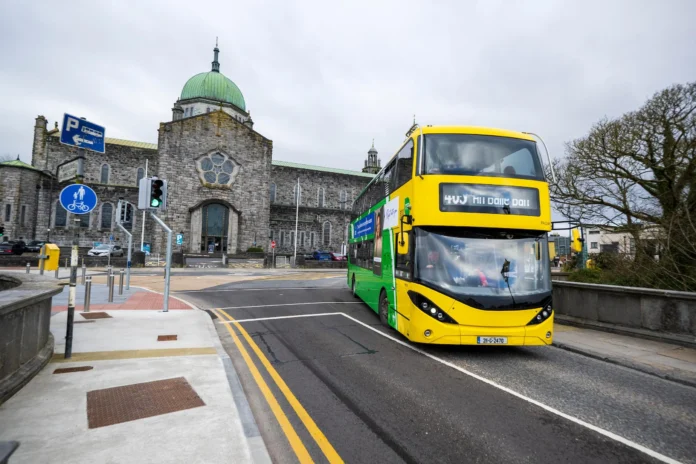
Plans are progressing for works across Galway City to improve pedestrian, cycling, and public transport infrastructure under the Bus Connects scheme.

As part of providing for the new bus network for Galway, it is proposed there will be upgrade works to existing bus stops, relocation of existing bus stops, and construction of new bus stops.

It is proposed the works undertaken will include measures to improve pedestrian safety and convenience through the provision of bus stops, crossing points, and line marking.

The city council is inviting submissions as part of a public consultation required for a Section 38 application to carry out these works.

In conjunction with the NTA, measures are proposed under Section 38 at the following locations:

East Ward

Bus Stop Ref. Number

Stop Name

Section 38 Works Description

012 Ballybrit Southbound Shortening of cycle lane, realignment of existing lane and associated road marking.
023/024 Calbro Retail Park Northbound/Southbound Provision of central island on Tuam Road and associated road marking to realign existing lanes

West Ward

Bus Stop Ref. Number

Stop Name

Section 38 Works Description

016 Barna Road / Cappagh Road Eastbound Extension of footway into the carriageway and associated road marking
048/049 Cuan na Coille Northbound/Southbound Provision of central island on Bishop O’Donnell Road and associated road marking to realign existing lanes.
085/ 086 Lios Carraig Northbound/ 
Lios Carraig Southbound
Provision of central island on Threadneedle Road and associated road marking to realign existing lanes. Provision of double yellow lines.
104 Cartúr Mór (Clybaun Road) Extension of footway into the carriageway and associated road marking.
130   Slí na Craoibhe Northbound (Clybaun Road)   Extension of footway into the carriageway and associated road marking.
163 Dún Na Carraige Westbound Provision of central island on Salthill Road Upper. Extension of footway to edge of carriageway and associated road marking.
169 Atlantaquaria Eastbound Realignment of kerb and associated road marking. Provision of double yellow lines.

Central Ward

Bus Stop Ref. Number

Stop Name

Section 38 Works Description

043 Corrib Village Northbound Extension of footway. Provision of controlled pedestrian crossing with belisha beacons and central island and associated road marking.
057/079 Dyke Road Car Park Northbound / Headford Road Lidl Southbound Provision of central island on Headford Road and associated road marking.
182 Westside Pitches Extension of bus lane and associated road marking.
186 St Francis’ Home Extension of footway into carriageway and associated road marking.
187 Dangan Heights (N59) Provision of central island on N59 and associated alteration to road marking.


Drawings showing the proposed works are available online here and may also be inspected for a period of one month until Tuesday, August 4 (each day excluding weekends and public holidays) from 9a.m. to 4p.m. at: Galway City Council, City Hall, College Road, Galway, H91 X4K8.

Observations and submissions relating to the above-mentioned proposed works may be made in writing to the Active Travel Team, Galway City Council, City Hall, College Road, Galway, H91 X4K8, at the link above, or by email to ActiveTravel@GalwayCity.ie.

The latest date for receipt of such representations is 4pm on Tuesday, August 4.

Road closure until mid-August for water mains replacement

0
Galway daily news Water outages in multiple areas of Galway due to burst mains

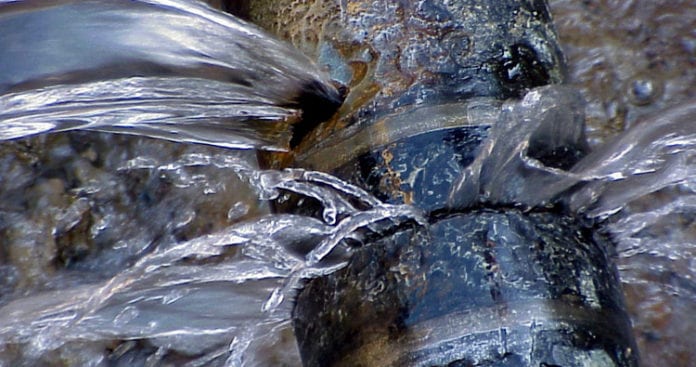
Work has begun this week on replacing just over half a kilometre of ageing leaky water mains in Galway city centre.

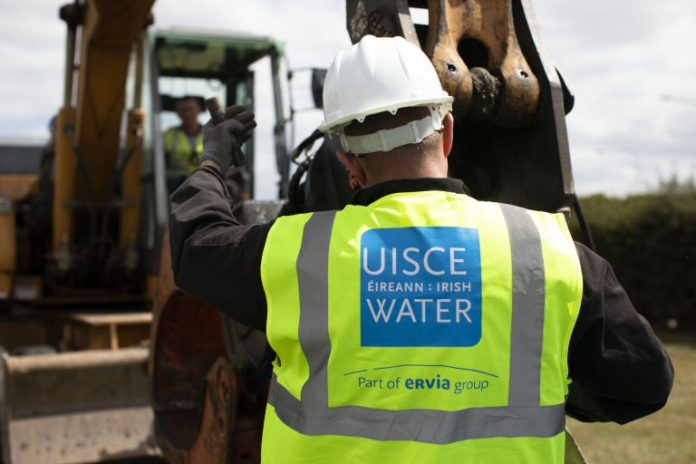
Uisce Éireann is replacing 510m of old pipes with new modern equivalents on Presentation Road, with work getting underway this week.

These new mains will improve the quality of treated water being delivered into homes and businesses in the area while also strengthening and safeguarding the network against bursts and other operational issues.

Enda Mac Namara, Uisce Éireann Programme Manager, said that customers in the area can look forward to a range of benefits accruing from these upgrade works.

“We have made significant progress in our programme of mains upgrades to the west of Galway city over the last 12 months, and this project on Presentation Road is the latest example of our commitment to deliver for customers and communities in Galway,” said Enda.

“These upgrades will provide an improved supply of water for homes and businesses at Presentation Road, Mill Street and the surrounding areas, while reducing the likelihood of operational issues on the network and helping us to reduce leakage rates.”

To facilitate the successful and safe delivery of these essential main upgrades, traffic management measures in the form of a road closure will be necessary.

The road will be closed 24/7 until Friday, August 21 from the junction of Presentation Road and Newcastle Road to the junction of Mill Street and Dominick Street Lower. Local and emergency access will be maintained at all times.

During the period of the road closure, traffic will be diverted via Dominick Street Lower, Dominick Street Upper, Henry Street, St Helen’s Street and Newcastle Road.

Presentation Road and Mill Street will be re-opened for the week commencing Monday, 27 July to facilitate increased traffic flows during the Galway Races.

Galway RNLI respond to three call outs in one very busy night

0

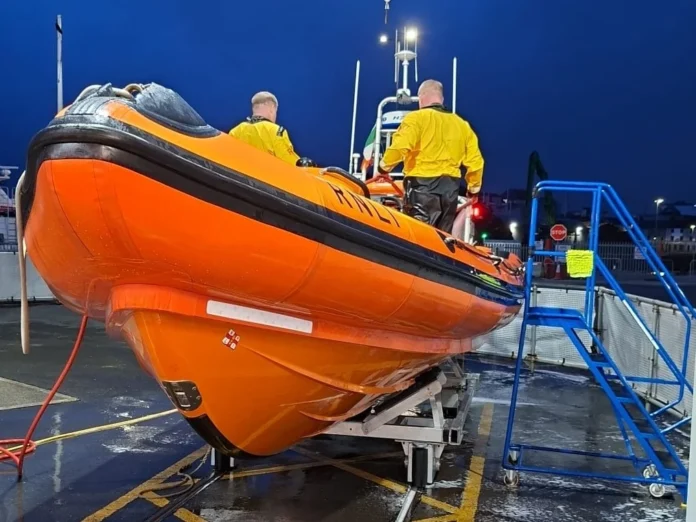
It was a busy night for the volunteer crew at Galway Lifeboat Station on Monday, as they were requested to launch shortly after 1am to the first incident followed in quick succession by two further unrelated call outs.

The first call out was requested by the Coast Guard to a research ship on Galway Bay with reports of an unwell crew member on board who required medical evacuation.

Conditions were rough at sea with strong winds which meant that the usual means of transport from the ship to shore were not possible without assistance.

The crew of James Rattigan, Paddy Hennelly, Mark Purcell and helm Declan Killilea launched the lifeboat, with Eoghan Donohue as shore crew, and were underway to the ship’s location shortly before 1.30am when a second call for assistance came in from the Coast Guard.

The crew were initially diverted and later stood down from that shout when additional reports came in that a 33ft sailing boat with two sailors onboard, who had been expected to arrive home in the evening, were well overdue.

The family members of the two people onboard the sailing boat hadn’t been able to make contact with them for a number of hours and had raised the alarm.

The sailing boat had been heading to Renville, County Galway and their location was picked up on radar off Black Head in County Clare.

The lifeboat and crew made way to the area to check on the welfare of the sailors and at around 2.40am located the sailing boat and the two sailors on board who were making their way slowly up the Clare coast.

The sailors were both well. They had encountered rough weather along the way and had lost all comms, but were safe and the lifeboat crew were able to relay this information to the Coast Guard who informed the families.

The lifeboat crew then left the sailing boat and headed to the research ship which was in the area of inner Galway Bay near Mutton Island.

The crew member who was unwell was transferred to the lifeboat at around 3am and the lifeboat returned to the pontoon at the lifeboat station where the casualty was handed over to the care of the National Ambulance Service.

The lifeboat crew then returned to check on the progress of the sailors who were around 1 mile from their destination and the lifeboat and crew accompanied the sailing boat until it was tied up at moorings at Renville.

The lifeboat crew then brought the two sailors on board the lifeboat and transferred them to shore and back to the waiting families.

Peter Navan was the Launch Authority on call for Galway RNLI last night. He said, “It was quite an unusual evening to say the least with three different call outs in such quick succession.”

“But it is the sort of scenario that we are trained for, not just in terms of the skills and experience of the lifeboat crew but also the decision making and risk assessment required when there are three incidents taking place almost simultaneously.”

“Our mission is to save lives at sea so the highest priority is always someone who is in the water or at risk of getting into trouble in the water.”

“It was a long night for our crew but it is what we are trained for and the reason why our volunteers will get out of bed in the middle of the night, not knowing what to expect but always ready and willing to respond when their pagers go off.”

Weather advisory issued as temperatures may reach 30 degrees by Friday

0
Galway Daily news galway weather sun

Met Eireann has issued a weather advisory for a prolonged period of high temperatures expected to last almost a week starting from Wednesday.

No weather warnings have been issued yet, but the advisory will be in place from tomorrow until Tuesday, July 14.

“A prolonged spell of very warm or hot weather will occur this week lasting into next week with heat wave conditions expected. Daytime maxima will widely exceed 25 degrees Celsius with values climbing to the high 20s or even low 30s in places from Friday.”

“The UV Index is expected to be high to very high. Warm and humid nights will occur with minima of 15 degrees or higher. Possible tropical nights may occur in places this weekend. There is also the chance of some thunderstorms later this week.”

The hot weather is likely to result in water safety issues as more people use waterways, lakes and beaches, possible heat stress and dehydration, especially for the elderly.

There is also the potential for disruption to public transport, as well as animal welfare issues, drought concerns, and a risk of wildfires from dry vegetation.

New operator sought for Pálás arthouse cinema

0
Galway Daily news Palas cinema founders on latest tax defaulters list

Galway City Council is again seeking an operator for the Pálás arthouse cinema, with the property open for expressions of interest from potential commercial operators.

The council is offering to provide the cinema property on a long lease, without charge, to one operator. No other support will be provided to keep it open.

Pálás has been closed since February 2025 due to mounting financial losses by the operator, Picture Palace Cinema Ltd.

A recent independent commercial review of the ‘property’ commissioned by Galway City Council suggested three options to consider.  These included

  • Re-opening of the property as a cultural space featuring one operational cinema with other areas repurposed for community and cultural use.
  • Re-purposing of the property to become more tourism focused with a focus on cultural tourism.
  • Re-configuration of the property to operate as a mix of commercial space generating annual rents combined with allocation of space for community use.

This expression of interest is not limited to these suggestions. Interested parties are invited to submit their own intended site usage concept and financially viable operational model.

The successful operator will operate the property in a manner compatible with the city’s international reputation for culture and the arts.

Efforts to find a new operator for the arthouse cinema fell through earlier this year due to expected refurbishment costs.

In the new invitation, the city council has eliminated any closing date for when expressions of interest must be in by.

Galway RNLI rescue lone sailor adrift 2 miles offshore

0
Galway Daily news Back to back medical evacuations for Aran Islands RNLI

The volunteer crew at Galway Lifeboat Station were requested to launch by the Irish Coast Guard over the weekend following a distress call from a lone sailor

The sailor who was alone on a 30 foot boat had been motoring west from Galway when a problem arose with the engine and the boat lost power in the bay, more than 2 miles south of Spiddal.

Two of the Galway RNLI crew were at the lifeboat station at the time the call came in from the Coast Guard and the lifeboat was launched immediately and was underway once the full complement of crew had assembled.

The crew of Paddy Hennelly, Mark Purcell, James Rattigan and helm David Badger made their way without delay to the casualty, arriving shortly after 10.30am.

Peter Navan, Launch Authority for Galway RNLI said, “This was a really good launch and rescue operation. Everything went as it should starting with the casualty immediately raising the alarm when the boat lost power, which is absolutely the right thing to do.”

“One of the ferries to the Aran Islands was in the vicinity of the casualty boat when the call for help went out and the ferry stayed alongside the casualty boat until the lifeboat had launched.”

“When the lifeboat arrived at the scene, one of the crew went on board the casualty boat to check on the condition of the sailor and thankfully all was well.”

“The crew then carried out an inspection of the boat and in the absence of a more suitable vessel and given the risks related to the boat’s condition and location in the main shipping channel, it was determined that towing was the best course of action for all involved in this instance.”

“Conditions were favourable at sea with good visibility and just a moderate breeze. The lifeboat and crew were back at the lifeboat station at around 1pm having ensured that the casualty boat was secured and the sailor was safely ashore.”

“Incidents can happen at sea at any time. Today was an example of how important it is to call for help when you get into trouble on the water, or if you see someone in trouble.”

“For anyone heading out sailing or motorboating, it is essential that you always carry a means of calling for help, and that everyone onboard knows how to use it. Whether that is using a VHF radio or using a mobile phone and dialling 999 or 112 and asking for the Coast Guard.”

Smarter Planning for Galway’s Growing Business Community

0

Growth can make a business stronger. It can also expose every weak assumption that was easy to ignore when the team, premises and workload were smaller.

A finance process that once lived in one spreadsheet may become too slow. A building that felt generous can start to feel cramped. Energy use rises, maintenance becomes harder to coordinate, and decisions that once affected one department begin to influence the whole organisation.

That challenge is particularly relevant across Galway’s varied business community. A professional-services firm adding a second team will not face the same pressures as a medtech manufacturer expanding production, yet both need to connect commercial ambition with operational reality. The same applies to technology companies, pharmaceutical facilities, developers and growing SMEs preparing to move into larger premises.

Smarter planning does not mean predicting every detail perfectly. It means gathering enough reliable information to test your assumptions, sequence investment and recognise when the business has outgrown an informal way of working.

The numbers matter. So do the building, the infrastructure and the people responsible for keeping everything running.

Measure performance before committing to expansion

Turnover matters, but it is not a complete measure of business strength.

A company can increase sales while margins narrow, cash becomes tighter and overheads rise faster than expected. Growth may look impressive from the outside while putting considerable pressure on working capital behind the scenes. That is why expansion decisions should begin with a clear financial baseline.

Look beyond the headline figure. Gross margin can show whether higher sales are producing proportionate value. Operating margin can reveal how overheads are affecting profitability. Debtor days may expose pressure on cash collection, while stock movement can show whether money is tied up for longer than planned. Liquidity, labour productivity and return on investment may also be relevant, depending on how your business operates.

The real value comes from comparison. How have these figures changed over the past year? Are costs rising faster than revenue? Is productivity improving as the team grows? Are you comparing your results with businesses that have a genuinely similar model?

One practical way to answer those questions is through benchmarking financial performance against previous periods and, where appropriate, comparable firms or sector norms. Used carefully, benchmarking can highlight margin pressure, rising overheads or cash-flow weaknesses before they become harder to correct. Coffey & Co offers further guidance on how SMEs can use this process to support better financial decisions.

The comparison still needs context. A Galway software company, a contract manufacturer and a professional-services firm will have very different cost structures, working-capital requirements and growth cycles. An unsuitable benchmark can mislead you just as easily as no benchmark at all.

Official data can help provide a broader view. The Central Statistics Office’s enterprise statistics bring together information on business demography, SMEs, structural business performance and enterprise sustainability. These figures will not tell you exactly what your margin should be, but they can help you understand the wider commercial environment.

Keep the reporting focused. A short set of measures that management understands and reviews regularly is more useful than a crowded dashboard filled with numbers nobody acts on.

Connect financial targets with operational reality

Once you have established the financial baseline, translate the growth target into practical consequences.

If revenue is expected to rise, what must change operationally? You may need more staff, additional equipment, longer opening hours or greater production capacity. More customers could mean more deliveries, support requests or pressure on existing systems. A larger team might require new meeting space, welfare facilities, parking arrangements or supervisory capacity.

This is where plans often become vague. The commercial target is precise, but the operational assumptions underneath it are not.

Suppose a Galway manufacturer expects to add a new production line. The financial model should account for more than the equipment purchase. The business may need electrical capacity, ventilation, drainage, specialist maintenance, training and additional quality-control processes. A technology company taking a larger office must think beyond rent. Occupancy, fit-out, connectivity, energy use and ongoing facilities costs will all shape the real cost of the move.

Choose operational indicators that connect directly with the plan. These could include output per labour hour, equipment downtime, delivery lead times, defects, utilisation of key spaces, energy consumption or progress against project milestones.

Then assign ownership. Who reviews the figures? How often? What happens when performance moves outside the expected range?

Data without a decision process becomes decoration. It may look sophisticated in a monthly pack, but it does not help you act.

Make building performance part of the growth strategy

Premises tend to become more complicated gradually.

A new area is fitted out. Working hours change. Specialist equipment is added. Teams occupy rooms differently. Heating, cooling, lighting, ventilation and metering systems may continue operating according to assumptions made years earlier.

At first, the problems appear minor. One part of the building is too warm. Another is difficult to ventilate. Lights remain on in an area that is used only occasionally. Staff rely on manual adjustments because nobody has a complete view of how the systems interact.

As the building becomes larger or more technically demanding, this fragmentation can affect comfort, operating costs and fault response.

For an organisation with complex premises, working with an international specialist in BEMS such as Standard Control Systems can provide expertise in the design, integration, commissioning, maintenance and optimisation of controls for heating, ventilation, cooling, lighting and metering. The purpose is not technology for its own sake. It is better visibility and more coherent control.

Before investing, define the operational problem. Do you need to understand when systems are running? Are separate zones following unsuitable schedules? Is fault information difficult to interpret? Have occupancy patterns changed? Does the facilities team have access to useful data, or only complaints when someone is uncomfortable?

Smaller firms may be able to improve performance by reviewing timers, maintaining equipment and setting clearer responsibilities. Larger sites may need an energy audit or a more structured upgrade programme. SEAI’s business grants and supports provide current information on energy audits, building-fabric measures, heating and cooling upgrades, technical assistance and other supports. Check eligibility and programme conditions directly before including any funding in a budget.

The building should support the business plan. If the organisation is growing while the premises becomes harder to operate, the two strategies are moving in opposite directions.

Design infrastructure for the years after opening

Major developments are often judged by whether they reach completion. Owners and operators have to think further ahead.

The systems installed during construction will need to be inspected, maintained and, eventually, adapted. Routes that appear acceptable on drawings may be difficult to access once ceilings, equipment and other services are in place. Responsibilities that are obvious to the project team can become unclear after handover.

Rainwater infrastructure is a good example. It may receive little attention from most occupants, yet poor access, unclear maintenance arrangements or weak coordination with other services can create long-term operational problems.

A specialist such as CapCon Engineering works across the design, prefabrication, installation and maintenance of siphonic and gravity rainwater systems for large-scale and high-tech construction. For a business owner or developer, the broader lesson is not to become a drainage engineer. It is to ask how specialist systems will be coordinated, tested, documented and maintained once the building is in use.

Consider roofs, discharge routes, inspection access, future extension plans and the relationship between drainage and structural or mechanical services. Ask who owns each decision. Confirm what information the facilities team will receive at handover.

Opening day is only one date in the life of a building. A decision that saves time during construction but creates years of difficult maintenance is not an efficient decision.

Maintain visibility throughout complex projects

As a development becomes more heavily serviced, coordination turns into a management discipline of its own.

Architects, engineers, specialist contractors, equipment suppliers and construction teams may all need space within the same zones. A change to one route can affect several other packages. Work must be sequenced around access, safety, testing and the activities of other trades.

This is why project information needs to stay current and visible. Drawings, approved routes, installation status, inspection records and commissioning results should not disappear into separate folders owned by different teams.

On a heavily serviced development, accurate drainage system tracking across routing, installation, testing and handover can help the project team retain visibility as work progresses. The linked Galway campus example describes detailed routing, clash avoidance, prefabrication, sequencing around multiple trades, final testing and system monitoring in a coordination-intensive environment.

The principle applies well beyond drainage. If a project team cannot see what has changed, who approved it and whether it has been tested, small uncertainties can multiply.

Set clear document-control rules. Agree which drawing or model is authoritative. Record changes promptly. Make inspection responsibilities explicit. Include the future facilities team before commissioning is complete, not after the project knowledge has dispersed.

Handover should be a transfer of understanding, not merely a transfer of files.

Review whether the new systems still support the business

Implementation is not the end of the planning cycle.

Once a new process, system or premises is operational, compare actual performance with the original assumptions. Did margins develop as expected? Has the additional capacity been used? Are energy patterns consistent with occupancy? Is maintenance manageable? Can staff find the records they need?

A review does not have to become a major audit every time. It can be a structured discussion held at sensible intervals, supported by a few relevant figures.

Some results will differ for good reasons. Demand may have changed. Recruitment may have taken longer. A new area may be used differently from the original plan. The point is not to punish every variance. It is to understand it before the next decision is made.

Assign continuing ownership. Finance should know who maintains the commercial model. Operations should know who reviews capacity and productivity. Facilities staff should know who controls building settings, maintenance schedules and technical records.

When responsibility is shared too vaguely, it is often exercised by nobody.

Growth makes review more important, not less. The business you are managing six months after an expansion may not be the business described in the original proposal.

Build a phased roadmap for sustainable growth

Bring the work together in a sequence your organisation can realistically follow.

Start with the commercial outcome. Be specific about what growth means: additional capacity, a new market, a larger team, improved margin or a more resilient operating model.

Establish the baseline next. Review financial performance, operational constraints and the condition of the premises. Then test whether existing systems can support the plan. Identify changes that can be made through clearer routines before assuming that every problem requires capital expenditure.

Separate immediate actions from medium-term upgrades and major projects. Give each item an owner, a budget assumption and a review point. Some improvements may be low-cost but urgent. Others may be valuable only when the business reaches a certain scale.

This phased approach reflects the fact that organisations develop through different stages. Galway Daily’s guide to the stages of entrepreneurship highlights growth and continual reassessment as part of the entrepreneurial journey. The systems needed at launch will not necessarily be enough when the business is hiring, expanding or managing technically demanding premises.

For local advice, training, mentoring and information on financial supports, Local Enterprise Office Galway is another useful starting point. Check current eligibility and programme details directly before making commitments.

Smarter growth is not simply a matter of spending more or building bigger. It is the discipline of connecting ambition with evidence.

Measure what matters. Translate targets into operational requirements. Make the premises part of the strategy. Coordinate infrastructure properly. Review what happens after implementation.

That is how growth becomes more than momentum. It becomes something your business can understand, manage and sustain.

A Beginner’s Guide to Online Betting

0

Online betting has become one of the most popular forms of entertainment around the world. Thanks to smartphones and fast internet connections, people can now place bets from almost anywhere. Many players compare different platforms before getting started, including TonyBet Ireland, to learn about features, sports, and payment options. If you are new to online betting, understanding the basics can help you enjoy the experience safely and responsibly.

What Is Online Betting?

Online betting means placing a wager using a website or mobile app.

Instead of visiting a betting shop, players can use their phones, tablets, or computers to place bets.

Most betting websites are available every day and offer many different sports and events.

This makes betting simple and convenient for many people.

Popular Sports for Betting

Sports betting is the most common type of online betting.

Football is the most popular sport because matches take place throughout the year. Many people also bet on basketball, tennis, rugby, cricket, boxing, horse racing, and motorsports.

Having many sports to choose from gives players plenty of options every week.

Understanding Betting Odds

Odds are an important part of betting.

They show how likely an event is to happen.

They also show how much money a winning bet could return.

Lower odds usually mean an outcome is more likely, while higher odds usually offer a larger possible payout.

Learning how odds work helps players understand their bets better.

Different Types of Bets

There are many ways to place a bet.

A match winner bet is the simplest option. Players choose the team or player they think will win.

Some people enjoy betting on the total number of goals or points.

Others place bets on both teams to score or predict the exact final result.

Accumulator bets combine several selections into one ticket, offering larger potential returns if every selection is correct.

Why Mobile Betting Is Growing

Many people now use smartphones for online betting.

Mobile apps and websites make it easy to place bets wherever there is an internet connection.

Players can also check live scores, follow statistics, and manage their accounts from one device.

The convenience of mobile betting has helped it grow quickly.

Live Betting

Live betting allows players to place bets while a match is taking place.

The odds change throughout the event based on what happens during the game.

For example, a goal, red card, or injury can affect the available odds.

Many sports fans enjoy live betting because it makes watching matches even more exciting.

Bonuses and Promotions

Many betting websites offer bonuses for new and existing customers.

These may include welcome bonuses, free bets, cashback offers, or loyalty rewards.

Bonuses can provide extra value, but players should always read the terms and conditions carefully.

Understanding the rules helps avoid confusion later.

Choosing a Trusted Betting Website

Not every betting website offers the same experience.

It is important to choose a trusted and licensed platform.

Good betting sites provide secure payments, clear rules, reliable customer support, and a wide range of betting markets.

Reading reviews can also help players compare different platforms before opening an account.

Easy Payment Methods

Modern betting websites offer many payment options.

Players may use bank cards, digital wallets, bank transfers, and other online payment methods.

Fast deposits allow players to begin quickly, while faster withdrawals improve the overall experience.

Many players prefer websites that offer payment methods they already know and trust.

Responsible Betting

Responsible betting is one of the most important parts of gambling.

Betting should always be viewed as entertainment rather than a way to earn money.

Players should decide on a budget before they begin and never spend more than they can afford to lose.

Many betting websites also provide helpful tools such as deposit limits, spending reminders, cooling-off periods, and self-exclusion options.

These features help players stay in control.

Common Mistakes to Avoid

New players sometimes make simple mistakes.

One common mistake is placing bets without understanding the odds.

Another is chasing losses by trying to win back money immediately after losing.

Some players also bet on too many matches at the same time.

Taking time to learn and staying patient can help avoid these mistakes.

Learning Before Betting

Successful betting starts with good preparation.

Following sports news, checking team form, reading injury updates, and studying recent results can all be helpful.

Although research cannot guarantee success, it can help players make more informed decisions.

Learning about different betting markets also improves confidence.

Technology Is Improving Online Betting

Technology has changed online betting in many ways.

Fast internet allows websites to update odds almost instantly.

Many platforms now include live statistics, match trackers, and live streaming for selected events.

Artificial intelligence is also helping improve customer support and website security.

These improvements make betting easier and more enjoyable.

The Future of Online Betting

Online betting is expected to continue growing.

Mobile devices will remain the main way people place bets.

Technology will likely bring faster websites, better live features, and improved security.

Companies will also continue developing responsible betting tools to support safe gambling.

These changes will improve the experience for players around the world.

Online betting has become a popular way for sports fans to enjoy their favourite events. With many sports, betting markets, and mobile features available, players have more choices than ever before. By understanding betting odds, choosing trusted websites, setting a budget, and following responsible betting practices, players can enjoy the experience in a safe and balanced way. The most important thing is to treat betting as entertainment and always stay in control.

University of Galway unveils new Institute for Creativity

0

University of Galway has officially launched its new Institute for Creativity, a major strategic initiative that aims to harness culture and creativity on Ireland’s western seaboard.

The new Institute will forge next-generation collaborations between art and science, and research, policy, and industry – working across all disciplines in the University from life science to business and law, from engineering to the natural sciences.

As AI reshapes the way we interact with all sectors of society, the Institute for Creativity celebrates the University’s legacy as an important partner in the creative ecosystem regionally and nationally and puts artistic intelligence to the fore in developing alternative solutions to the world’s most complex problems.

The new Institute will support and enhance research already underway in the University while driving new projects at the intersection of creativity and technology that are rooted in arts-based practice.

Key areas of focus for the Institute for Creativity

  • Lead research in the role of art and culture in fostering and driving sustainable development in rural and remote areas, alongside working with Galway’s globally renowned creative sector.
  • Rethink and revalue the important relationship between art and culture, and health and wellbeing.
  • Conduct experimental research to promote cultural and linguistic diversity as a competitive advantage for Ireland and Europe.

The Institute for Creativity will also be home to University of Galway’s popular ‘Arts in Action’ programme, which welcomes students and staff, and visitors from outside the university to engage with a broad and varied programme of artistic events.

The formal launch took place as part of the 2026 International Forum on Artistic Research, the largest-ever conference on practice-based artistic research, bringing together more than 300 international practitioners, scholars, researchers and policymakers at University of Galway from June 23-26.

The Forum is part of The Society for Artistic Research (SAR), a network that promotes and disseminates artistic research practices and findings across disciplines and contexts.

President of University of Galway, Professor David Burn said, “I am delighted to officially launch our new Institute for Creativity as part of this important conference on practice-based artistic research. Galway’s vibrant creative sector is globally connected – empowered by contemporary creative practice and innovative technologies.”

“Our university is at the heart of this activity, exploring the links between creativity, teaching, research, and the wider world, while being rooted in the local community to create spaces where ideas can thrive.”

“Creativity, Culture and Society, Transformative Data and AI, and Innovation for Health are three key pillars in our strategic plan, Of Galway, For the World. These pillars reflect and support the vision of the Institute for Creativity.”

“We will work together to ensure the extraordinary talent, creativity and opportunity we have here will continue to enable close collaboration on research and student engagement in the creative arts.”

Professor Florian Schneider, Director of the Institute for Creativity said,“The future of innovation lies at the intersection of creativity and technology. But Creativity is not just for the creative arts, the Institute will research creativity as a general condition that reshapes the manifold relationships across all faculties of knowledge.”

“Unlocking this creative potential is particularly urgent for Galway and for the West of Ireland as a creative hub, and equally significant at national and European levels.”

Professor Rebecca Braun, Executive Dean, College of Arts, Social Sciences and Celtic Studies, said that the college is “delighted to be home to the new Institute for Creativity, supported by its thriving research community.”

“An arts degree provides a solid foundation for creativity in many areas of life well beyond the creative arts yet arts and culture, heritage and creativity can play a key role in facilitating and driving new collaborations by bringing people together that would not otherwise meet.”

“In a world rocked by social and political unrest, and a digital revolution, we need cross-disciplinary, collaborative research that cuts across sectors, generations and disciplines. The Institute for Creativity will be a beacon for collaborative research and innovation, and societal impact at local, national and international levels for the University of Galway.”

Water supply returning in Galway City after repairs continue until 5am

0
Galway Daily news Water main replacement

Water supply is being restored this morning to homes in Galway City affected by a burst mains on the Lough Atalia Road last night.

Customers on the Lough Atalia Road, College Road, Wellpark Road and surrounding areas were hit by water outages and disruptions after a major burst pipe.

Repair crews worked into the early hours to isolate and repair the damaged main, and these repair works were completed at approximately 5am this morning.

Teresa Burke of Uisce Éireann thanked affected customers for their patience while repairs were ongoing.

“We acknowledge the inconvenience of an unplanned outage for our customers, and we wish to thank impacted residents for their understanding,” said Teresa.

“Our crews worked late into the night to repair this significant burst and restore supply, and we wish to thank the crews for their dedication also.”

Typically, it takes two to three hours following repairs for normal supply to restore to all customers affected by an unplanned outage.

However, it may take longer for normal supply to be restored to customers at the end of the network or on higher ground as the system recharges.

Exhibition explores the lived experience of Gaza

0

University of Galway is hosting a four-day exhibition exploring daily life in Gaza through personal testimony, photography, video, letters and children’s artwork.

The exhibition centres on the experiences of Palestinian entrepreneur, writer and public speaker Shirene Yaseen, whose family remains in Gaza.

The Lived Experience of Gaza opened Wednesday July 1, and will run until to Saturday July 4 from 9am to 6pm in An Dánlann, the University of Galway Art Gallery in the Quadrangle.

Shirene Yaseen will travel from her base in Doha, Qatar, to open the exhibition and deliver a special address in the Michael D Higgins Auditorium in the Quadrangle of the University on Friday July 3 at 10am, sharing her family’s experience of survival and displacement.

The event will be followed by a peace panel exploring what institutional protection means for human dignity and what its absence costs.

Through personal accounts and visual materials, the exhibition documents the realities of displacement, disrupted education, limited access to healthcare and the challenges facing families living amid the ongoing conflict and humanitarian crisis.

It asks whether the silence since the ceasefire reflects the actual situation in Palestine, or whether the world has simply stopped paying attention.

This event is part of the Thinking Beyond thought leadership series hosted by the J.E. Cairnes School of Business and Economics at University of Galway.

Admission is free and registration is available online. Funding for the project was secured through the University of Galway Sustainability Engagement Fund.

Shirene was five years old in 2000 when she first witnessed someone being killed. She has lived through more than seven wars since. Her story is not one that began in October 2023, it is the story of a lifetime.

Since the most recent conflict began, Shirene’s family have been displaced nearly 20 times. They continue to live without functioning healthcare, schools, safety, and certainty of where they will sleep. Shirene left Gaza and cannot go back, and her family cannot leave.

Shirene Yaseen said, “Gaza has become unliveable, but the world has moved on. I carry a deep helplessness because I left and they cannot. I want people to understand that this is not over. My family is fighting to survive every day, and they deserve to be seen.”

Sophie Sweeney, Lecturer at the University of Galway and organiser of the exhibition, said, “There is a world of difference between following a conflict in the news and hearing directly from someone living it.”

“When I met Shirene, I knew this story had to come to Ireland. We have a long tradition of standing with displaced communities, and this felt like something our university and city should be part of.”

Among the stories featured in the exhibition is that of Shirene’s sister, who gave birth on a staircase in the dark without medical assistance. The destruction of schools has left Shirene’s nieces and nephews without access to education, and her family no longer have a home to return to and have been forced to move repeatedly, carrying only what they can.

Since the ceasefire, Gaza has largely fallen out of the headlines. Yet many of the institutions that people depend on for healthcare, education, safety and justice remain severely damaged or non-functioning.

Organisations, businesses, community groups and individuals interested in supporting the exhibition through sponsorship, promotion, volunteering or related activities are invited to contact Sophie Sweeney at sophie.sweeney@universityofgalway.ie

New exhibition on Tuam and Ireland’s institutional past opens at Galway City Museum

0

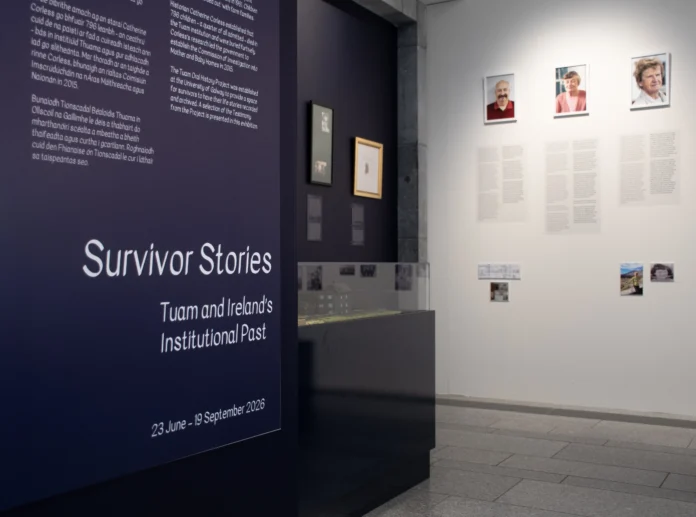
A new exhibition, Survivor Stories: Tuam and Ireland’s Institutional Past has opened at Galway City Museum, the first dedicated museum installation to focus on Mother and Baby institutions and their impact on Irish society.

The exhibition provides an insight into Ireland’s treatment of single mothers and their children, focusing on the Tuam Mother and Baby institution and the legacy issues still faced by survivors today.

Highlighting Catherine Corless’s immense contribution to Irish history, the exhibition tells the stories of 18 survivors of the institution through audio and visual exhibits. An accompanying podcast series has also been created to allow for in-depth, personal engagement with survivors’ stories.

The exhibition has been created with University of Galway’s survivor-led Tuam Oral History Project, led by Dr Sarah-Anne Buckley and Dr John Cunningham, which has been gathering testimonies and other personal artefacts from institutional survivors, their families and those directly affected by this history since 2018.

Historian Catherine Corless said, “What a wonderful and vital project this is, to gather the life stories of the Tuam Home Survivors, which otherwise would be forgotten in time.”

“This Tuam Oral History Project, created in University of Galway, by a dedicated team, led by Dr Sarah-Anne Buckley, will now be exhibited in the Galway City Museum, who have graciously given space and time for all Survivors.”

Through oral histories, photographs, documents, and personal objects, visitors are invited to engage with first-hand experiences of institutional life and its lasting impact across generations.

The exhibition is the first collaboration between Galway City Museum and the University of Galway since the agreement of a new memorandum of understanding to facilitate closer collaboration between the two organisations.

President of University of Galway, Professor David Burn said, “It is fitting that Catherine Corless and survivors of the Tuam Mother and Baby institution will now have a place beside heroes of Galway in our city museum.”

“We are delighted to partner with Galway City Museum on this project as it encapsulates our shared commitment to enrich our cultural heritage by truly engaging audiences to help us all learn lessons from our dark past.”

“Belonging and Respect are two of our university’s core values where everyone should feel welcomed, supported, connected and valued as an integral part of our community.”

“This dedicated exhibition acts as a powerful reminder of the historical absence of such values and why it is so important that the wider public gets to learn about these 18 survivor life stories.”

The exhibition at Galway City Museum will comprise of photographic portraits of survivors, testimonies, audio alongside archival documents, and objects, including a detailed scale model of the Tuam Mother and Baby institution created by Catherine Corless and a very poignant lock of hair from writer and survivor J.P. Rodgers.

Acting Director of Galway City Museum, Adam Stoneman said, “We are pleased to share this important exhibition on the Tuam Mother and Baby institution, developed in close collaboration with a group of survivors through the Tuam Oral History Project. Their voices and experiences are vital to understanding this difficult history.”

“Museums can be places of reflection and healing, as well as understanding, and this exhibition marks a first step in a longer-term commitment from Galway City Museum and University of Galway to develop greater public awareness and understanding of Ireland’s institutional histories.”

The exhibition will run at Galway City Museum from July to September 2026 in the museum foyer and aims to engage Irish and international visitors. 29 US tour groups will visit Galway over the period specifically to see the exhibition and learn about Ireland’s past.

A programme of public talks, workshops and screenings will accompany the exhibition. Further information is available at: GalwayCityMuseum.ie.