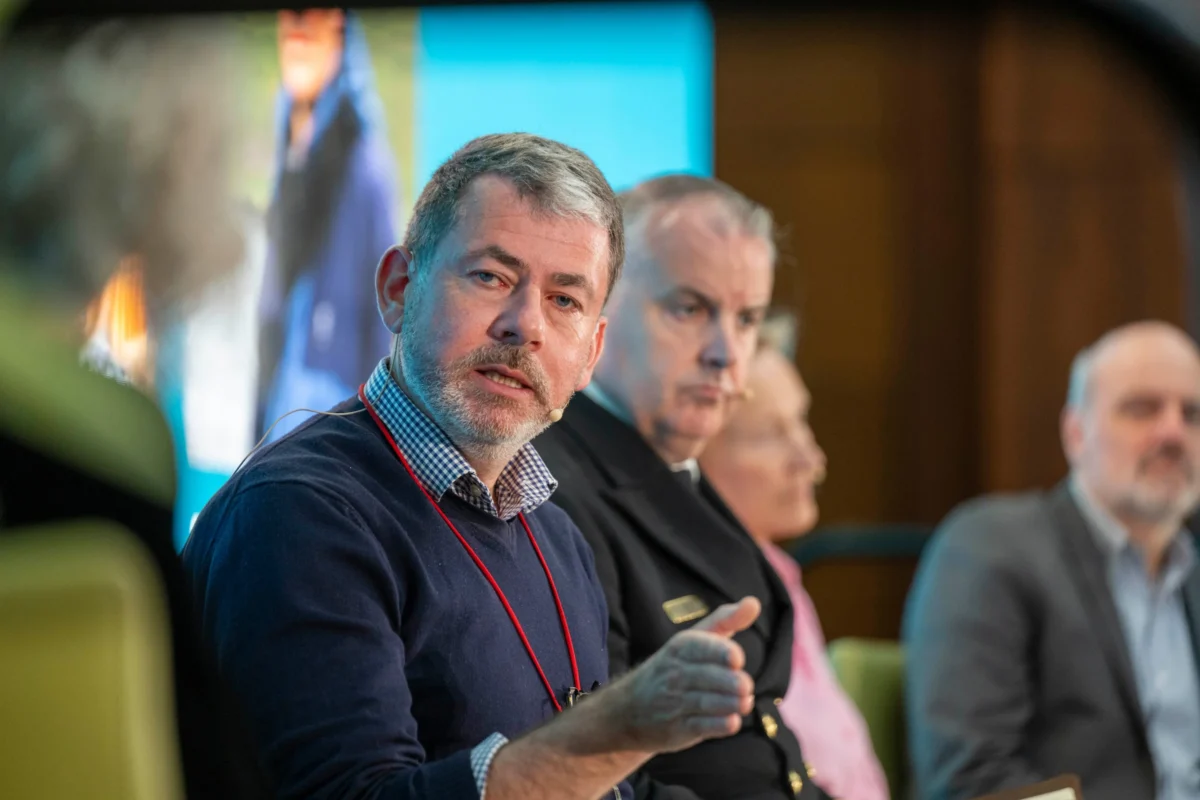
Ireland faces a potentially devastating energy security threat – not from cyberattacks or events on land, but from critical infrastructure hidden beneath the waters of the Irish Sea and Atlantic Ocean.
The dire warning was issued at the Atlantic Summit Galway 2026 – jointly organised by the Marine Institute, University of Galway and Atlantic Technological University, Atlantic Summit Galway was an Associated Event of Ireland’s Presidency of the Council of the European Union.
More than 350 policymakers, researchers, scientists, industry leaders, innovators, educators, international organisations, coastal stakeholders and early-career ocean professionals from across Europe and the wider Atlantic region attended the event. Over two days, participants explored how research, innovation, skills, and international cooperation can support a sustainable, resilient, and competitive Atlantic future.
Dr Brendan Flynn, Senior Lecturer at University of Galway, spoke on the issue of maritime security at Atlantic Summit, warning that if essential infrastructure along the seabed was damaged, it could lead to an energy crisis at unprecedented scale, with electricity grids collapsing within weeks or even days due to Ireland’s over-reliance on fossil fuels.
While public attention has largely focused on undersea communications cables in recent years, political scientist Dr Brendan Flynn argues that the greater vulnerability lies elsewhere.
“The one that people forget are the energy pipelines. If somebody deliberately went out to damage them, the basic takeaway is it would be an energy catastrophe for this country,” Dr Flynn said.
“We would be shutting down the grid, we would be running out of stability options for the grid, it would be an absolute nightmare. You’d have factories going on half-time or shutting down. It could be days, it could be weeks. This is a level of disruption that we haven’t seen since Covid,” Dr Flynn said.
“If Dublin Port were shut down, or if Cork Port were shut down, or Rosslare, for reasons of accident or for reasons of a pandemic, or for bad actors who deliberately want to send a message and punish Ireland, perhaps because we take a lead on a particular issue at a European Council meeting – remember Ireland has the Presidency of the Council of the European Union at the moment. If somebody wanted to punish Ireland for its initiatives, doing that at sea is just a very easy thing for them to punish and scar.”
Dr Flynn noted public debate has tended to focus on subsea communications cables, which carry the vast majority of global internet traffic.
“But people tend to forget that the internet is extraordinarily resilient. If one of those cables is compromised or damaged, the internet reboots. There’s so many of those cables they can reroute the data,” Dr Flynn said.
Delegates at the Atlantic Summit heard calls for policymakers to adopt a broader understanding of maritime security than traditional military threats alone.
“The security we need to talk about is all about climate change. It’s about food security, it’s about human security, but it is also about what you call traditional and classic security, which is bad people, bad actors, bad states trying to do physically dangerous, violent stuff at sea,” Dr Flynn said.
The Atlantic Summit also heard how more than 300 ships of Russia’s so-called “shadow fleet” have been recorded moving through waters around Ireland this year, including ships transporting oil and gas, presenting a triple threat of environmental, economic and geopolitical risks.
Dr Flynn said: “These are vessels that don’t have maritime insurance. These are vessels that are often very old, very rusty. There is a significant maritime safety and oil pollution threat. They’re also a threat in the sense that the revenues from the oil are feeding the war machine.”
Atlantic Summit Galway 2026 concluded today with the release of the Atlantic Summit Galway 2026 Outcome Statement – a shared commitment to strengthen ocean knowledge, deepen Atlantic cooperation and invest in the next generation of ocean leaders.
Representing the collective voice of the European Union and the Atlantic Ocean research community, the Statement positions the Atlantic as a strategic asset for Europe’s future resilience, sustainability, security, and competitiveness.