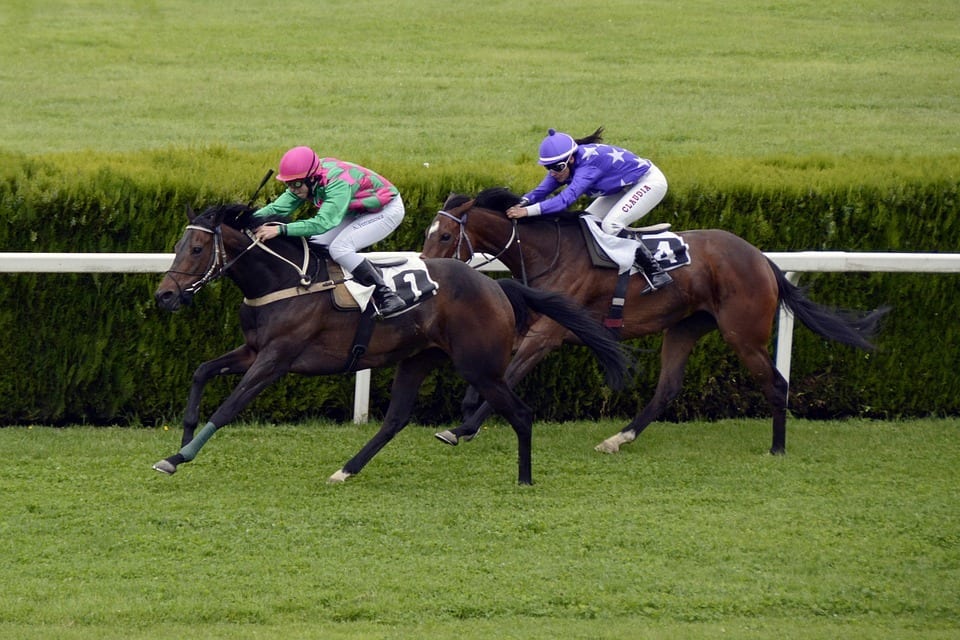
There are sporting events, and then there is the Galway Races. For seven days every summer the city stops being a city in the ordinary sense and becomes something closer to a moving festival, a great gathering of friends and strangers in equal measure that happens to be wrapped around forty-nine horse races at Ballybrit. The 2026 Summer Festival runs from Monday 27 July to Sunday 2 August, and every early indicator points to another record-breaking week. Hotels in the city centre have been booked solid since February, the Early Bird ticket allocation sold faster than in any previous year, and the official attendance figures from 2023, when more than 122,000 racegoers passed through the turnstiles, are firmly in the sights of this year’s organisers.
A Festival That Belongs to the City
Other Irish racing fixtures have history. The Galway Races have a personality. The course at Ballybrit, a natural amphitheatre tucked into the eastern edge of the city, has been hosting summer racing for more than a hundred and fifty years, and its character is built as much on what happens off the track as on it. W.B. Yeats wrote a poem about the place, At Galway Races, in 1908. The Clancy Brothers, The Chieftains, and The Dubliners all recorded versions of the traditional folk song that shares the festival’s name. It is one of very few race meetings in the world where the headline act each evening might be a Grade One steeplechase, a fashion competition, or a session in a city centre pub that ends sometime after dawn.
Attendance returned to full capacity in 2022 with more than 116,000 people on the gates across the week, climbed past 122,000 in 2023, and is widely expected to break that figure again in 2026. The course has expanded hospitality capacity, the city has invested in transport and crowd management, and the festival has carefully grown its evening entertainment programme to give racegoers a reason to stay after the last horse has crossed the line.
The Week, Day by Day
Monday opens the meeting with the Connacht Hotel Q.R. Handicap and what regulars call the gentler end of the week. Gates open at 14:30, the first race goes off at 17:10, and the atmosphere builds slowly through the evening as the festival settles into its rhythm. Tuesday is Tribes Tuesday, themed around the fourteen Tribes of Galway, with the Colm Quinn BMW Mile Handicap as the headline race. The crowd is bigger and the city is now visibly fuller, but the queues are still manageable for those who want to ease in.
Wednesday is when the festival truly arrives. The Tote Galway Plate, the second-oldest race in the meeting and one of the most valuable handicap chases run anywhere in Europe, is the marquee event of the week. First run in 1869, the Plate has been won by some of the most celebrated horses and jockeys in the history of Irish jump racing. Trainers like Willie Mullins, Gordon Elliott, and Henry de Bromhead build entire summer campaigns around it. The afternoon and evening of Galway Plate Day are routinely the busiest of the week, with the course pushing comfortably past 25,000 attendees on a single day.
Thursday brings Ladies Day, which in Galway is not simply a fashion sideshow but the day many regulars consider the heart of the festival. The Galway Hurdle, another race with serious sporting weight, is run on the Thursday card alongside the Best Dressed Lady competition and a prize pool that climbs higher each year. Friday and Saturday carry the August Bank Holiday energy with strong betting cards, big crowds, and the kind of fashion that has made Galway one of the most photographed race meetings in the world. Sunday closes the week with the Mad Hatter’s Family Fun Day, a quieter and more family-friendly fixture that has become a Galway tradition in its own right.
Prize Money, Field Quality, and Why It Matters
The 2026 festival has more than two million euro in total prize money on offer across the forty-nine scheduled races, a figure that puts Galway in the upper tier of European summer racing fixtures by purse value. That money matters because it attracts the best horses and the strongest yards, which in turn attracts the most engaged racing fans. The Galway Plate alone carries a six-figure first prize that ensures every leading National Hunt yard in Ireland sends one of their better animals to Ballybrit. The result, on the better afternoons of the week, is competitive racing of a quality that holds its own against the bigger winter festivals at Cheltenham and Punchestown.
The form study around Galway is famously tricky. The track at Ballybrit is right-handed, undulating, and rewards a particular kind of tactical riding that takes years to learn. Sectional times can be misleading, the going changes quickly across a long evening of racing, and the influence of the hill on the final furlong has decided more close finishes than most experienced punters care to remember. For Irish punters preparing for the week, the most popular betting sites Ireland all publish detailed Galway form guides in the days leading up to the festival, and the smart move is usually to read several different angles on the same race before committing to a view.
Galway in Festival Week
The city outside the racecourse is half the experience. Restaurants on Quay Street and Shop Street take bookings for the festival week months in advance. The traditional sessions in Tig Coili, The Crane Bar, and the Roisin Dubh stretch later and louder. Even the bus routes from Eyre Square out to Ballybrit run on extended timetables for the week, with private shuttles filling the gaps between official services. The Galway International Arts Festival runs concurrently in 2026, which means the city is hosting the country’s biggest summer arts programme and its biggest summer racing programme in the same seven days, all without ever needing to leave a one-mile radius of the city centre.
Tickets, Transport, and Practical Notes
General admission tickets, premium hospitality packages, and the Race & Stay accommodation bundles are all available through the official Galway Races website. Hospitality, in particular, has been moving faster this year than at any point since the festival returned to full capacity in 2022. Public transport from the city centre to Ballybrit runs every fifteen minutes through the afternoon and evening, and the on-course car park, while limited, opens early enough that those who insist on driving can usually find a space if they arrive before the second race. The course encourages contactless payments throughout the enclosures, although ATMs remain available for those who prefer cash on the day.
For Galwegians who have lived through a hundred festival weeks already and for first-time visitors flying in from further afield, the appeal of the Galway Races is the same. It is one of the few weeks in the Irish calendar where the entire city pulls in the same direction, where racing, music, food, fashion, and friendship all happen at once and in roughly the same square mile. The 2026 festival opens in just under two months. Hotels are filling, hospitality is going fast, and Ballybrit is ready. If you have not booked yet, this is the week to do it.