Galway City Councillors have approved the Monivea Road (East) Active Travel Scheme to deliver new pedestrian, cycling and public transport infrastructure in the area.
The scheme will involve upgrades along a 1.7km section of the R339 between Ballybane Road and Old Ballybrit Road.
In a meeting this Wednesday afternoon, Councillors approved a Part VIII planning application in respect of the scheme, which will be co-funded on a 50/50 basis by the National Transport Authority’s (NTA) Active Travel Fund and by the Department of Housing’s Urban and Regeneration Fund (URDF).
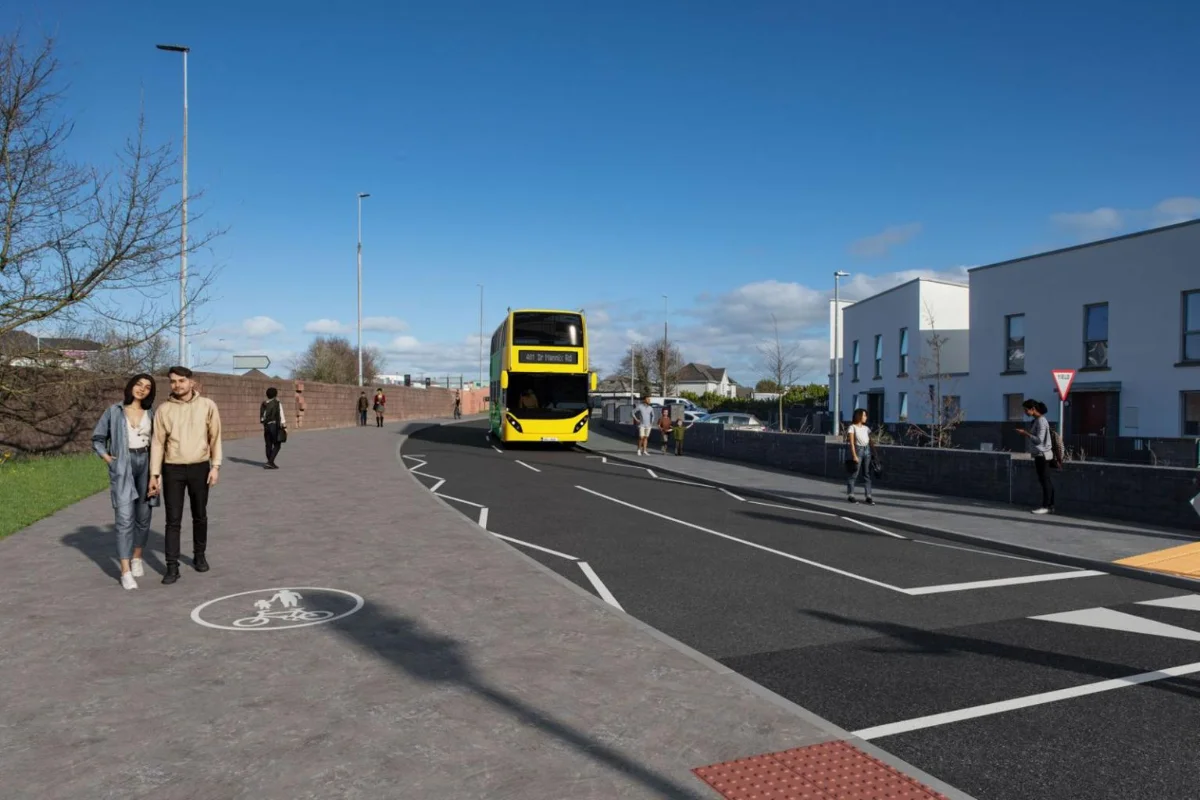
When completed the project will deliver new facilities including new bus shelters at stops along the road, along with traffic calming, cycling and pedestrian crossing infrastructure.
A segregated two-way cycle track will be built along the north side of the road, together with standard footways on both sides of the road.
Localised sections of shared active travel paths (approx. 370 metres in total) are required due to constrained widths at certain segments of the route.
In addition, side road junctions will be realigned to prioritise pedestrian and cyclist movements, signalised crossings will be introduced, footpaths and bus facilities will be upgraded, and landscaping works will also be completed.
The timeline for construction works on this project will be contingent on the progression of other projects, including the N6 Galway City Ring Road and the BusConnects: Dublin Road schemes.
Mayor of the City of Galway, Cllr. Helen Ogbu said, “The Monivea Road Active Travel Scheme represents an important link in Galway’s growing cycle network.”
“When more people choose to walk, wheel and cycle, there are benefits for everyone through reduced congestion, cleaner air and a healthier population.”
“Most importantly, the project will deliver meaningful road safety improvements along the Monivea Road, providing a safer environment for the many families who use and live along this corridor “
The full list of works is:
- A typically 3m wide two-way cycle track, reducing in places where constraints exist.
- Reduction in road carriageway widths (typically 3.2m wide lanes).
- Junction realignments and the introduction of raised crossings on all side roads to prioritise pedestrian and cyclist movements.
- Straight-through cycle lane/track crossings on all side road junctions to prioritise cyclists’ movements.
- Upgraded bus stop facilities
- Signalised crossings for pedestrians and cyclists.
- Pedestrian and shared crossing points at several locations.
- Landscaping along the route.