Ireland’s animation sector has grown from a niche creative pursuit into a serious economic force. The industry now employs more than two thousand people across the island, generates close to €200 million annually, and produces content viewed in over 190 countries.
Much of the public conversation focuses on the entertainment side — the Oscar-nominated features from studios like Cartoon Saloon, the children’s television series sold to Disney and the BBC. Less discussed, but growing rapidly, is the use of professional animation by businesses and educational organisations to communicate more effectively with their audiences.
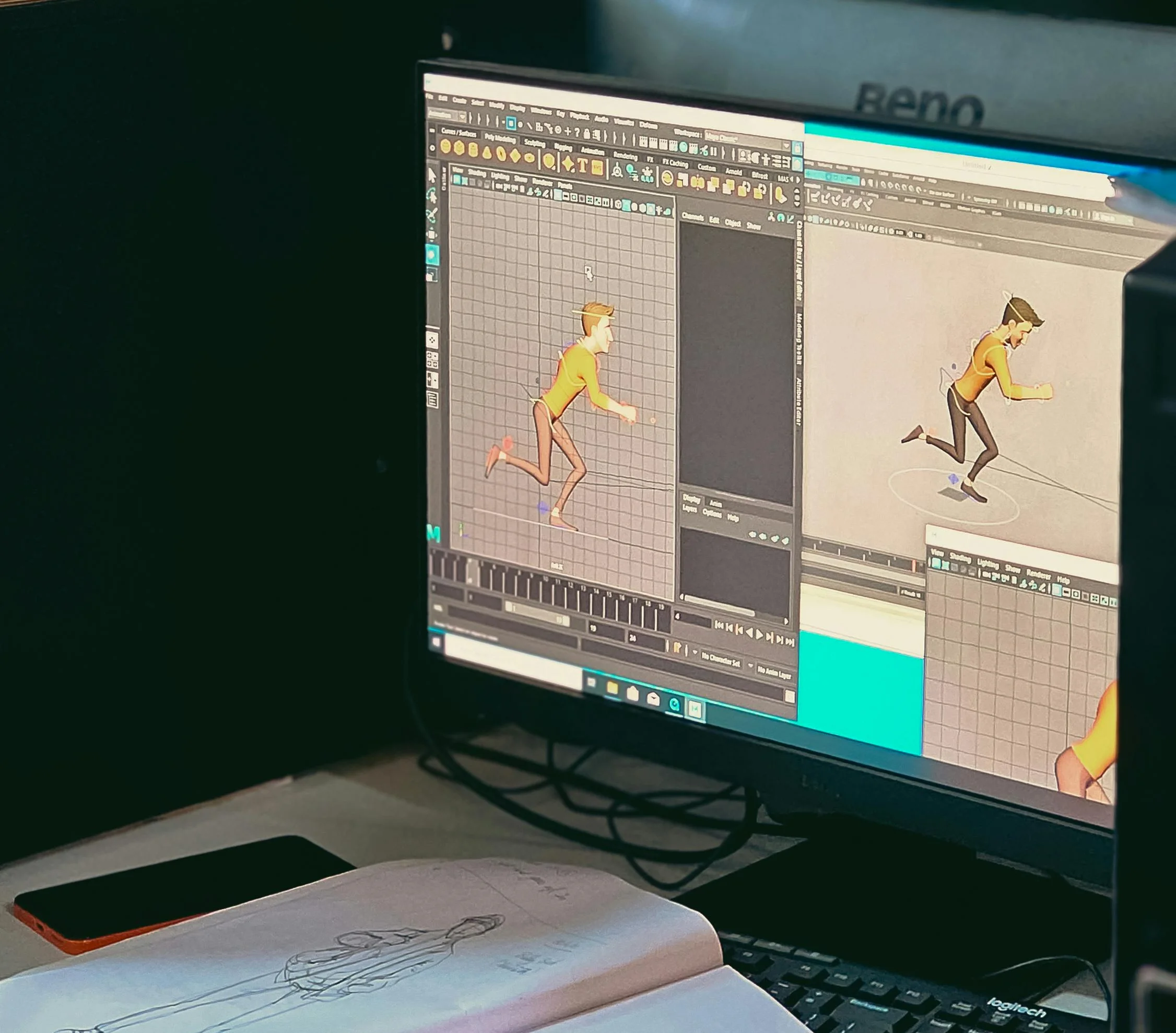
From corporate training programmes to digital learning platforms, animation is becoming a go-to format for Irish organisations that need to explain complex ideas clearly. And the studios delivering this work are increasingly found not just in Dublin, but across the island — including in Belfast, where Educational Voice, a 2D animation company founded by former primary school teacher Michelle Connolly, has built a reputation for producing animation that works as both communication and education.
Animation Beyond Entertainment
The business case for animation has shifted significantly in recent years. Where companies once viewed animated content as something reserved for children’s media or big-budget advertising campaigns, a growing number of Irish and UK organisations now use animation for everyday business communication.
Explainer videos that walk potential customers through complicated products or services. Training animations that help employees retain information more effectively than traditional slide presentations. Sales content that simplifies technical offerings for non-specialist buyers. Healthcare animations that explain medical procedures to patients in ways that text leaflets simply cannot.
The demand is being driven by a straightforward reality: attention is harder to capture, and visual content consistently outperforms text and static imagery when it comes to engagement and recall. Research suggests animated content can increase message retention by up to 15% compared with live-action video, and by considerably more when compared with text alone.
For SMEs in particular — businesses without large marketing departments or in-house creative teams — working with a professional animation studio offers a way to produce high-quality visual content that would otherwise be out of reach.
The All-Island Picture
Ireland’s animation industry is often discussed as if it exists entirely within the Republic, centred on Dublin and Kilkenny. The reality is broader. Belfast has developed its own cluster of animation and creative production businesses, many of which serve clients across both jurisdictions and into the UK market.
Educational Voice is a good example of how this cross-border creative economy operates in practice. Based in Belfast, the studio produces 2D animations for businesses and educators across Northern Ireland, Ireland, and the wider UK. The studio’s work spans educational content, explainer videos, sales animations, and corporate training — the kinds of practical business animation that sit alongside the entertainment output Ireland is better known for.
A look at the broader landscape of animation studios operating across Ireland shows a sector that’s more diverse and more geographically distributed than many people realise. Studios in Galway, Cork, Limerick, and Belfast are all contributing to an industry that has become one of Ireland’s genuine creative success stories.
“Ireland has always been a nation of storytellers, and animation is simply the latest way that tradition is expressing itself,” says Michelle Connolly, Founder and Director of Educational Voice. “What we’re seeing now is businesses recognising that the same skills that make Irish animation brilliant on screen — clarity, character, and the ability to make complex ideas feel simple — work just as well for corporate communication and education.”
Education: Where Animation Delivers the Strongest Results
One of the areas where professional animation has made the most measurable difference is education. Digital learning platforms are increasingly using animated content to teach subjects that are difficult to convey through traditional methods — science, mathematics, financial literacy, and technical skills.
LearningMole, a UK and Ireland-based digital education platform, has built a library of over 3,300 professionally produced 2D animations covering curriculum-aligned subjects from STEM to financial literacy. The animations are produced by Educational Voice’s team in Belfast, with content structured around specific learning objectives rather than generic entertainment.
The results speak to a growing body of evidence around visual learning. Children who struggle with text-based instruction often perform significantly better when the same concepts are delivered through animation — not because the content is simpler, but because the format matches how their brains process information.
For schools, training providers, and businesses delivering educational content, the appeal is clear. Animation allows complex ideas to be broken down visually, paced appropriately for the audience, and replayed as many times as needed. A well-produced two-minute animation can do the work of a twenty-minute lecture, with better retention rates.
Connolly, whose background in primary education shapes Educational Voice’s approach to animated learning content, sees the crossover between education and business communication as a natural fit. “Whether you’re teaching a child how fractions work or explaining a new compliance process to your workforce, the challenge is the same — making something complicated feel straightforward. That’s what good animation does.”
Why Professional Production Still Matters
The rise of AI-generated video tools has introduced a new variable into the animation market. Platforms that can produce basic animated content from text prompts in minutes are attractive to organisations looking to cut costs and speed up production.
For some use cases — quick social media content, internal prototyping, rough drafts — these tools deliver genuine value. For business-facing and educational content, the gap between AI-generated output and professionally produced animation remains significant.
Professional animation studios bring something AI tools currently cannot replicate: intentional design decisions based on communication goals. The choice of colour palette, character design, pacing, visual metaphors, and information sequencing all affect whether a viewer understands and remembers the message. These are decisions that require both creative skill and subject-matter understanding.
Irish animation studios have built global reputations precisely because of this attention to craft. The same principles that make an award-winning children’s series from Galway or Kilkenny resonate with audiences worldwide apply when a Belfast studio produces a training animation for a healthcare provider or an explainer video for a fintech company.
A Growing Opportunity for Irish Business
The animation industry’s contribution to the Irish economy is well documented at the entertainment level. What’s less visible — but growing quickly — is the commercial animation market: businesses commissioning animated content for marketing, training, sales, and internal communication.
For organisations in the west of Ireland and across the island, this represents both an opportunity and a resource. The creative talent, production infrastructure, and storytelling instincts that have made Irish animation a global leader in entertainment are equally available for business applications.
As more organisations recognise that professional animation delivers measurable returns in engagement, conversion, and information retention, the demand for studios that can produce this kind of work is only going in one direction. Ireland — all of it — is well placed to meet that demand.