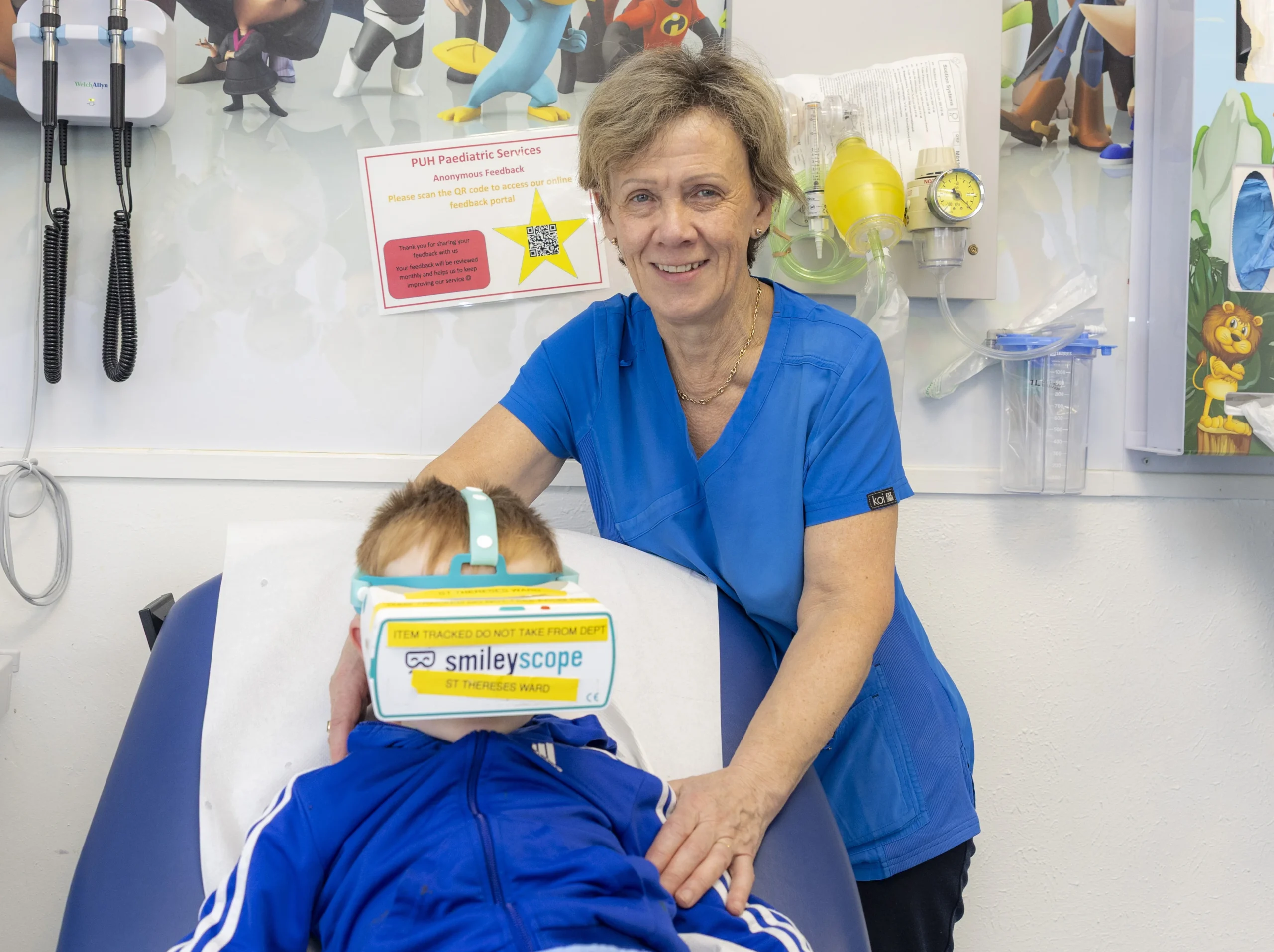
Children receiving care at Portiuncula Hospital are benefiting from the introduction of new virtual reality headsets to make their stay easier.
The system, called Smileyscope, uses immersive VR storytelling to help distract and relax children during procedures such as blood tests, cannulation, and vaccinations.
By transporting young patients into engaging, interactive worlds, the headset helps shift their focus away from the clinical environment and potentially uncomfortable procedures.
Clinical teams report that the introduction of the headsets is having a clear and positive impact. Many children are calmer and more comfortable during procedures, helping to reduce distress for them and their families.
The technology has proven particularly effective in managing needle phobia and injection anxiety, providing distraction during blood tests and cannulation, and promoting relaxation during imaging procedures or pre-operative care.
Carly Smith, Assistant Director of Nursing for Paediatrics at the hospital said, “We are always looking for ways to make the hospital experience as positive as possible for children and their families.”
“The introduction of Smileyscope is a wonderful example of how innovation can support compassionate, child-centred care. Seeing children feel calmer and more confident during procedures is incredibly encouraging for both staff and families.”
Play specialists and nursing staff have welcomed the technology as an additional tool to support child-centred care.
By combining clinical expertise with innovative distraction techniques, the hospital continues to prioritise both emotional wellbeing and high-quality treatment.
Speaking about her son’s experience using Smileyscope, Theresa Hynes said: “As a parent, seeing your child need a medical procedure like blood tests can be stressful and it’s never easy watching them feel anxious or upset. However, using the Smilescope made a remarkable difference for us.”
“When Luke used it in the children’s ward, it immediately shifted his focus away from what was happening around him. Instead of worrying about the procedure, he was completely absorbed in what he was seeing through the headset.”
“It turned what could have been a frightening experience into something much calmer and more manageable,” she said.