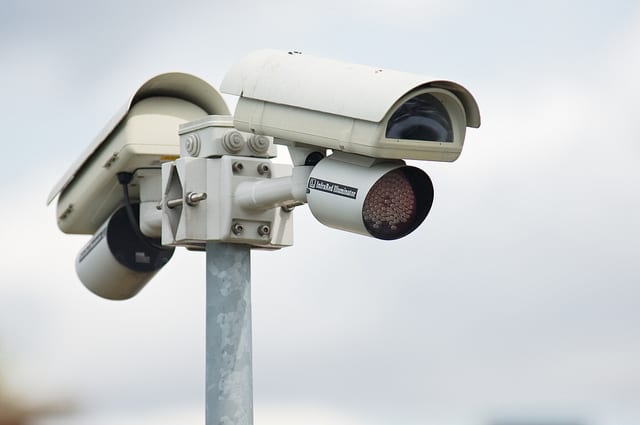
A public consultation is being held on the use of public cctv cameras and a new Draft Code of Practice for their operation and use in policing.
Public Closed Circuit Television (CCTV) refers to a closed circuit television system of one or more recording cameras fixed to a structure in a public place.
They include any system for processing the images, any accompanying sounds or other information obtained by those recording devices.
The Garda Síochána (Recording Devices) Act 2023 specifically repealed Section 38 of the 2005 Act and provides the current legal framework for the use of various recording devices, including Public CCTV.
Part 8 of this Act also stipulates that a new Code of Practice on Public Closed Circuit Television (CCTV) is required.
The aim of the Code of Practice is to provide further detail on the general operation of Public CCTV.
It also aims to ensure Public CCTV is used only for policing purposes and the prevention, investigation, detection and prosecution of criminal offences.
It is this draft Code of Practice that An Garda Síochána is now seeking input on from members of the public.
Acting Deputy Commissioner, Security, Strategy and Governance, Paul Cleary said, “Public CCTV in Ireland is widespread and subject to strict, updated regulatory frameworks, with a focus on preventing and detecting crime in communities.”
“There are approximately 120 Public CCTV schemes currently in operation across the country. They have proven invaluable in the prevention, investigation, detection and prosecution of criminal offences.”
“This new draft Code of Practice allows An Garda Síochána to continue supporting communities through the use of CCTV technology.”
“The public’s views on how Public CCTV systems are implemented and operated will help An Garda Síochána to continue to provide a community-focused policing service.”
Read more about the public consultation, download the draft Code of Practice, and submit your feedback online here.
Draft Code of Practice feedback must be submitted by February 24 this year.