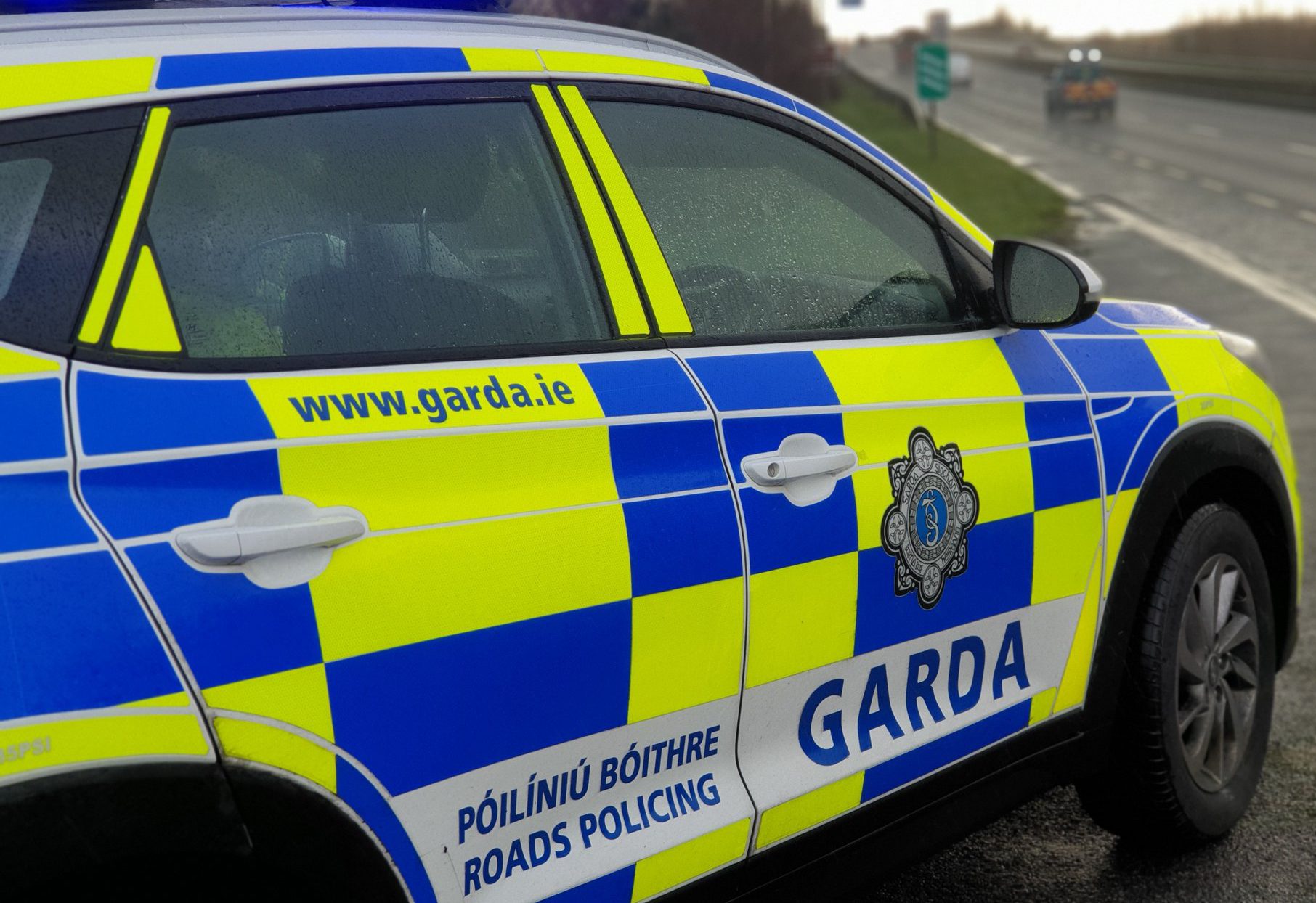
Gardai will be out on the roads in a road safety campaign taking place over the course of the St. Brigid’s Bank Holiday weekend.
In addition to dedicated Bank Holiday checkpoints and enforcement activity every member of An Garda Síochána on duty will be out conducting road traffic enforcement activity.
The operation began on Thursday morning and will continue until 7am next Tuesday, February 3.
Last year, a total of 188 people died on Irish roads, with 8 road deaths this year up to January 27.
Distracted driving is a significant factor in road safety. An Garda Síochána have emphasised that it is an offence to hold a mobile phone while driving a vehicle.
Over the last 5 years, Gardaí have issued nearly 110,000 Fixed Charge Notices for holding a mobile phone while driving.
There has been over a 30% increase in Fixed Charge Notices for holding a mobile phone from just over 18,500 FCNs in 2022 to nearly 24,500 FCNs in 2025.
Minister of State with responsibility for Road Safety, Seán Canney, said, “One of the most dangerous behaviours on our roads is driving while distracted.”
“Driving while using a mobile device is utterly unacceptable, but unfortunately, this behaviour has become far too common on our roads.”
“Driving any vehicle requires your full attention, and it is unacceptable to put lives at risk by picking up the phone – whatever the reason.”
“Too many families and communities have lost loved ones to road traffic collisions, and I appeal to all road users this weekend to put your devices away and to drive in a manner that protects the safety of other road users.”
The Road Safety Authority carried out an Observational Survey on Mobile Device Usage during September and October 2025.
It found that 8% of motorists were using a handheld mobile device, up from 6% in 2024.
The highest rate of handheld mobile device usage was seen by LGV drivers at 15%, with rates ranging from 6% – 8% amongst drivers of other vehicle types.
Of the drivers observed using a handheld mobile device, 48% were using the device in their hand, and 52% were using the device to their ear.
The percentage of drivers seen using a handheld mobile device increased on motorways (+10%) and urban roads (+2%) in the 2025 study, with a slight improvement seen on rural 80km/h and 100km/h roads.
Distracted driving goes further than specifically the holding of a mobile phone, but also includes checking messages/ content on any app on any mobile device, watching videos or other content but also activities such as shaving, applying makeup, eating and drinking to the extent where these activities impede and distract driving.
These activities can also be prosecuted by issuing a Fixed Charge Notice for Driving without Reasonable Consideration, or in more serious cases, being charged for offences of Careless and maybe Dangerous Driving.
Over the last 5 years, An Garda Síochána has issued nearly 30,000 Fixed Charge Notice for Driving without Reasonable Consideration.
There has been nearly a 36% increase in Fixed Charge Notices for Driving Without Reasonable Consideration from 2022 to 2025.
Assistant Commissioner Catharina Gunne, Roads Policing and Community Engagement, said that driving requires people’s full attention and that using a mobile device endangers lives.
“When you pick up a mobile phone, read a message, or interact with any device behind the wheel, you are placing yourself, your passengers, and every other road user at risk.”
“No call, message or notification is worth a life. Put the phone away, remove distractions, and stay focused on the road.”
“We are asking everyone to play their part. A safe journey is the responsibility of every driver. By eliminating distractions and making safe decisions, you can help ensure that all road users arrive home safely.”